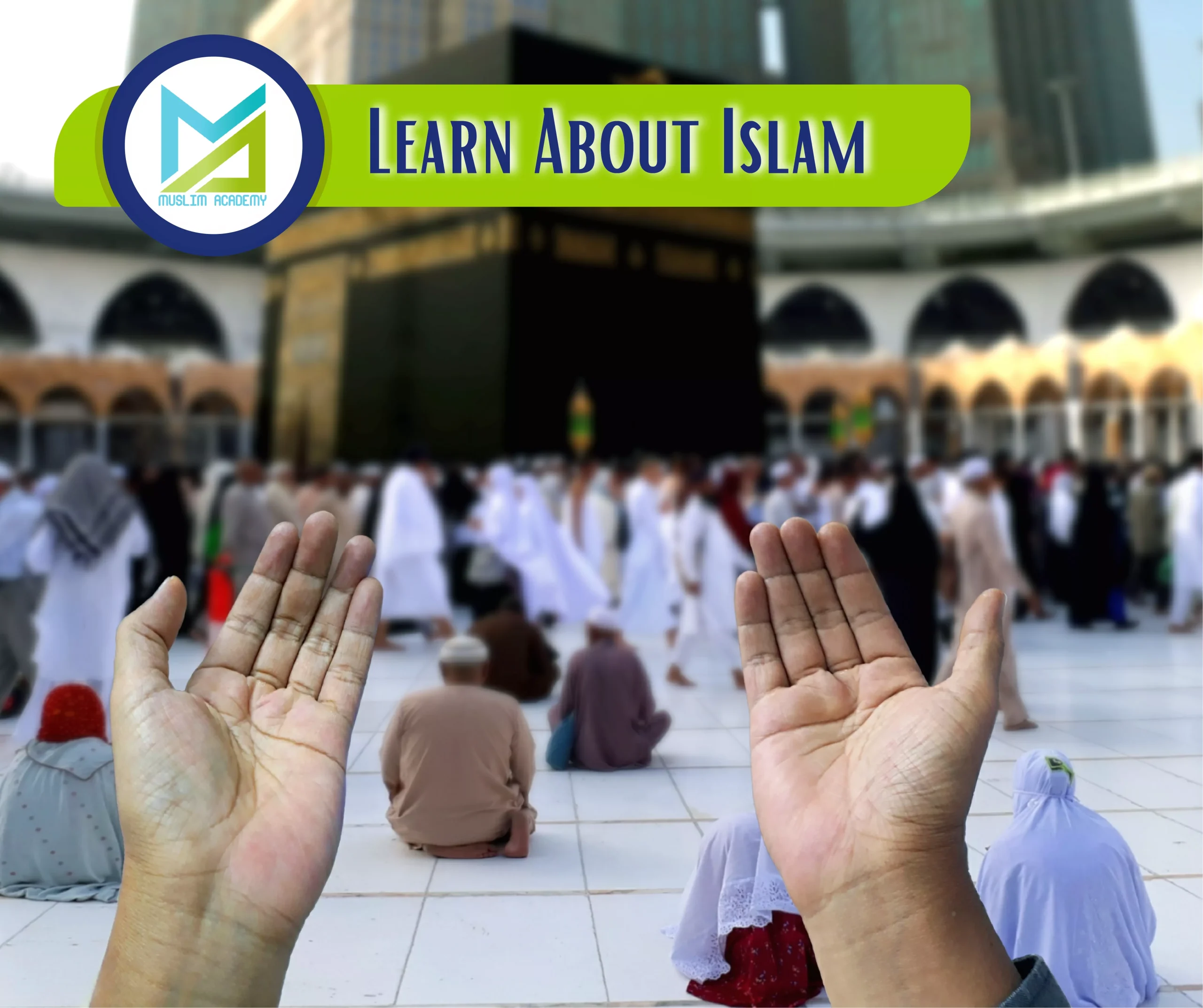
Start Online Quran Classes with Muslim Academy
https://muslimacademy.net/index.php/free-trial/
Understanding Islam in its full complexity requires more than superficial familiarity with its basic tenets. Islam represents not merely a religious belief system but a comprehensive civilization encompassing theology, law, ethics, art, science, and social philosophy developed over more than fourteen centuries across diverse geographic regions and cultural contexts. Many people today recognize the importance of deepening their knowledge about one of the world’s major religions, whether for personal spiritual development, academic study, professional purposes, or simply to engage more meaningfully with Muslim neighbors and colleagues. The journey to Learn About Islam with Muslim Academy provides individuals with frameworks for understanding billions of believers worldwide, appreciating the profound intellectual contributions Islamic civilization has made to human knowledge, and recognizing the diversity of thought and practice within the Islamic tradition.
The Scope and Scale of Islam
Islam is practiced by nearly two billion Muslims distributed across every continent and represented in virtually every country. Despite this global diversity, Muslims worldwide share fundamental beliefs and practices that create remarkable unity across cultural boundaries. Understanding Islam requires recognizing this balance between universal core teachings and the distinctive expressions these teachings have taken in different cultural contexts throughout history and across the contemporary world.
The Islamic world includes Arab Muslims in the Middle East and North Africa, Persian-speaking Muslims in Iran and parts of Central Asia and Afghanistan, Turkish Muslims spanning from Turkey through various parts of the Middle East, South Asian Muslims constituting the largest Muslim population globally in Pakistan, Bangladesh, and India, Southeast Asian Muslims including the massive populations in Indonesia and Malaysia, African Muslims across the continent, and significant Muslim communities in Europe, the Americas, and other regions. This diversity means that Islamic civilization encompasses a remarkable variety in artistic expression, architectural styles, literary traditions, scientific achievements, and social customs, all developed within frameworks of shared Islamic principles.
Core Beliefs and Practices
The foundation of Islamic belief rests on several essential doctrines that all Muslims affirm. Muslims believe in absolute monotheism, affirming that God is one, incomparable, and alone worthy of worship. This belief in divine unity fundamentally shapes the Islamic worldview and distinguishes Islamic theology from other religious traditions. Belief in God’s revelation through prophets represents another essential Islamic doctrine, with Muslims recognizing numerous prophets throughout human history and understanding the Prophet Muhammad as the final messenger bringing God’s complete guidance to humanity.
The Islamic faith encompasses belief in angels as God’s creation serving divine purposes, in divine revelation contained in the Quran and preceding scriptures, in the Day of Judgment when all humanity will face divine accountability, and in divine decree and human responsibility. These theological foundations inform Islamic ethics, law, and spirituality.
Islamic practice centers on the Five Pillars, representing fundamental religious obligations. The declaration of faith represents the first pillar, articulating belief in God’s unity and Muhammad’s status as God’s messenger. Prayer performed five times daily constitutes the second pillar, creating rhythm and structure through which believers maintain a connection with God throughout their day. Almsgiving represents the third pillar, obligating Muslims to support the alternative and needy. Fasting during the month of Ramadan comprises the fourth pillar, combining spiritual discipline with physical experience of hunger and heightened awareness of those living in poverty. Finally, pilgrimage to Mecca represents the fifth pillar, a spiritual journey undertaken by Muslims who possess the health and financial means.

The Quran and Its Significance
The Quran stands as the central text of Islam, believed by Muslims to be the literal word of God revealed to the Prophet Muhammad over approximately twenty-three years. This scripture comprises 114 chapters of varying lengths containing 6,236 verses addressing fundamental questions of theology, ethics, law, and human conduct. Understanding Islam requires engagement with Quranic teachings, recognizing how these sacred verses have shaped Islamic thought, law, and spirituality throughout history and continue to guide Muslim belief and practice today.
The Quran’s literary qualities, including its rhythmic prose and poetic language, have made it a source of inspiration for Islamic art, music, and calligraphy. Professional Quranic reciters are honored throughout Muslim communities, with many Muslims memorizing the entire text as a spiritual and intellectual achievement. The Quran’s teachings span practical guidance for daily life alongside profound spiritual and theological insights, creating a comprehensive framework for Muslim living.
The Traditions of the Prophet Muhammad
Complementing the Quran are the teachings, practices, and sayings of the Prophet Muhammad preserved in collected traditions known as hadith. These traditions provide detailed examples of how the Prophet applied Quranic principles to specific situations, offering Muslims models for conduct and guidance for addressing novel circumstances using Islamic principles. Muslim scholars developed rigorous methodologies for evaluating hadith traditions, assessing their authenticity, and understanding their context and application.
The biography of the Prophet Muhammad, known as the Seerah, provides essential context for understanding Islamic history and the emergence of Islamic civilization. The Prophet’s life exemplified the principles he taught, and his relationships with his companions established models for Islamic community formation and governance.
Islamic Law and Jurisprudence
Islamic law, known as Sharia, developed through centuries of scholarly interpretation of Quranic principles, prophetic traditions, and legal reasoning. Rather than representing an inflexible code, Islamic law emerged as a living tradition adapting Quranic and prophetic principles to changing circumstances while preserving core values. Different schools of Islamic law developed distinct methodologies while sharing fundamental approaches to legal reasoning.
Islamic jurisprudence addresses every dimension of human life, from matters of faith and worship through family relations, commerce, criminal justice, and governance. Understanding Islamic law requires recognizing that different scholars reach different conclusions on particular issues while agreeing on fundamental principles and methodologies. This diversity of legal opinion, rather than representing a weakness, demonstrates the flexibility and applicability of Islamic principles across different contexts and times.

Islamic Spirituality and Mysticism
Beyond the external practices and legal requirements, Islam encompasses rich traditions of spiritual development and inward devotion. Sufism, representing Islamic mysticism, developed various approaches to cultivating a deeper connection with God through disciplines including meditation, recitation of divine names, poetry, music, and ascetic practices. While sometimes misunderstood or criticized by some Muslims, Sufism has produced profound spiritual teachers and influenced Islamic intellectual and artistic traditions substantially.
Islamic ethics emphasize character development, virtue cultivation, and moral excellence. Muslims are called to embody virtues including truthfulness, justice, compassion, and courage, applying these principles to all their interactions and relationships. Ethical living represents not merely following external rules but developing an inner character reflecting these virtues.
The Diversity Within Islam
Understanding Islam requires appreciating the considerable diversity of thought and practice within the Muslim world. Different legal schools offer different interpretations of Islamic law while maintaining shared principles. Different theological schools throughout history have offered varying perspectives on fundamental questions of theology and philosophy. Contemporary Islam includes reformist movements seeking to reinterpret Islamic teachings in light of modern contexts, traditionalist scholars emphasizing preservation of classical methodologies, and numerous positions between these perspectives.
Different Muslim communities emphasize different aspects of Islamic tradition. Some focus primarily on legal observance, others on spiritual development, still others on intellectual and philosophical engagement. This diversity reflects the richness and complexity of Islamic civilization rather than representing any fundamental division in Islamic faith.
The Contributions of Islamic Civilization
Islamic civilization has made extraordinary contributions to human knowledge
and achievement. During the medieval period, when Islam was at the forefront
of scientific advancement, Muslim scholars made groundbreaking discoveries
in mathematics, including the development of algebra and the decimal system.
Medical advances emerged from Islamic physicians who established the first
hospitals and made discoveries in anatomy, pharmacology, and clinical
medicine. Astronomical observations and calculations from Islamic scholars influenced European science and navigation.
Islamic architecture produced magnificent structures ranging from the Blue
Mosque in Istanbul to the Alhambra in Granada, influencing architectural
traditions worldwide. Islamic art developed distinctive styles in calligraphy,
geometric design, and visual representation. Islamic poetry and literature
produced works of extraordinary beauty and philosophical depth, continuing to move readers centuries after their composition.
Why Understanding Islam Matters
In contemporary times marked by globalization and increasing interaction
between different communities, understanding Islam and Islamic civilization
has become increasingly important. Misconceptions and stereotypes about
Islam abounds, often based on extremist interpretations or sensationalized
media coverage rather than engagement with Islamic sources and traditions.
Accurate knowledge of Islam enables more productive cross-cultural dialogue
and fosters respect for the Muslim neighbors, colleagues, and friends with whom many people interact daily.
For Muslims themselves, engaging more deeply with Islamic teachings
strengthens faith, clarifies ethical and practical questions, and enables more
meaningful practice of religious obligations. Personal spiritual development
benefits from understanding the principles underlying Islamic practice and the profound wisdom contained in Islamic sources.
Conclusion
The journey to understand Islam more deeply represents an investment in
knowledge that enriches both personal spiritual development and cross–
cultural understanding. Whether motivated by faith, academic interest,
professional requirements, or simple curiosity about one of the world’s major
religions, engaging seriously with Islamic teachings, history, and civilization
provides access to profound wisdom that has guided billions of believers
across centuries. The accessibility of high-quality information about Islam
through books, courses, and online resources means that anyone committed to
learning can develop a meaningful understanding of this complex and
Beautiful tradition. Such understanding contributes not only to the individual
enrichment, but also to a more peaceful and respectful global community in
which religious diversity is appreciated, and misunderstandings are bridged
through knowledge and genuine engagement.