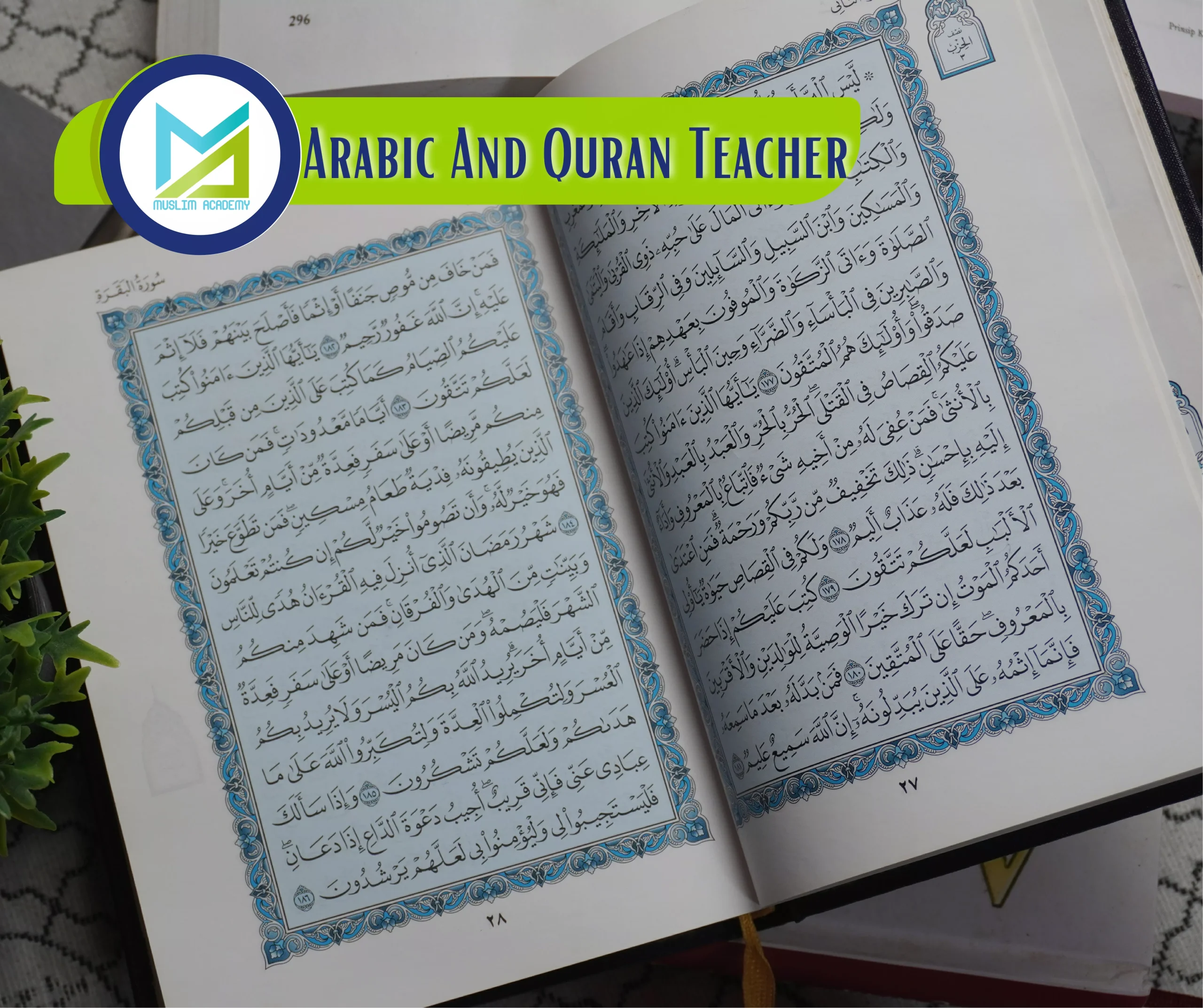
Start Online Quran Classes with Muslim Academy
https://muslimacademy.net/index.php/free-trial/
The Foundation of Islamic Teaching
The profession of an Arabic and Quran Teacher with Muslim Academy represents one of the most revered and spiritually significant roles within Islamic society. These dedicated educators serve as guardians of divine knowledge, entrusted with the sacred responsibility of transmitting the holy Quran and the beauty of the Arabic language to successive generations of Muslims worldwide. Their influence extends far beyond traditional academic instruction, encompassing spiritual guidance, character development, and cultural preservation that shapes the very foundation of Islamic communities.
Throughout Islamic history, the role of religious educators has been held in the highest esteem. The Prophet Muhammad himself emphasized the elevated status of teachers, declaring that the ink of scholars is more sacred than the blood of martyrs. This profound statement underscores the immense value placed upon those who dedicate their lives to sharing knowledge, particularly the divine wisdom contained within the Quran and the linguistic mastery required to understand it in its original Arabic form.
An Arabic and Quran Teacher with Muslim Academy carries the weight of preserving not just textual accuracy but also the spiritual essence and cultural context that give meaning to sacred words. They serve as living bridges between the time of revelation and contemporary Muslim communities, ensuring that the timeless message of Islam remains accessible and relevant to each new generation of believers.
The traditional Islamic concept of knowledge transmission involves a sacred trust known as “Amanah,” which places tremendous responsibility upon educators to maintain the integrity and authenticity of what they teach. This trust encompasses not only academic accuracy but also the moral and spiritual dimensions of Islamic education that help students develop a comprehensive understanding of their faith.
Modern Arabic and Quran Teacher with Muslim Academy professionals must navigate the delicate balance between preserving traditional teaching methods that have successfully transmitted Islamic knowledge for centuries while adapting to contemporary educational needs and diverse student populations. This challenge requires a deep understanding of both classical Islamic scholarship and modern pedagogical approaches that can effectively serve students from various cultural backgrounds and educational experiences.
The spiritual dimension of this teaching role cannot be overstated. Students often view their religious instructors not merely as academic teachers but as spiritual mentors whose personal conduct and character serve as living examples of Islamic principles. The behavior, dedication, and authenticity demonstrated by teachers profoundly influence their students’ understanding of faith and their relationship with divine guidance.
Essential Qualifications and Training
Becoming an effective Arabic and Quran Teacher with Muslim Academy requires extensive preparation that combines rigorous academic study with spiritual development and practical teaching experience. The journey typically begins with comprehensive Quranic memorization, as teachers must demonstrate their commitment to preserving the sacred text with absolute accuracy. Complete memorization of the Quran, known as Hifz, represents not just an academic achievement but a spiritual milestone that deepens the teacher’s connection to the divine message they will share.
Advanced Arabic language studies form another cornerstone of teacher preparation. Educators must master classical Arabic grammar, syntax, morphology, and rhetoric to explain complex linguistic concepts and help students appreciate the Quran’s unparalleled literary excellence. This linguistic expertise enables teachers to address sophisticated questions about word meanings, grammatical structures, and stylistic features that enhance students’ textual understanding and spiritual connection.
Theological education provides the doctrinal foundation necessary for addressing religious questions and explaining the historical and spiritual contexts surrounding Quranic revelations. Teachers study Islamic jurisprudence, prophetic traditions, scholarly commentaries, and comparative theology to develop a comprehensive understanding that informs their interpretation and explanation of sacred texts. This broad knowledge base enables them to address diverse student questions while maintaining doctrinal accuracy and scholarly integrity.
Contemporary teacher training programs increasingly emphasize pedagogical methods specifically adapted for Islamic education in modern contexts. Effective educators learn to accommodate different learning styles, integrate educational technology appropriately, create inclusive classroom environments that welcome students from diverse backgrounds, and develop assessment methods that evaluate both technical skills and spiritual growth.
Professional certification programs often require supervised teaching practice under experienced mentors who provide guidance on classroom management, curriculum development, and student counseling. These practical experiences help novice teachers develop confidence and refine their instructional approaches before assuming independent teaching responsibilities.
Continuing education remains essential throughout a teacher’s career, as new research in Islamic studies, Arabic linguistics, and educational methodology continues expanding the field’s knowledge base. Professional development opportunities through conferences, workshops, and advanced degree programs help educators stay current with scholarly developments and teaching innovations.
Teaching Methodologies and Classroom Practices
Modern Arabic and Quran Teacher with Muslim Academy professionals employ diverse instructional approaches that recognize the unique challenges of simultaneously teaching language skills and sacred content. While traditional memorization techniques remain foundational, contemporary educators supplement these methods with analytical approaches that help students understand meanings, contexts, and practical applications alongside accurate recitation.
Interactive teaching strategies actively engage students in their learning process rather than relying solely on passive listening and repetition. Group discussions encourage students to explore textual meanings collaboratively, while peer teaching opportunities help learners reinforce their understanding by explaining concepts to classmates. These collaborative approaches build classroom community while developing communication skills essential for religious leadership and community participation.
Technology integration has transformed teaching possibilities while preserving the personal relationships that characterize excellent Islamic education. Digital audio resources enable students to hear perfect pronunciation examples repeatedly, while interactive software provides immediate feedback on recitation accuracy. Virtual reality applications can transport students to historical Islamic sites, while online platforms connect learners with qualified instructors regardless of geographical limitations.
Differentiated instruction acknowledges that students possess varying backgrounds, learning speeds, and educational objectives. Some seek basic recitation skills for prayer enhancement, while others pursue advanced linguistic analysis for scholarly purposes. Skilled teachers adapt their instruction to meet these diverse needs within single classroom environments, providing appropriate challenges for advanced students while ensuring struggling learners receive necessary support.
Assessment methods in Islamic education require sensitivity to both technical skill development and spiritual growth that may resist quantitative measurement. Traditional evaluation focuses on recitation accuracy, memorization completion, and grammatical understanding that can be objectively assessed. However, comprehensive educators also recognize subtler indicators of progress, including improved concentration during recitation, enhanced spiritual awareness, and increased confidence in religious discussions.
Cultural sensitivity proves particularly crucial when teaching diverse student populations that include recent converts, heritage learners from various backgrounds, and students with different levels of prior religious knowledge. Effective teachers develop cultural competency that enables respectful interaction with students from all backgrounds while maintaining high educational standards and authentic Islamic content.
Student Development and Community Impact
The influence of a dedicated Arabic and Quran Teacher with Muslim Academy extends far beyond individual skill development to encompass character formation, spiritual growth, and community leadership preparation. Students often experience profound personal transformations through their educational journey, developing enhanced self-discipline, improved moral reasoning, and stronger connections to their faith community that influence all aspects of their lives.
Comprehensive Islamic education addresses the whole person, recognizing that spiritual development requires integration of knowledge, practice, and character refinement. Teachers serve as role models who demonstrate how Islamic principles translate into daily behavior, professional conduct, and interpersonal relationships.
This modeling proves particularly important for young students
who are forming their understanding of what it means to live as practicing Muslims in contemporary society.
The ripple effects of quality Islamic education spread through families
and communities as students share their learning and apply religious principles in their various roles and relationships. Parents often report improvements in their children’s behavior, academic performance, and family relationships following enrollment in Islamic education programs. These positive changes reflect the holistic nature of religious education that addresses moral and spiritual development alongside academic achievement.
Advanced students frequently become community resources,
volunteering as teaching assistants, youth group leaders,
or community outreach coordinators. Their enhanced religious knowledge
and communication skills enable them to serve as bridges between Islamic institutions and broader
community organizations, facilitating interfaith dialogue and cultural understanding that benefits entire communities.
Many graduates eventually pursue careers in Islamic education themselves,
continuing the chain of knowledge transmission that connects contemporary learners
with centuries of scholarly tradition. These career paths provide meaningful opportunities
to apply their educational achievements while contributing to the preservation and expansion of Islamic educational institutions.
The character development fostered through Islamic education often produces individuals
who become positive forces for social change in their communities. Alumni frequently engage in charitable work,
social justice initiatives, and community development projects that reflect the ethical principles
and social responsibility emphasized in their religious education.
Professional opportunities in translation, international relations
Academic research and religious leadership often become available
to students who achieve advanced proficiency in both the Arabic language and Islamic studies.
These career paths provide practical applications for their educational investments
while contributing to intercultural understanding and scholarly advancement.
Professional Excellence and Future Directions
The evolving landscape of Islamic education presents both opportunities
and challenges for Arabic and Quran teachers with Muslim Academy
professionals who must balance the preservation of traditional wisdom with adaptation
to contemporary needs. Modern educators increasingly serve diverse populations
that include students from various cultural backgrounds, different age groups,
and varying levels of prior religious knowledge, requiring flexibility
and cultural competency alongside scholarly expertise.
Professional development remains essential for maintaining teaching excellence in rapidly changing educational environments.
Conferences, workshops, and scholarly seminars provide opportunities
to learn from experienced educators, discover innovative teaching techniques,
and discuss common challenges with professional colleagues.
These networking opportunities often lead to collaborative relationships
that benefits both teachers and their students through shared resources and expertise.
Research and publication activities contribute to the broader field
of Islamic education while helping individual teachers reflect critically on
their practices and develop new approaches to common challenges.
Teachers who engage in scholarly work often discover insights
that improve their classroom instruction while contributing
to the professional knowledge base that supports the entire field.
Mentorship relationships with experienced educators provide ongoing support
and guidance for teachers at all career stages. Novice teachers benefit from the wisdom and practical advice of veterans,
while experienced educators often find renewal and fresh perspectives through
their interactions with newer colleagues who bring contemporary insights and energy to traditional practices.
The integration of educational technology continues expanding possibilities
for Islamic education while requiring teachers to develop new skills
and adapt their methods appropriately. Online learning platforms enable access
to quality instruction regardless of geographical limitations,
while interactive software provides personalized learning experiences that complement traditional teaching methods.
An experienced Arabic and Quran Teacher with Muslim Academy
must also navigate the complexities of serving multicultural communities
where students may come from different Islamic traditions, cultural backgrounds,
and educational experiences. This diversity enriches the learning
environment while requiring teachers to develop sensitivity
to various perspectives and approaches within the broader Islamic tradition.
The future of Islamic education depends largely on the dedication
and excellence of teachers who commit themselves to continuous improvement
and innovation while maintaining the spiritual authenticity and scholarly rigor
that have characterized the best Islamic educational traditions throughout history.
Their influence extends far beyond individual student achievement to shape
the character and direction of entire Muslim communities for generations to come.
Quality Islamic education serves as a foundation for strong,
vibrant Muslim communities that can contribute positively
to broader society while maintaining their distinct religious identity
and values. The role of Arabic and Quran Teacher with Muslim Academy
professionals in facilitating this education remains central to the health
and continuity of Islamic civilization in contemporary contexts.