
Start Online Quran Classes with Muslim Academy
https://muslimacademy.net/index.php/free-trial/
The Arabic language represents one of the most significant linguistic systems in human history, spoken by hundreds of millions of people across the globe and serving as the official language of 26 countries. In an increasingly interconnected world where cross-cultural communication has become essential, learning Arabic has transitioned from a specialized pursuit to a practical and valuable skill sought by professionals, academics, students, and cultural enthusiasts alike. An Arabic Language Course with Muslim Academy offers far more than simple vocabulary and grammar instruction; it provides a gateway to understanding one of the world’s richest cultural traditions and opens professional and personal opportunities that extend far beyond basic communication. Whether you’re driven by career aspirations, cultural curiosity, religious interest, or intellectual challenge, embarking on an Arabic Language Course with Muslim Academy represents a transformative educational journey that can reshape your worldview and expand your capabilities in remarkable ways.
The Significance of Arabic in the Modern World
To truly appreciate the value of pursuing Arabic language education, one must first understand the broader context of why Arabic matters in contemporary society. The Arab world encompasses a vast region spanning from the Atlantic Ocean to the Persian Gulf, encompassing diverse nations with rich histories, significant economic importance, and growing geopolitical influence. Arabic is not merely the language of everyday communication in this region; it is intrinsically connected to Islamic civilization, which has profoundly shaped human history in areas including mathematics, astronomy, medicine, philosophy, and literature.
From a practical standpoint, the Middle East and North Africa represent regions of substantial economic activity and strategic importance. International organizations, multinational corporations, diplomatic entities, and non-governmental organizations all actively seek professionals with genuine Arabic language capabilities. Beyond the business realm, academic researchers, journalists, intelligence analysts, and cultural workers find that Arabic proficiency opens doors to primary sources, a deeper understanding, and professional advancement. For individuals with Arab heritage seeking to reconnect with their ancestral languages and cultures, Arabic language education represents a deeply personal journey of cultural reclamation and identity affirmation.
The linguistic challenges inherent in Arabic also make it intellectually stimulating for language enthusiasts. Unlike languages that share more structural similarities with English, Arabic presents a genuinely different approach to organizing thought and expressing meaning through language. This difference makes studying Arabic a cognitively enriching experience that enhances overall linguistic awareness and mental flexibility.
Understanding Arabic’s Linguistic Characteristics
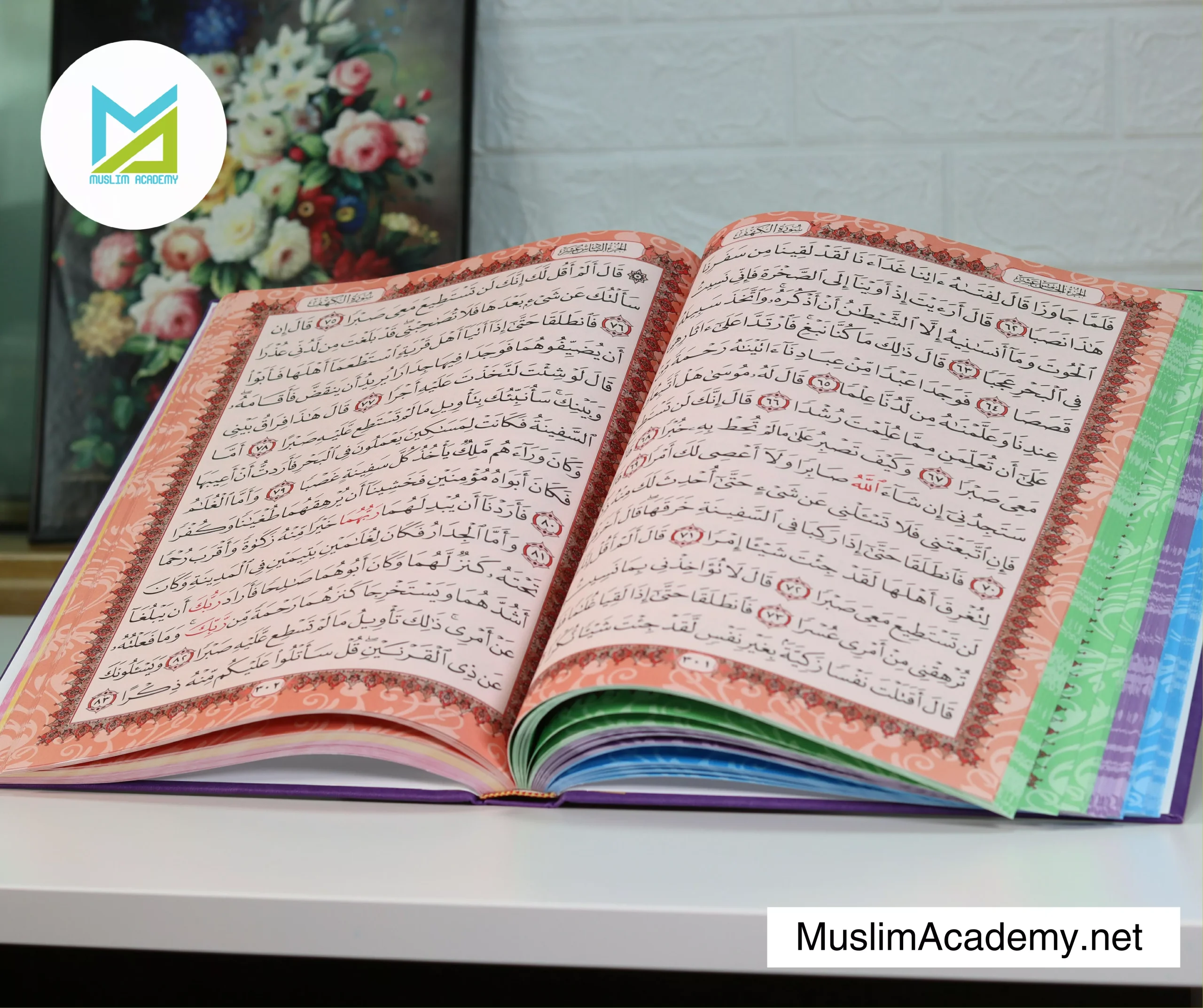
Before enrolling in an Arabic Language Course with Muslim Academy, prospective students benefit from understanding the fundamental characteristics that make Arabic a distinctive linguistic system. The most immediately noticeable feature is the Arabic writing system, which consists of 28 letters forming an alphabet written and read from right to left. The script itself is quite beautiful and aesthetically distinctive, with individual letters connecting in cursive fashion rather than remaining separate as in the Latin alphabet used by English.
The phonological system of Arabic includes sounds that do not exist in English, such as emphatic consonants, pharyngeal sounds, and the guttural “ayin” and “ghayn” sounds that perplex many English speakers initially. Mastering these sounds requires deliberate practice and ear training, which quality language instruction provides through exposure, modeling, and corrective feedback. The challenge of Arabic pronunciation should not discourage prospective learners; with consistent practice and proper instruction, learners of all ages develop proficiency in producing and distinguishing these sounds.
Arabic grammar operates on principles quite different from English. The language employs a root system where words derive from three-letter consonant roots that carry core meaning, with vowels and affixes added to modify and specify that meaning. This system allows for elegant expressiveness but requires learners to think about language construction differently than English speakers typically do. Additionally, Arabic distinguishes grammatical gender far more extensively than English does; every noun possesses gender, and adjectives, verbs, and other modifying words must agree with that gender. Numbers in Arabic also behave differently, with specific rules governing how nouns appear when preceded by numbers.
Modern Standard Arabic, the formal version used in media, literature, and official contexts across the Arab world, differs substantially from colloquial spoken varieties used in daily conversation. This distinction means that a comprehensive Arabic Language Course with Muslim Academy typically addresses both formal and informal registers, equipping learners to engage with Arabic in various contexts.
The Evolution of Arabic Language Education
Arabic language education has undergone a remarkable transformation over recent decades. Traditionally, Arabic instruction was limited to university-level programs and specialized language institutes, accessible primarily to those with substantial time and financial resources. The landscape has shifted dramatically with technological advancement and growing global demand. Today, prospective learners encounter unprecedented options for engaging with Arabic instruction, each with distinct characteristics, advantages, and limitations.
This democratization of access represents one of the most significant developments in language education generally. No longer must aspiring Arabic speakers travel to universities or expensive private schools to begin their studies. Instead, they can access instruction from their homes, at times fitting their schedules, often at costs dramatically lower than traditional options. Yet this expanded access brings new challenges, as learners must now navigate countless options to identify programs matching their specific needs, learning styles, and educational goals.
Selecting Your Ideal Arabic Language Course with Muslim Academy
Choosing the appropriate Arabic Language Course with Muslim Academy requires careful consideration of multiple factors. Your current proficiency level is the obvious starting point. Complete beginners need courses building from an absolute foundation, teaching the alphabet, basic pronunciation, and essential survival vocabulary before advancing to more complex grammatical structures. Those with some prior exposure can enter intermediate programs focusing on skill expansion and practical application. Advanced learners might pursue specialized courses targeting particular goals like business Arabic, classical Arabic literature, or advanced conversation.
Your ultimate learning objective significantly influences which course best serves your needs. If your primary goal is conversational ability for travel or social interaction, you want programs emphasizing speaking and listening comprehension through communicative methods that prioritize real-world dialogue scenarios. Professionals in business contexts benefit from courses focusing on professional Arabic, negotiation language, and industry-specific vocabulary. Students preparing for academic study need programs building strong reading and writing capabilities. Those interested in classical Arabic poetry or religious texts require instruction in formal classical forms. Heritage learners wishing to master a specific regional dialect need programs addressing that particular variety.
Your available time commitment represents another crucial practical consideration. Intensive courses compress significant instruction into shorter timeframes, often requiring three to four hours of daily study over weeks or months. These programs accelerate learning for those who can commit fully but demand substantial dedication. Extended courses spread over months or years demand less daily time but require greater patience and long-term consistency. Research on language acquisition suggests that regular practice matters more than total hours, making extended part-time study potentially more effective for those juggling other responsibilities.
Different Course Formats and Delivery Methods
The modern learner can choose from diverse formats for receiving Arabic instruction, each offering distinct advantages. Traditional university programs provide comprehensive curricula, qualified instructors, peer interaction, and recognized credentials. Community colleges and language institutes offer similar benefits, often at lower costs and with more flexible scheduling than four-year universities.
Online courses have revolutionized accessibility, allowing learners worldwide to access quality instruction regardless of geographic location. Interactive video lessons, virtual classroom discussions, and digital exercises create engaging learning experiences. However, online learning requires self-discipline and can reduce opportunities for face-to-face conversational practice unless the platform incorporates video conference components with native speakers.
Private tutoring offers highly personalized instruction tailored to individual learning pace and preferences. One-on-one work with experienced tutors allows rapid progress and immediate correction of errors, though costs typically exceed group instruction. Many learners combine private tutoring with group classes, using tutoring sessions to address specific challenges while groups provide broader instruction and social engagement.
Immersion programs in Arabic-speaking countries offer unparalleled advantages for serious learners. Living within an Arabic-speaking environment provides constant exposure to the language in authentic contexts, accelerates cultural understanding, and creates genuine communication urgency. Homestays with Arabic-speaking families provide informal language exposure, complementing formal classroom instruction. These intensive experiences, whether lasting several weeks or entire semesters, produce dramatic proficiency improvements for motivated learners.
Language exchange partnerships pair learners of different native languages for mutual practice. An English speaker learning Arabic works with an Arabic speaker learning English, each helping the other. This arrangement costs nothing but requires finding compatible partners and maintaining consistent contact.

Effective Learning Strategies and Study Practices
Success in any Arabic Language Course with Muslim Academy depends significantly on how learners engage with material beyond formal instruction. Consistency trumps intensity; daily thirty-minute study sessions produce better results than weekly three-hour sessions followed by days of inactivity. Language learning involves building neural pathways and establishing automatic recall, processes requiring regular reinforcement.
Active engagement with authentic Arabic materials accelerates learning remarkably. Consuming Arabic music, podcasts, films, and television shows exposes learners to natural language patterns, contemporary vocabulary, and cultural context. News websites, blogs, literature, and social media in Arabic provide reading material at varying difficulty levels. This immersion in authentic content prevents the artificial language limitations of textbooks alone.
Speaking practice deserves particular emphasis. Many learners delay speaking until achieving higher proficiency levels, fearing mistakes. In reality, early speaking practice, even if initially simple and error-prone, dramatically accelerates conversational ability development. Speaking to oneself, recording voice messages, practicing with language exchange partners, or participating in conversation meetups all develop speaking confidence and fluency.
Writing practice reinforces grammar understanding and develops written expression. Keeping a journal in Arabic, writing emails to pen pals, or participating in online Arabic writing communities provides meaningful writing contexts. The corrective feedback from native speakers helps learners recognize and correct persistent errors.
Cultural Integration in Language Learning
Effective Arabic language education extends beyond grammar and vocabulary
to include cultural understanding. Languages are cultural systems; acquiring
true proficiency requires grasping cultural contexts informing language use.
Understanding Arab hospitality traditions, communication styles, historical
references, and cultural values enables learners to communicate authentically
and respectfully. Quality courses incorporate cultural components, helping
learners understand not just what to say but why and when Arabic speakers say it.
Assessment and Progress Tracking
Formal proficiency assessments provide objective measures of advancement.
The ACTFL Proficiency Guidelines, used by the U.S. government and many
through Superior. Taking assessments periodically allows learners to document
improvement and identify areas needing additional focus. Some learners
pursue formal certifications through the Diplomatic Language Services test or
the Arabic proficiency test administered by the Defense Language Institute.
These recognized credentials demonstrate proficiency to employers and educational institutions.
Conclusion
Pursuing an Arabic Language Course with Muslim Academy represents a
significant but profoundly rewarding investment in personal and professional
development. Whether driven by career ambitions, cultural heritage, religious
interest, or intellectual curiosity, learners embarking on Arabic language
education discover a journey of continuous discovery and growth.
The modern educational landscape offers unprecedented options for pursuing
this goal through approaches matching virtually any learner’s circumstances,
preferences, and objectives. Success requires selecting an appropriate course,
maintaining consistent study practices, engaging authentically with the
language and culture, and remaining patient with the inevitable challenges
that arise when learning a linguistically complex language. For those willing to
commit to the journey, Arabic language proficiency opens doors to meaningful
personal connections, expanded professional opportunities, and a deeper
understanding of one of human civilization’s most significant cultural and
intellectual traditions. The investment of time and effort yields returns
extending far beyond the practical ability to communicate, enriching one’s
intellectual life and worldview in ways that continue throughout a lifetime.