Start Online Quran Classes with Muslim Academy
https://muslimacademy.net/index.php/free-trial/
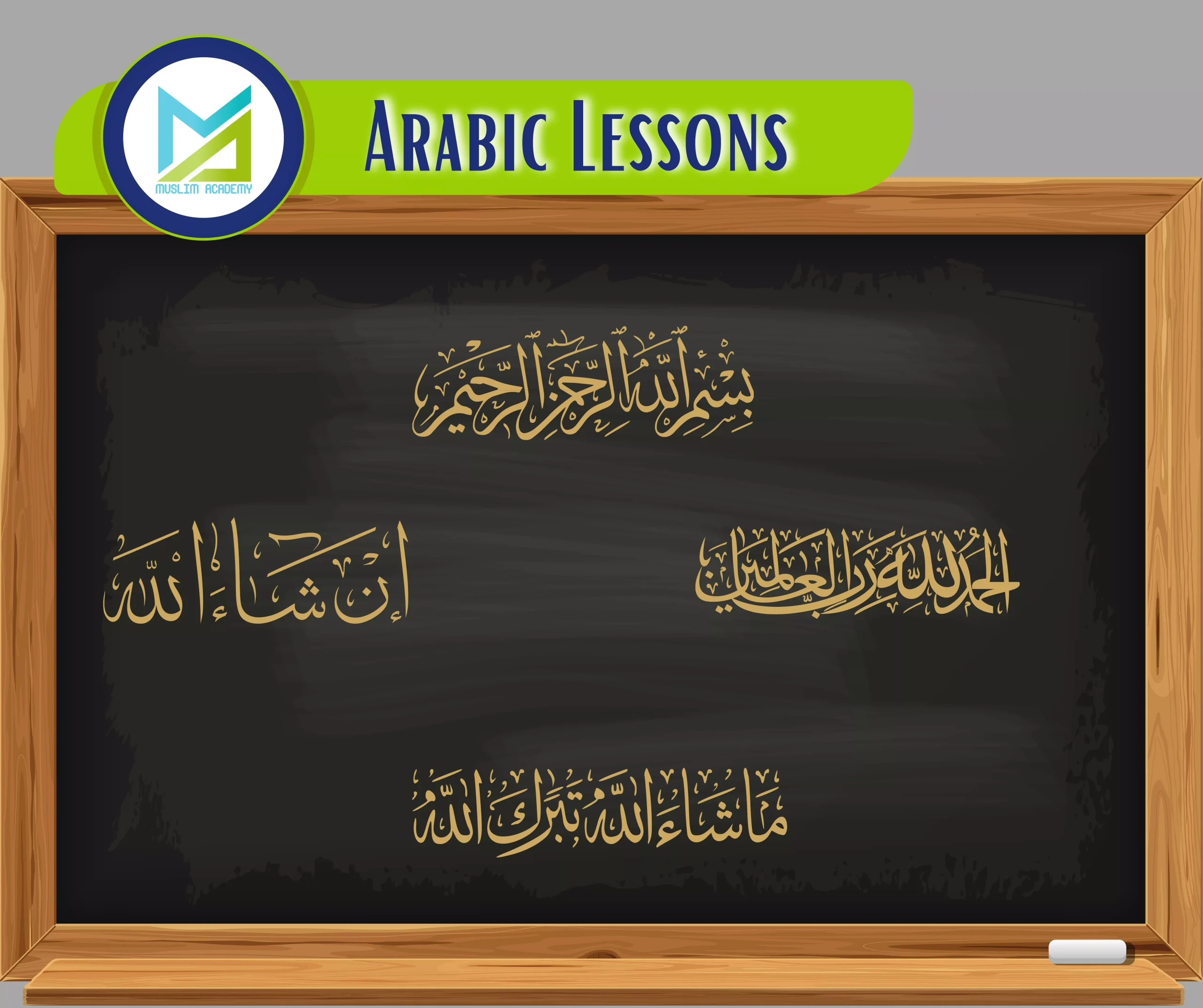
The decision to pursue Arabic Lessons with Muslim Academy opens doors to one of the world’s most historically significant and widely spoken languages, providing access to a rich cultural heritage, religious texts, and contemporary communication across vast geographical regions. Arabic ranks among the six official languages of the United Nations and serves as the native tongue for over 400 million people across the Middle East and North Africa, while also functioning as the liturgical language for nearly two billion Muslims worldwide who recite Quranic verses regardless of their native languages. This linguistic reach, combined with Arabic’s profound historical importance in science, philosophy, mathematics, and literature during Islamic civilization’s golden age, makes Arabic study remarkably valuable for diverse purposes ranging from religious understanding to professional advancement, academic research, and cross-cultural communication in our increasingly interconnected world.
The Historical Significance and Contemporary Relevance
Arabic possesses an extraordinary historical legacy that few languages can match. During Europe’s medieval period, Arabic functioned as the primary language of scientific and philosophical discourse, preserving and expanding upon Greek, Persian, and Indian knowledge while making original contributions that laid the foundations for modern mathematics, astronomy, medicine, and chemistry. Scholars writing in Arabic introduced the world to concepts including algebra—itself an Arabic word—refined astronomical observations, developed surgical instruments, and advanced philosophical thought in ways that profoundly influenced Western intellectual development when their works were eventually translated into Latin.
The language’s connection to Islam ensures its ongoing vitality and relevance, as the Quran’s status as divine revelation in Arabic creates perpetual demand for linguistic competency among Muslims seeking to understand their scripture in its original form. This religious dimension distinguishes Arabic from other classical languages whose contemporary usage might be limited to academic contexts, as Arabic remains a living language spoken daily by hundreds of millions while simultaneously serving as the sacred vehicle for divine guidance that Muslims have preserved with meticulous care for over fourteen centuries.
Contemporary geopolitical realities make Arabic increasingly valuable professionally. The Middle East’s strategic importance due to energy resources, its role in international security considerations, and the growing economic opportunities in rapidly developing Gulf nations create demand for Arabic speakers in fields including diplomacy, international business, journalism, intelligence analysis, and humanitarian work. Organizations serving Arabic-speaking populations require professionals who can communicate effectively with clients, understand cultural contexts, and navigate linguistic nuances that translation applications cannot adequately address.
Understanding Arabic’s Distinctive Features
The Arabic language possesses unique characteristics that learners should understand before beginning study, as these features shape learning strategies and set realistic expectations about the acquisition process. The writing system, flowing from right to left, initially disorients students accustomed to left-to-right directionality, though adaptation typically occurs relatively quickly with practice. More significantly, Arabic script connects letters within words, with individual characters changing shape depending on their position—initial, medial, final, or isolated—requiring learners to recognize and write each letter in multiple forms.
The root-pattern morphological system distinguishes Arabic fundamentally from Indo-European languages familiar to most Western learners. Arabic words typically derive from three-letter roots carrying core meanings, with prefixes, suffixes, and internal vowel changes creating related words sharing semantic connections. Understanding this system proves invaluable for vocabulary acquisition, as recognizing a root enables inference of numerous related words’ meanings without memorizing each term individually, dramatically multiplying learning efficiency.
Arabic’s rich consonant inventory includes sounds that don’t exist in English or most European languages, particularly emphatic consonants and various throat sounds articulated at different depths. These phonetic challenges require physical training of articulatory muscles and auditory discrimination development, as students must learn to produce and distinguish sounds that initially seem imperceptibly different to ears accustomed to different phonological systems.
The diglossia characterizing Arabic language use creates interesting dynamics for learners choosing between Modern Standard Arabic (MSA) used in formal writing, news media, and official contexts versus regional dialects spoken in daily conversation throughout the Arab world. These dialects differ substantially from MSA and from each other, sometimes to the point of mutual unintelligibility between distant regions like Morocco and Iraq. Most structured Arabic Lessons with Muslim Academy emphasize MSA as the foundational variety, given its universality across the Arab world and its similarity to classical Arabic used in historical texts and Quranic scripture.
Comprehensive Curriculum Components
Quality Arabic language programs integrate multiple skill areas that together build complete communicative competency. Reading and writing instruction teaches the script systematically, building recognition and production capabilities through graduated practice with increasingly complex texts. Beginning students typically start with alphabet mastery before progressing to simple words, then sentences, and eventually connected discourse in various genres.
Listening comprehension development through exposure to native speakers trains ears to parse rapid connected speech, recognize vocabulary in natural contexts, and understand meaning despite imperfect comprehension of every word. This skill proves essential for real-world communication where speakers won’t accommodate learners by simplifying language or speaking unnaturally slowly.
Speaking practice builds productive capabilities, enabling students to express ideas, engage in conversations, and communicate needs despite limited vocabulary or imperfect grammar. Overcoming reluctance to speak imperfectly represents significant psychological hurdles for many adult learners, making supportive environments that normalize mistakes as learning opportunities particularly important for speaking skill development.
Grammar instruction addressing Arabic’s distinctive syntactic and morphological features provides frameworks for understanding how the language operates systematically. While communicative approaches emphasize practical usage over theoretical knowledge, explicit grammar awareness accelerates comprehension development and enables self-correction as students recognize patterns underlying proper usage.
Vocabulary building through systematic high-frequency word study combined with thematic organization creates lexical foundations enabling meaningful communication. Research-based approaches that identify and prioritize the most common words in spoken and written Arabic enable efficient learning that maximizes practical return on study investment, as several thousand carefully selected terms account for vast majorities of everyday language use.
Diverse Learning Motivations and Goals
Students pursue Arabic Lessons with Muslim Academy for remarkably varied reasons, each requiring somewhat different emphases and approaches for optimal outcomes. Religious learners seeking Quranic understanding typically prioritize classical Arabic skills, including reading, vocabulary relevant to religious texts, and grammatical analysis enabling textual interpretation. These students may care less about conversational fluency in contemporary dialects, focusing instead on written comprehension and the ability to engage with Quranic commentary and classical Islamic literature.
Heritage learners who grew up hearing Arabic at home but lack formal literacy often possess strong listening comprehension and basic speaking abilities in their family dialect, while requiring reading and writing instruction plus expansion of vocabulary beyond domestic contexts. These students benefit from leveraging their existing oral foundations while systematically building literacy that enables access to the full richness of written Arabic.
Academic researchers in fields like history, religious studies, or Middle Eastern studies require reading comprehension sufficient for engaging with primary sources, scholarly literature, and archival materials. These students often prioritize reading skills above conversational fluency, though a comprehensive understanding of grammatical structures proves essential for accurate textual interpretation.
Professional learners seeking Arabic for career purposes, including business, diplomacy, or journalism, typically need well-rounded competency across all skill areas, enabling effective communication in diverse contexts. These students often benefit from specialized vocabulary related to their professional fields, supplementing general language foundations.
Travel enthusiasts preparing for visits to Arabic-speaking countries may emphasize practical conversational skills, survival vocabulary, and cultural knowledge enabling respectful interaction and basic navigation, rather than pursuing comprehensive mastery; they may not maintain it long-term.

Effective Learning Strategies and Methods
Success in Arabic study requires strategic approaches to maximize learning
efficiency while maintaining sustainable engagement over an extended time
periods that genuine proficiency requires. Consistent daily practice, even brief
fifteen-to-thirty-minute sessions, builds skills more effectively than infrequent ones
longer study periods, as regular exposure strengthens memory consolidation
while preventing the forgetting that occurs during extended gaps between study sessions.
Immersive experiences through media consumption, language exchange
partnerships, or ideally, travel to Arabic-speaking regions, dramatically
accelerate acquisition by providing authentic contextual exposure that
Classroom instruction alone cannot fully replicate. Watching Arabic television
programs, listening to Arabic music or podcasts, and reading materials written
for native speakers—starting with simpler content before progressing to
Complex texts—all contribute to developing an intuitive language feel that complements explicit instruction.
Spaced repetition systems for vocabulary learning optimize long-term retention
by presenting terms at scientifically determined intervals that maximize
memory consolidation while minimizing wasted review of already-solidly-
learned items. Digital flashcard applications incorporating these principles
proven particularly effective for building the extensive vocabulary knowledge that fluent communication requires.
Active production through speaking and writing practice, despite discomfort
Making mistakes proves essential for developing productive capabilities.
Students who only consume language passively through reading and listening
may understand quite well, but struggle to express themselves when
Communication situations demand active language use.
Technological Resources Enhancing Traditional Study
Modern learners benefit from numerous technological tools supplementing
traditional classroom instruction or enabling self-directed study. Language
learning applications provide structured lessons, interactive exercises,
immediate feedback, and progress tracking through gamified interfaces that
many students find engaging and convenient. While these applications work
best as supplements to comprehensive instruction rather than standalone
solutions, they offer valuable practice opportunities accessible during brief moments throughout busy days.
Online dictionaries and translation tools provide instant access to word
meanings, grammatical information, and usage examples, though learners
should use them judiciously rather than developing dependence that prevents
internalization of vocabulary and structures. These resources work best for
clarifying uncertainties during reading practice rather than substituting for systematic vocabulary study.
Video conferencing enables connection with native speaker tutors worldwide,
providing conversational practice and personalized instruction regardless of
students’ geographical locations. These one-on-one sessions offer flexibility and
individualized attention that group classes cannot always provide, though they
work most effectively when supplementing a structured curriculum rather than providing all instruction.
Cultural Knowledge Enriching Language Learning
Understanding Arab culture, history, and contemporary society enriches
language learning while providing essential context for appropriate
communication. Cultural knowledge affects everything from proper greeting
protocols and politeness conventions to understanding references embedded
in everyday language and interpreting non-verbal communication that
accompanies verbal expression.
The diversity within the Arab world means that cultural understanding must
encompass regional variations rather than assuming monolithic uniformity
across twenty-two Arabic-speaking countries with distinct histories, political
systems, and cultural practices. While Islamic heritage provides common
threads, significant diversity exists between and within nations regarding
customs, values, and social norms that language learners should appreciate.
Conclusion
Pursuing Arabic Lessons with Muslim Academy represents an investment
yielding rich returns across religious, professional, academic, and personal
dimensions. Whether motivated by spiritual aspirations to understand Islamic
texts, career objectives requiring Arabic proficiency, scholarly interests in
Middle Eastern civilization, or cultural curiosity about Arabic-speaking societies,
Students who commit to serious study discover that Arabic acquisition opens
doors to profound knowledge, meaningful relationships, and unique
opportunities that monolingual existence cannot access. The journey demands
patience, persistence, and strategic effort, but rewards dedicated learners with
linguistic capabilities that connect them to a remarkable cultural heritage,
enabling communication across vast regions where Arabic serves as a key to
understanding, engagement, and meaningful participation in one of the
world’s most significant linguistic and cultural communities.