Start Online Quran Classes with Muslim Academy
https://muslimacademy.net/index.php/free-trial/
Friday holds a special and sacred place in the Islamic week. Muslims across the entire world stop their daily activities, gather at mosques, and listen to a sermon that connects them to their faith, their community, and the living tradition of their Prophet. This weekly gathering is one of the most powerful and consistent practices in all of Islamic life. Understanding the Juma Khutba in English with Muslim Academy opens this experience to millions of Muslims who live and worship in English-speaking countries, helping them engage more deeply with one of Islam’s most important weekly rituals.
What Juma Actually Means
The word “Juma” comes directly from Arabic. It means “gathering” or “assembly,” and this meaning reveals the entire purpose of the occasion. Allah specifically designated Friday as a day of communal gathering for Muslims. The Quran dedicates an entire surah — Surah Al-Jumu’ah — to this day and its obligations. Within that surah, Allah commands believers to leave their trade and worldly affairs when the call to Friday prayer sounds and to hasten toward the remembrance of Allah.
This divine command elevates Friday above all other days of the week in Islamic tradition. The Prophet Muhammad described it as the best day on which the sun rises. He mentioned that Adam was created on Friday, that the Day of Judgment will occur on a Friday, and that it contains a special hour during which Allah answers every sincere supplication. Consequently, the Juma prayer and its accompanying sermon carry a weight and significance that no other weekly practice in Islam matches.
The Structure of the Khutba
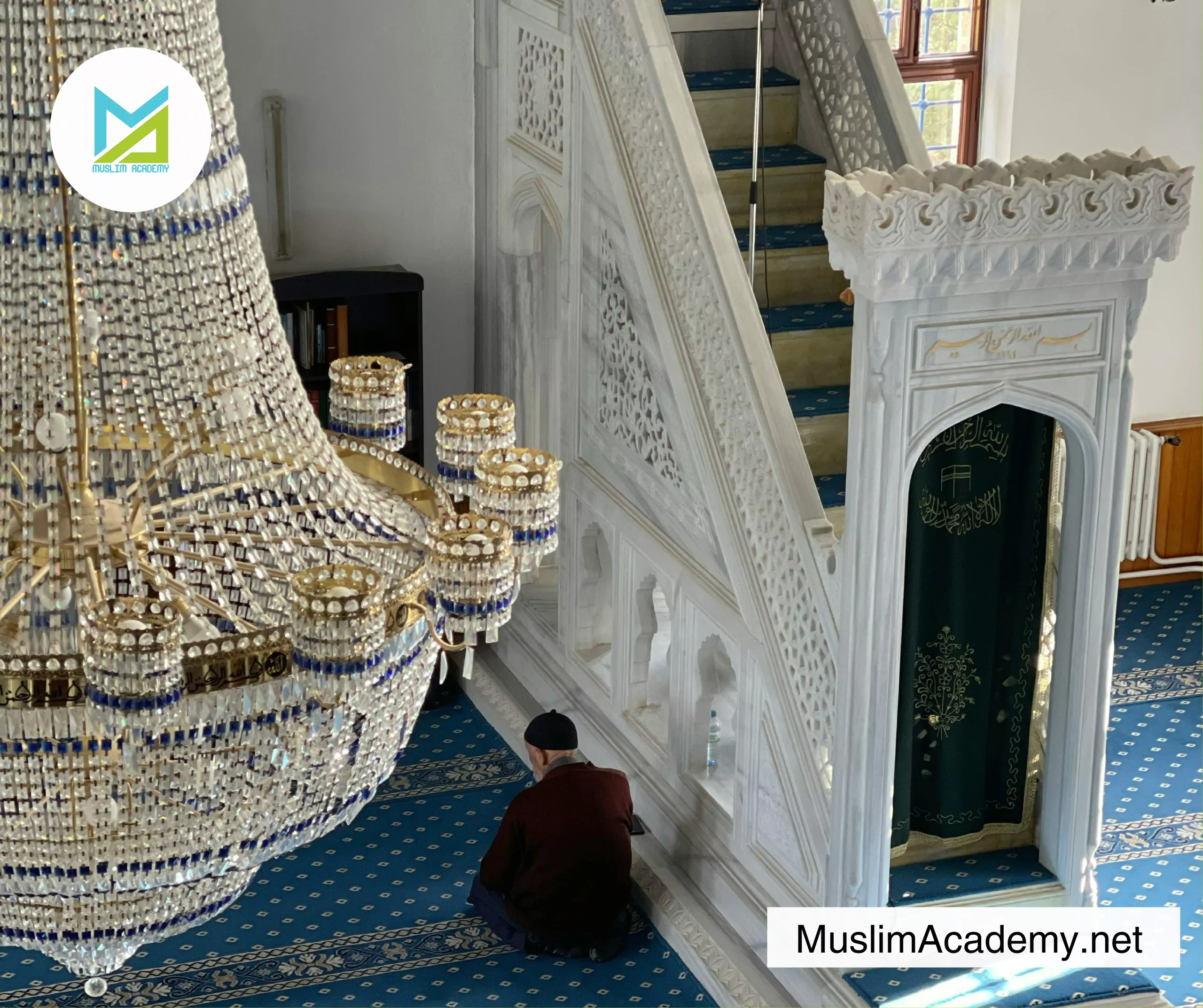
The Khutba, or sermon, follows a specific and established structure that Islamic scholars have preserved across many centuries. Every Khutba consists of two distinct parts. The imam delivers the first part while standing. This section opens with praise of Allah, blessings upon the Prophet, and a direct address to the congregation. The imam then develops the main theme of the sermon, drawing on Quranic verses, Prophetic traditions, and relevant contemporary applications.
After completing the first part, the imam sits briefly in silence. This short pause carries deep significance. It marks a transition between two connected but distinct portions of the sermon. Subsequently, the imam stands again and delivers the second part. This section typically includes supplications for the Muslim community, prayers for the deceased, and a closing reminder. Following both parts of the Khutba, the congregation performs two units of congregational prayer together. This prayer replaces the standard four-unit Dhuhr prayer for that day.
Furthermore, specific conditions govern the validity of the Khutba. The imam must be in a state of ritual purity. The sermon must take place after the sun passes its midpoint. The congregation must reach a minimum number. Additionally, the sermon must include praise of Allah, blessings upon the Prophet, and at least one Quranic verse. These established conditions reflect the seriousness with which Islamic scholarship has always treated this weekly institution.
Why Language Matters in the Khutba
For centuries, Arabic served as the primary language of Khutba delivery across the Muslim world. This practice connected Muslims globally through a shared liturgical language and honored the language of the Quran and the Prophet. However, as Islam spread to non-Arabic speaking regions, a genuine and important question emerged. Should the sermon remain entirely in Arabic, even when the congregation understands nothing of what they hear? Or should at least part of the sermon address worshippers in their own language?
Scholars across different schools of jurisprudence have debated this question thoughtfully for centuries. Most contemporary scholars and Islamic institutions agree on a practical approach. The obligatory elements of the Khutba — the specific Arabic phrases, Quranic verses, and traditional supplications — remain in Arabic. However, the substantive teaching portion that develops the sermon’s main theme can and should reach the congregation in a language they genuinely understand. This balance honors both the sacred tradition of Arabic and the genuine pastoral responsibility of every imam to truly serve his congregation.
The Growing Importance of Juma Khutba In English with Muslim Academy
Muslim communities in the United States, United Kingdom, Canada, Australia, and other English-speaking countries have grown enormously over recent decades. Millions of Muslims in these countries were born and educated in English. Arabic is not their first language. Many of them struggle to extract meaning from a Khutba delivered entirely in Arabic. They sit through the sermon politely but leave without any intellectual or spiritual nourishment from the words they heard.
This situation creates a serious pastoral problem. The Khutba exists specifically to educate, inspire, remind, and guide the Muslim community. A sermon that the congregation cannot understand fulfills its technical religious requirements while completely failing its human purpose. Consequently, delivering a Juma Khutba in English with Muslim Academy has moved from a minority practice to a widespread and genuinely necessary approach in Western Muslim communities.
Imams who deliver their sermons in English report dramatically increased engagement from their congregations. Young people who previously sat through Arabic Khutbas with glazed expressions now listen attentively. Questions and discussions emerge after the prayer. Community members carry the sermon’s message into their week and apply it to their real situations. This transformation in congregational engagement demonstrates clearly that language accessibility does not diminish the Khutba’s sacred character. Rather, it restores its original purpose of genuine community guidance.
Topics That an Effective Khutba Should Address
The best Friday sermons connect timeless Islamic principles to the specific circumstances their congregation actually faces. An effective imam does not simply recite classical texts that audiences could read independently. Instead, they build a thoughtful bridge between revealed guidance and contemporary life. This bridge-building requires both deep religious knowledge and genuine awareness of what the community is experiencing.
Foundational theological topics such as the nature of faith, gratitude, reliance on Allah, and preparation for the afterlife represent perennial Khutba themes. These subjects never lose their relevance because they address the permanent dimensions of human spiritual life. Every congregation benefits from regular reminders about these essentials, regardless of their level of religious knowledge or their specific current circumstances.
Contemporary social and ethical issues also deserve serious Khutba attention. Muslim communities face real challenges around family relationships, financial pressures, educational choices, mental health struggles, and civic responsibilities. An imam who addresses these challenges directly — drawing on Quranic principles and Prophetic guidance — provides exactly the kind of practical spiritual leadership that every congregation needs. Additionally, addressing community-specific concerns demonstrates that the imam genuinely knows and cares about the people they serve.
Seasonal and contextual themes add another valuable dimension to the Khutba calendar. Ramadan, Dhul Hijjah, the anniversary of the Prophet’s birth, and significant world events all provide natural opportunities for focused and timely guidance. An imam who plans their Khutba themes carefully across the year ensures that the congregation receives well-rounded and comprehensively relevant religious education through their weekly Friday attendance.

Qualities of an Excellent Khutba
Delivering an excellent Khutba requires several distinct skills working together simultaneously. First and most fundamentally, the imam must possess solid and accurate Islamic knowledge. Every claim they make should rest on authentic Quranic verses or verified Prophetic traditions. Congregations trust their imam deeply. That trust demands rigorous intellectual honesty and consistent accuracy.
Clarity of expression ranks equally with religious knowledge in practical importance. An imam who possesses vast knowledge but cannot communicate it clearly leaves their congregation confused rather than enlightened. Effective communication in the Khutba means using straightforward language, concrete examples, and memorable illustrations. It means structuring the sermon with a clear beginning that identifies the theme, a middle that develops its meaning, and a conclusion that ties everything together into a practical takeaway.
An authentic emotional connection distinguishes a truly moving Khutba from a merely competent one. When an imam speaks from genuine conviction, when they clearly love and care for their congregation, and when their own heart is present in the words they deliver, the effect on listeners is powerful and lasting. Conversely, a technically perfect sermon delivered without genuine feeling rarely touches hearts or changes lives.
Preparing and Delivering the Khutba
Thorough preparation separates consistently excellent Khutbas from inconsistent ones. Imams who research their topics deeply, gather authentic source material, structure their thoughts carefully, and practice their delivery produce sermons of far higher quality than those who improvise or recycle old material without fresh engagement. Even experienced imams who possess years of speaking practice benefit enormously from dedicated weekly preparation.
Reading widely helps imams develop both their religious knowledge and their ability to connect with their congregation’s contemporary experiences. Staying informed about community concerns, current events, and relevant research allows them to choose timely topics and use relevant examples. Furthermore, seeking feedback from trusted community members helps imams identify their blind spots and continuously improve their effectiveness.
Conclusion
The Friday sermon represents one of Islam’s most powerful weekly institutions. It brings communities together, transmits essential knowledge, provides spiritual nourishment, and connects every Muslim to a tradition that stretches back directly to the Prophet himself. Delivering a meaningful Juma Khutba In English with Muslim Academy ensures that this powerful institution fulfills its genuine purpose for the millions of Muslims whose hearts and minds most naturally receive guidance in the English language.
Every Muslim community deserves an imam who prepares thoroughly, speaks clearly, draws on authentic sources, and addresses the real challenges their congregation faces. Every congregation deserves to leave Friday prayer carrying something meaningful — a verse that spoke to them, a principle they can apply, or simply a renewed sense of connection to their Creator and their community. That weekly renewal, multiplied across thousands of mosques and millions of hearts, represents the full and living power of the Friday sermon done well.