Start Online Quran Classes with Muslim Academy
https://muslimacademy.net/index.php/free-trial/
The Letters in the Quran with Muslim Academy represent the fundamental building blocks through which Allah’s eternal message has been preserved and transmitted to humanity for over fourteen centuries. These Arabic characters constitute far more than mere alphabetic symbols—they embody the precise phonetic, visual, and spiritual means through which divine guidance reaches believers. Understanding these letters encompasses multiple dimensions, including their distinctive pronunciation features, their variable written forms, their mysterious appearances as disconnected combinations at chapter openings, and their role in preserving textual integrity across generations. For students beginning their Quranic journey, mastering these letters represents the essential first step, while for advanced scholars, contemplating their deeper significance continues to reveal layers of wisdom embedded within scripture’s very structure.
The Arabic Alphabet Structure
The Arabic alphabet consists of twenty-eight consonantal letters, each possessing unique characteristics that determine its pronunciation and function within the linguistic system. Unlike English’s twenty-six letters representing both vowels and consonants explicitly, Arabic’s writing system primarily records consonantal sounds, with short vowels indicated through diacritical marks appearing above or below letters rather than as separate characters.
Each letter carries distinct phonetic properties that students must master for proper Quranic recitation. Several Arabic sounds have no direct equivalents in English or most European languages, requiring learners to develop entirely new articulatory capabilities. The emphatic consonants, various throat letters articulated at different depths, and subtle distinctions between similar sounds all challenge non-native speakers who must train both their vocal apparatus and auditory discrimination systems to produce and recognize these unfamiliar phonemes accurately.
Visual Forms and Positional Variations
One distinctive feature of Letters in the Quran with Muslim Academy is their variable appearance depending on word position. Most letters possess four different forms—isolated, initial, medial, and final—that students must recognize and write correctly. This positional variation stems from the Arabic script’s cursive nature, where letters connect within words rather than standing separately as in printed English text.
For example, the letter ‘ayn appears as ع when isolated, ع when beginning a word, ـعـ when occurring mid-word, and ـع when ending a word. This multiplicity of forms initially challenges learners accustomed to alphabets using consistent letter shapes regardless of position, effectively quadrupling the visual recognition demands compared to non-connecting writing systems.
The right-to-left directionality of Arabic script represents another adjustment for students from left-to-right writing traditions. This reversed flow affects not only individual word reading but entire page layout, with Quranic manuscripts opening from what English readers would consider the “back” and progressing toward what seems the “front.”
Diacritical Marks and Pronunciation Guides
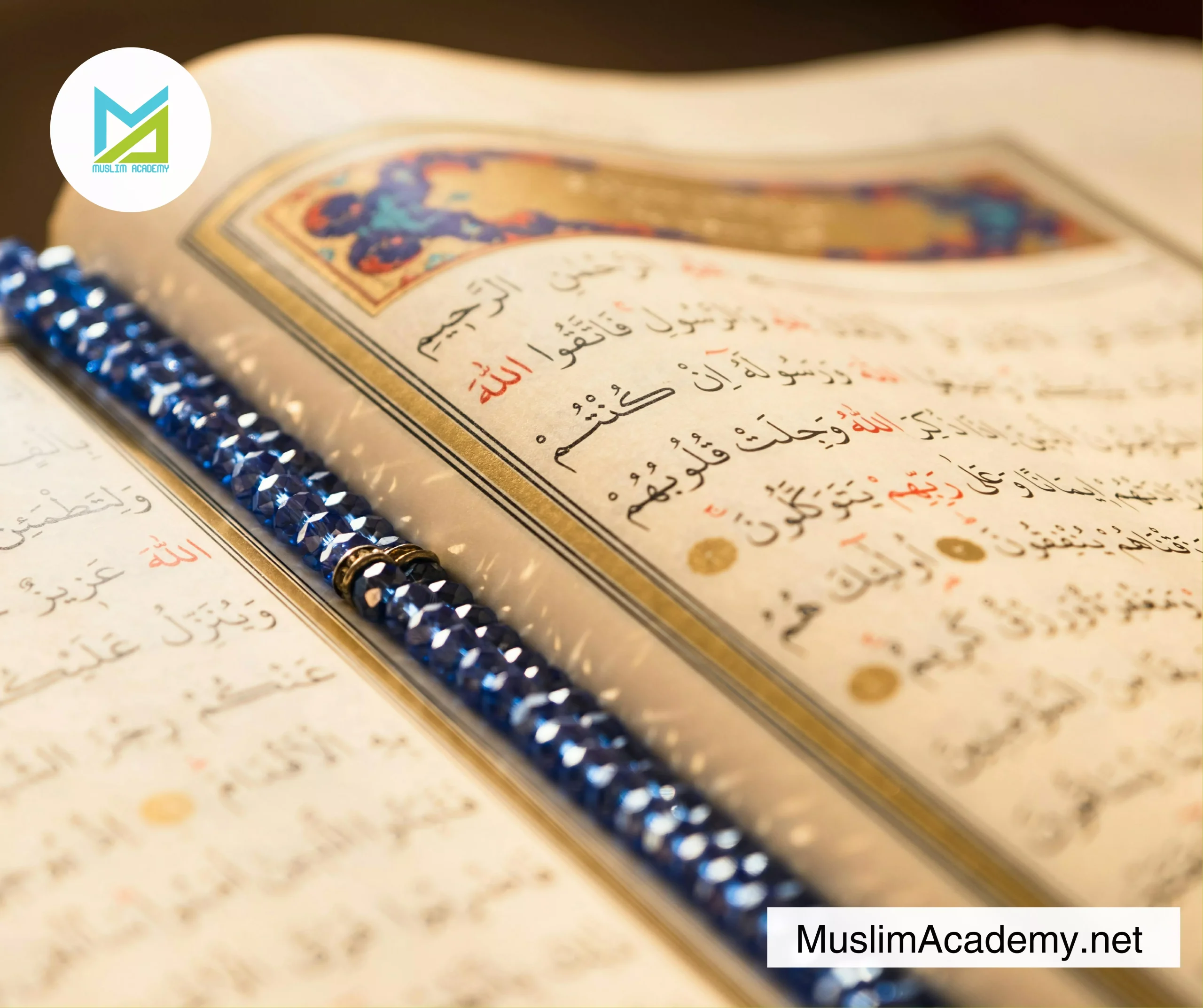
Beyond the letters themselves, a sophisticated system of diacritical marks provides essential pronunciation information. The three primary short vowel marks—fatḥah (ـَ) indicating “a” sound, kasrah (ـِ) showing “i” sound, and ḍammah (ـُ) representing “u” sound—appear as small symbols above or below letters, guiding proper vocalization without constituting separate alphabetic characters.
The sukūn mark (ـْ) indicates the absence of a vowel, while shaddah (ـّ) signals letter doubling. Additional symbols, including tanwīn marks creating “-an,” “-in,” or “-un” sounds, and the maddah sign indicating elongation, all contribute to the comprehensive pronunciation guidance that enables accurate Quranic recitation, matching how revelation was originally received.
The Enigmatic Disconnected Letters
Perhaps the most mysterious aspect of Letters in the Quran with Muslim Academy involves the muqaṭṭaʿāt—the isolated letter combinations appearing at the beginning of twenty-nine chapters. These cryptic openings, including “Alif Lām Mīm” (الم), “Yā Sīn” (يس), “Ṭā Hā” (طه), and others, have intrigued scholars throughout Islamic history, generating diverse interpretations about their meanings and purposes.
Divine Secrets Beyond Human Comprehension
One major interpretive tradition regards these letters as divine mysteries whose meanings Allah has reserved for Himself, deliberately including content that exceeds human understanding capacity. This view emphasizes epistemic humility, reminding believers that complete comprehension of divine wisdom transcends human intellectual abilities regardless of scholarly sophistication.
Rhetorical and Literary Functions
Alternative interpretations propose practical purposes for these mysterious openings. Some scholars suggest they functioned as attention-getting devices in oral culture, signaling transitions from ordinary speech to divine revelation. The unusual combinations would immediately capture listeners’ attention, marking subsequent content as sacred discourse rather than human conversation.
Literary analysts note that these letters create distinctive sonic signatures for different chapters, contributing to the Quranic discourse’s overall aesthetic beauty while aiding memorization through their rhythmic recitation.
Numerical and Symbolic Dimensions
The abjad system traditionally assigned numerical values to Arabic letters, inspiring interpretations exploring potential mathematical patterns or symbolic meanings encoded in these mysterious combinations. Some researchers have identified intriguing statistical distributions of these letters throughout chapters where they appear, though debates continue about whether such patterns reflect intentional divine design or inevitable mathematical properties.
Pedagogical Approaches to Mastery
Teaching proper recognition and pronunciation of Quranic letters constitutes the foundation of Islamic education worldwide. Effective instructional programs employ systematic sequencing, often beginning with visually similar letters grouped before introducing more complex forms. This approach helps students recognize patterns while building visual literacy incrementally.
Multi-Sensory Learning Methods
Comprehensive letter instruction engages multiple learning modalities simultaneously. Visual aids, including letter charts showing all positional forms, writing practice sheets guiding proper stroke order, and color-coded texts highlighting pronunciation features, support visual learners. Audio resources featuring native speakers pronouncing letters individually and within words train auditory discrimination while providing models for imitation. Kinesthetic activities, including air-writing, tactile letter tracing, and articulation exercises, engage physical learning channels.
Progressive Skill Development
Letter mastery develops through a carefully structured progression. Students typically begin with isolated letter recognition before advancing to letters within words, then progress from individual word reading to connected text. Pronunciation training follows a similar gradation, starting with letters in isolation, advancing to simple syllables, then complete words, and eventually fluent passage recitation, applying all learned rules simultaneously.
Technology-Enhanced Learning
Contemporary students benefit from digital resources supplementing traditional instruction. Interactive applications provide instant feedback on letter recognition, gamified exercises make practice engaging, and voice recognition technology offers a preliminary pronunciation assessment. While not replacing expert human instruction, these tools enable unlimited practice opportunities, accelerating skill development.
Spiritual Significance of Letter Engagement
Beyond their utilitarian function, enabling textual access, the Letters In Quran with Muslim Academy carry profound spiritual significance for Muslims. The act of carefully forming letters during Quran copying represents meditative devotion, as calligraphers throughout Islamic history have considered beautiful script a form of worship honoring divine words through artistic excellence.
Calligraphic Art and Devotional Practice
Islamic calligraphy has developed into a sophisticated art form where scribes perfect letter formation, proportion, and aesthetic harmony. This artistic tradition reflects the belief that Allah’s words deserve the most beautiful presentation that human hands can create, transforming letter writing into a devotional practice in which technical skill serves spiritual purposes.
Contemplative Recitation
Slowly pronouncing each letter during deliberate recitation creates mindfulness connecting reciters intimately with revelation’s phonetic texture. This practice, sometimes called tartīl, emphasizes measured delivery, in which every sound receives proper attention, fostering contemplation of meanings while honoring proper pronunciation requirements.
Conclusion
The letters forming the Quranic text represent sacred foundations deserving careful study and reverent engagement. From their essential role in proper pronunciation to their mysterious appearances as cryptic chapter openings, from their visual beauty inspiring calligraphic artistry to their spiritual significance as vessels of divine revelation, these fundamental components merit the devoted attention that Muslims have given them throughout fourteen centuries of Islamic scholarship, recognizing that even scripture’s smallest elements contain wisdom worthy of lifelong contemplation and study.