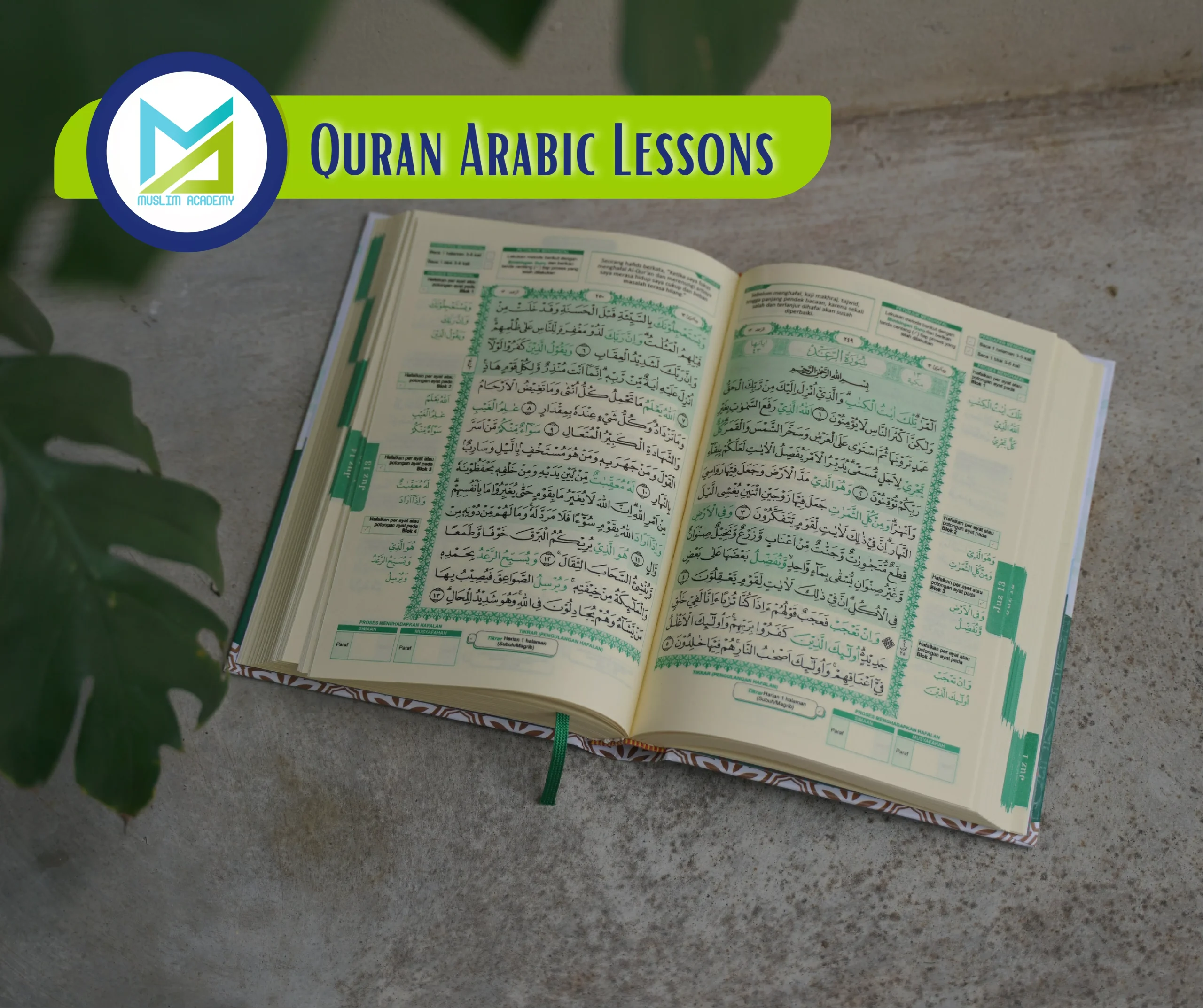
Start Online Quran Classes with Muslim Academy
https://muslimacademy.net/index.php/free-trial/
The pursuit of understanding the Holy Quran in its original Arabic form represents one of the most profound educational journeys available to Muslims worldwide. Specialized Quran Arabic Lessons with Muslim Academy have emerged as essential educational programs that bridge the gap between modern learning needs and the timeless wisdom contained within the sacred text. These comprehensive courses go beyond conventional Arabic language instruction to focus specifically on the linguistic elements, grammatical structures, and vocabulary patterns that are fundamental to Quranic comprehension. Through systematic study and dedicated practice, students develop the linguistic competency necessary to engage directly with the divine revelation in its pristine, original form.
The Sacred Linguistic Heritage of Quranic Arabic
Classical Arabic, as preserved within the pages of the Holy Quran, represents a linguistic treasure that has remained unchanged for over fourteen centuries. Unlike contemporary spoken Arabic dialects that vary significantly across different regions, Quranic Arabic maintains a standardized form that transcends geographical and temporal boundaries. Specialized Quran Arabic Lessons with Muslim Academy recognize this unique characteristic and structure their curriculum to address the specific linguistic features that distinguish sacred Arabic from modern conversational forms.
The vocabulary of the Quran encompasses approximately 1,800 unique root words, from which thousands of derivatives and variations emerge throughout the text. This relatively manageable lexicon makes Quranic Arabic more accessible than might initially appear, particularly when approached through systematic educational programs. Effective Quran Arabic Lessons with Muslim Academy capitalize on this linguistic efficiency by organizing vocabulary instruction around the most frequently occurring roots and their various morphological patterns.
The grammatical structures within the Quran, while sophisticated, follow consistent patterns that can be mastered through dedicated study and practice. These patterns include specific uses of verb forms, noun declensions, particle functions, and syntactical arrangements that create the text’s renowned eloquence and precision. Understanding these linguistic elements enables students to appreciate not only the literal meanings but also the subtle nuances, rhetorical devices, and theological implications embedded within the sacred text.
Progressive Curriculum Design and Learning Methodology
Well-structured Quran Arabic Lessons with Muslim Academy typically follow a carefully designed progression that builds foundational skills systematically before advancing to more complex linguistic analysis. The initial phase usually focuses on Arabic script recognition and pronunciation, ensuring students can accurately read and articulate the letters in their various positional forms. This foundational skill is crucial because proper pronunciation affects meaning and comprehension in Arabic.
Elementary levels of Quran Arabic Lessons with Muslim Academy introduce basic grammatical concepts, including word types (nouns, verbs, particles), fundamental sentence structures, and essential vocabulary drawn from commonly occurring Quranic terms. Students learn to identify different word forms and understand their grammatical functions within sentences. This stage often incorporates simple verses and phrases from the Quran to provide immediate practical application of newly acquired linguistic skills.
Intermediate instruction delves deeper into Arabic morphology, teaching students to recognize root patterns, derivational systems, and the sophisticated ways Arabic words are constructed and modified. Students learn about the trilateral root system that forms the backbone of Arabic vocabulary, enabling them to understand unfamiliar words by recognizing familiar root patterns and morphological templates.
Advanced Quran Arabic Lessons with Muslim Academy explore complex grammatical phenomena, including advanced syntax, rhetorical structures, and stylistic features that contribute to the Quran’s literary excellence. Students analyze complete verses and passages, applying their cumulative knowledge to understand both explicit meanings and implicit nuances that emerge through careful linguistic analysis.
Specialized Vocabulary Development and Root System Mastery
One of the most distinctive features of effective Quran Arabic Lessons with Muslim Academy is their systematic approach to vocabulary acquisition through root system mastery. Rather than memorizing isolated words, students learn to recognize and work with the trilateral and quadrilateral root patterns that generate families of related terms. This approach significantly accelerates vocabulary development while providing a deeper understanding of semantic relationships within the text.
The frequency-based vocabulary instruction employed in quality Quran Arabic Lessons with Muslim Academy ensures that students encounter and master the most commonly occurring terms first, enabling them to understand substantial portions of the Quranic text relatively quickly. Statistical analysis of Quranic vocabulary reveals that mastery of approximately 300 root words enables comprehension of roughly 70% of the text, making this systematic approach highly efficient for practical understanding.
Contextual vocabulary instruction helps students understand how word meanings can shift or expand based on grammatical context, surrounding words, and thematic considerations. This nuanced approach to vocabulary development prepares students to engage with the rich semantic layers that characterize Quranic language and contribute to its interpretive depth.
Etymology and historical linguistics components within comprehensive Quran Arabic Lessons with Muslim Academy provide students with insights into how Arabic words have evolved and how Quranic usage sometimes preserves archaic or specialized meanings that differ from contemporary usage. This historical perspective enhances appreciation for the text’s linguistic precision and cultural significance.
Interactive Learning Methods and Practical Application
Modern Quran Arabic Lessons with Muslim Academy incorporate diverse interactive methods that engage different learning styles and maintain student motivation throughout the challenging process of language acquisition. Visual learning aids include morphological charts, grammatical trees, and color-coded text analysis that help students recognize patterns and relationships within the linguistic structure.
Practical parsing exercises form a cornerstone of effective instruction, where students analyze actual Quranic verses by identifying each word’s grammatical function, morphological form, and semantic contribution to the overall meaning. These exercises develop the analytical skills necessary for independent Quranic study and interpretation.
Comparative analysis activities help students understand how different grammatical choices affect meaning and emphasis within the text. By examining alternative constructions and their implications, students develop an appreciation for the precise linguistic choices that contribute to the Quran’s eloquence and theological precision.
Translation exercises, both from Arabic to the student’s native language and vice versa, reinforce grammatical understanding while developing practical comprehension skills. These activities help students move beyond mechanical parsing to achieve genuine linguistic comprehension that enables meaningful engagement with the sacred text.
Technology Integration and Digital Learning Tools
Contemporary Quran Arabic Lessons with Muslim Academy leverage sophisticated technological tools that enhance the learning experience and provide additional practice opportunities outside of formal instruction time. Digital morphological analyzers allow students to examine word structures in detail, while searchable Quranic databases enable exploration of how specific terms and constructions appear throughout the entire text.
Interactive software applications often accompany structured programs,
providing students with additional exercises, progress tracking, and self-assessment tools
that support independent study and reinforcement of classroom learning.
These applications may include pronunciation guides,
morphological practice drills, and vocabulary-building games that make the learning process more engaging and effective.
Online forums and discussion platforms connected to Quran Arabic Lessons
with Muslim Academy programs enable students to ask questions,
share insights, and collaborate on challenging passages or grammatical concepts.
This community aspect helps maintain motivation and provides peer support throughout
The demanding process of Arabic language acquisition.
Mobile applications extending the classroom experience enable students to continue their studies during commutes,
breaks, or while traveling, maximizing learning opportunities and maintaining consistent progress toward linguistic competency goals.
Cultural and Spiritual Integration
Quality Quran Arabic Lessons with Muslim Academy are recognized
that language learning occurs within cultural and spiritual contexts
that enhance motivation and deepen understanding.
These programs typically incorporate discussions of
how linguistic analysis enhances spiritual appreciation and devotional practice,
helping students understand the connection between grammatical mastery and enhanced worship experience.
Historical and cultural background information provides context for understanding
how certain expressions, metaphors, and linguistic choices would
have been understood by the original audience, enriching contemporary comprehension and interpretation.
This cultural dimension helps students appreciate the text’s literary and rhetorical sophistication within its historical context.
The integration of Islamic scholarship traditions within Quran Arabic Lessons
with Muslim Academy connects linguistic study with the broader heritage of Quranic interpretation and Islamic learning.
Students learn how classical scholars approached linguistic analysis and how
their insights continue to inform contemporary understanding of the sacred text.
Spiritual reflection components encourage students to consider how
Their growing linguistic competency enhances their relationship
with the Quran and deepens their appreciation for its divine origins and continuing relevance to contemporary Muslim life.
Assessment Methods and Progress Evaluation
Comprehensive assessment systems within effective Quran Arabic Lessons
with Muslim Academy programs evaluate student progress across multiple dimensions of linguistic competency.
Regular testing of vocabulary recognition, grammatical analysis skills, and reading comprehension ensures
that students are mastering essential concepts before advancing to more complex material.
Practical assessment through verse analysis demonstrates students’ ability to apply
their linguistic knowledge to actual Quranic passages, moving beyond theoretical understanding to practical comprehension skills.
These assessments often require students to parse complete verses,
identify grammatical relationships, and explain how linguistic choices contribute to meaning and emphasis.
Portfolio-based assessment approaches allow students to demonstrate
their growing competency through accumulated work samples,
reflection essays, and progressive analysis of increasingly complex textual passages.
This comprehensive approach provides evidence of development over time while encouraging continued engagement with challenging material.
Self-assessment tools integrated into modern Quran Arabic Lessons
with Muslim Academy programs help students monitor
their progress and identify areas requiring additional attention or practice. These tools promote learner autonomy
while providing valuable feedback that informs instructional adjustments and personalized learning plans.
Global Accessibility and Cross-Cultural Adaptation
The international appeal of the Quran Arabic Lessons with Muslim Academy
has led to sophisticated approaches for serving students from diverse linguistic and cultural backgrounds. Instructional
Methods are often adapted to account for students’ native language influences on Arabic learning, addressing specific
pronunciation challenges, grammatical interference patterns, and cultural learning preferences.
Comparative linguistics approaches help students understand Arabic structures
by relating them to familiar grammatical concepts from their native languages
when appropriate, while clearly distinguishing the unique characteristics of Arabic
that must be mastered for accurate Quranic comprehension.
Cultural sensitivity training for instructors ensures that the Quran Arabic Lessons
With Muslim Academy can effectively serve students from different Islamic traditions and cultural contexts
while maintaining universal standards for linguistic accuracy and comprehension.
This approach recognizes the global nature of Islamic education
while respecting local variations in educational preferences and cultural practices.
Future Developments and Educational Innovation
The field of Quran Arabic Lessons with Muslim Academy continues to evolve
With advancing educational technology and pedagogical research.
Artificial intelligence applications may provide increasingly sophisticated personalized learning experiences,
automatic error detection and correction, and intelligent tutoring systems that adapt to individual student needs and learning patterns.
Virtual reality technologies hold potential for creating immersive Arabic learning environments that could simulate historical contexts,
provide three-dimensional visualization of grammatical concepts, or enable virtual interaction
with Arabic linguistic environments that enhance the learning experience.
Enhanced corpus linguistics tools may enable more sophisticated analysis of Quranic language patterns,
providing instructors and advanced students with deeper insights into linguistic structures and their theological implications.
Conclusion
Quran Arabic Lessons with Muslim Academy represent a specialized educational discipline
that successfully combines rigorous linguistic instruction with spiritual purpose and cultural appreciation.
These programs provide Muslims worldwide with the tools necessary to engage directly
with their sacred text in its original language, fostering deeper understanding,
enhanced devotional practice, and a stronger connection to Islamic heritage.
The success of well-designed Quran Arabic Lessons with Muslim Academy demonstrates
how specialized language instruction can serve both academic and spiritual goals,
creating educational experiences that are intellectually rigorous
while remaining personally meaningful and spiritually enriching.
As these programs continue to evolve and expand their global reach
They will play an increasingly important role in preserving and transmitting the linguistic heritage of Islamic civilization.
Through continued innovation in curriculum design,
Teaching methodology and technological integration,
Quran Arabic Lessons with Muslim Academy are establishing new
standards for religious language education that honor traditional scholarship
while embracing contemporary educational best practices and global accessibility requirements.