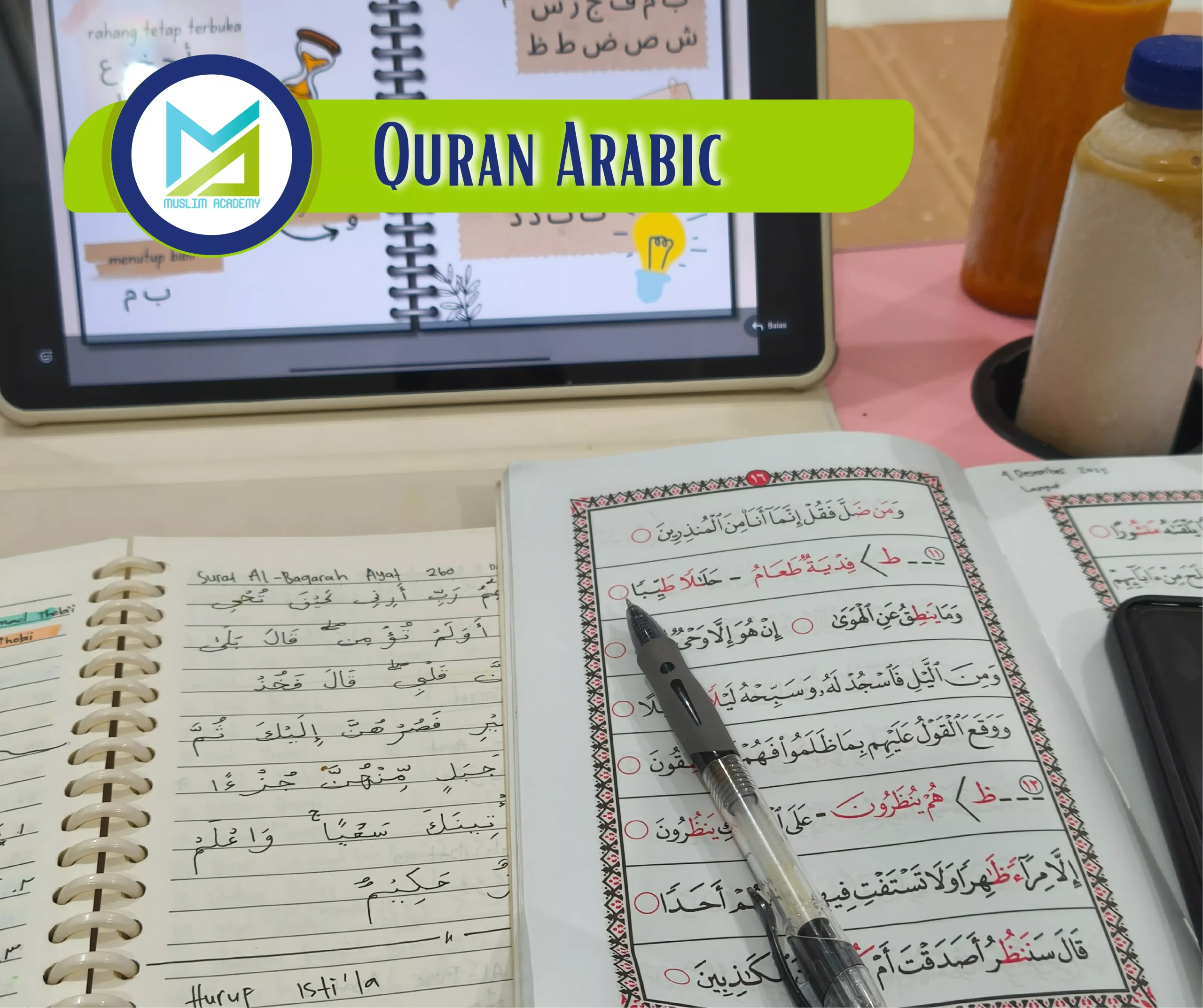
Start Online Quran Classes with Muslim Academy
https://muslimacademy.net/index.php/free-trial/
Language is never just a tool for communication. At its deepest level, language shapes thought, carries culture, and transmits meaning across generations. For the world’s over one billion Muslims, one language holds a place above all others — not because of its speakers, its literature, or its history alone, but because of what Allah chose to reveal through it. Quran Arabic with Muslim Academy is the specific form of Arabic in which the Quran descended, and understanding it opens a doorway into the scripture’s meaning, its power, and its extraordinary literary character that no translation can fully replicate.
Engaging with the Arabic of the Quran is one of the most rewarding intellectual and spiritual pursuits a Muslim can undertake. It transforms the experience of recitation from repetition of sounds into a genuine conversation with the divine word. Furthermore, it connects the learner to a linguistic tradition of remarkable depth, precision, and beauty that has shaped Islamic civilisation for over fourteen centuries.
Why the Quran Was Revealed in Arabic
The choice of Arabic as the language of the Quran was not incidental. Allah specifically states in the Quran itself that He revealed it in clear Arabic so that people could understand and reflect upon it. This choice carries several dimensions of wisdom that scholars have explored across centuries.
Arabic of the seventh century was a language of exceptional expressive power. The Arab alternative had developed poetry and oratory to an extraordinary level of sophistication. Words carried precise shades of meaning that other languages captured only approximately. A single Arabic root could generate dozens of related words, each carrying a distinct nuance that enriched rather than confused the overall meaning. Consequently, Arabic provided a linguistic vessel uniquely capable of carrying the weight, precision, and beauty of divine revelation.
Moreover, the Prophet Muhammad lived in an Arabic-speaking environment. His community understood Arabic natively. Revealing the scripture in their own language ensured that the people who first received it could engage with it directly, without the barrier of translation. From the very first moment of revelation, the Quran addressed its audience in their most intimate and natural mode of understanding.
The Arabic of the Quran also set a standard that influenced the entire subsequent development of the Arabic language. Classical Arabic grammar, rhetoric, and lexicography all developed in large part as disciplines devoted to understanding and preserving the Quranic text. Therefore, the Quran Arabic with Muslim Academy did not simply use the language — it permanently shaped it.
The Unique Characteristics of Quranic Arabic
Quranic Arabic belongs to the Classical Arabic tradition, but it possesses characteristics that distinguish it even within that tradition. Scholars of Arabic linguistics consistently identify the Quran as an unparalleled literary achievement — one that operates by its own internal rules and produces effects that no human author has replicated.
Precision of Vocabulary
Every word in the Quran carries an exact meaning. Arabic roots generate families of related words, and the Quran selects from these families with extraordinary care. Synonyms that appear interchangeable to a casual reader carry distinct theological, emotional, or contextual weight that careful study reveals. This precision makes the Quran endlessly rewarding for the student who engages with it at the level of individual words rather than general meaning.
Rhetorical Structure
The Quran employs a wide range of rhetorical devices — repetition for emphasis, contrast for clarity, narrative for engagement, and imagery for emotional impact. These devices operate simultaneously, creating a layered effect that rewards multiple readings. Furthermore, the Quran shifts between narrative, legislation, exhortation, and consolation with a fluidity that no other text in Arabic literature matches.
The Inimitable Style
Islamic theology holds that the Quran is inimitable — that no human being can produce anything comparable to it in style, content, or impact. This doctrine, known as i’jaz al-Quran, is not simply a theological claim. It is also a literary observation that Arab scholars of the highest calibre have affirmed across fourteen centuries of engagement with the text. The Quran does not fit neatly into any existing literary category. It is neither poetry nor prose in the conventional sense, yet it achieves effects that the greatest poetry and the finest prose strive toward and rarely reach.
Depth of Meaning
A single verse of the Quran can carry multiple layers of meaning simultaneously — a surface meaning accessible to every reader, a deeper meaning revealed through knowledge of Arabic grammar and rhetoric, and a deeper still meaning explored through the science of tafsir (Quranic interpretation). Classical scholars devoted entire lifetimes to exploring these layers. Nevertheless, they consistently reported that the text always offered more than any single reading or any single scholar could exhaust.
Learning the Quran Arabic with Muslim Academy: Where to Begin
Many Muslims feel a deep desire to understand the Quran in its original language, but do not know where to start. The distance between knowing that Arabic is important and actually beginning to learn it can feel enormous. However, a structured approach makes the journey manageable and genuinely rewarding from the very first steps.
Start With the Arabic Alphabet
Every journey into the Quran Arabic with Muslim Academy begins with the same foundation — the twenty-eight letters of the Arabic alphabet. Learning to recognise each letter, produce its correct sound, and identify it in connected script is the non-negotiable first step. Without this foundation, nothing else can follow. Quality beginner courses cover this stage thoroughly, using carefully sequenced exercises to build recognition and production skills simultaneously.
Learn the Vowel System
Arabic script in the Quran is fully vowelled — meaning that small marks above and below the letters indicate the precise vowel sounds that connect them. Learning to read these vowel markers (harakat) transforms a student from someone guessing at pronunciation to someone reading the text accurately. This skill is essential for correct recitation and forms the bridge between the alphabet and full Quranic reading.
Study Basic Grammar
Arabic is a highly structured language with a grammar system that differs significantly from English and most European languages. Understanding basic Arabic grammar — how words change according to their grammatical role, how verb patterns work, and how sentences are constructed — transforms the experience of reading the Quran from recognising shapes to grasping meaning. Even a basic understanding of Arabic grammar unlocks enormous amounts of Quranic vocabulary and structure that previously felt opaque.
Build Quranic Vocabulary
The Quran contains approximately 77,000 words, but these words come from a surprisingly compact set of roots. Learning the most frequently occurring roots and their associated words provides access to a significant portion of the Quran’s vocabulary relatively quickly. Several well-designed vocabulary programs identify the most common Quranic words and arrange them in order of frequency, allowing students to maximise the impact of their vocabulary study from the very beginning.
Work With a Qualified Teacher
Self-study produces real progress in vocabulary and grammar. However, pronunciation — particularly the precise articulation of Arabic sounds that have no equivalent in most other languages — requires a trained teacher who can model sounds correctly and provide immediate feedback. Moreover, the discipline of maintaining consistent study is far easier to sustain when a scheduled session with a teacher awaits. Therefore, combining structured self-study with regular sessions with a qualified teacher produces the fastest and most durable progress.
The Spiritual Dimension of Learning Quranic Arabic
Learning the Quran Arabic with Muslim Academy is not simply an academic exercise. It is a spiritual act that transforms the practitioner’s relationship with the sacred text in ways that no translation can fully replicate.
When a student begins to understand even basic Arabic vocabulary, familiar verses take on new dimensions. A word that the student previously heard as a sound suddenly carries meaning — and that meaning arrives with a directness and immediacy that translated meaning cannot match. The student is no longer reading about what Allah said. They are encountering what Allah said, in the actual words of the revelation.
This transformation deepens progressively as understanding grows. Scholars who have devoted decades to the Quran Arabic with Muslim Academy consistently report that the text continues to reveal new dimensions as linguistic understanding deepens. A verse studied for twenty years continues to offer something new to the scholar who knows the language well enough to perceive it. This quality of inexhaustible depth is itself one of the most compelling arguments for engaging seriously with the Quran Arabic with Muslim Academy rather than relying on translation alone.
Conclusion
Every Muslim who recites the Quran is already in contact with the Arabic language — speaking its sounds, moving through its rhythms, and participating in the oldest and most continuous oral tradition in human history. Learning the Quran Arabic with Muslim Academy means moving from that surface contact into genuine understanding — grasping the meanings behind the sounds, perceiving the precision behind the vocabulary, and encountering the divine word in the language Allah chose for it.
This journey takes time and consistent effort. However, every step brings its own reward. Every word understood is a door opened. Every grammatical pattern recognised is a new layer of meaning revealed. And every moment spent in sincere engagement with the Quran Arabic with Muslim Academy is a moment spent in the closest possible contact with a book that has guided, consoled, challenged, and illuminated human lives for over fourteen centuries.