
Start Online Quran Classes with Muslim Academy
https://muslimacademy.net/index.php/free-trial/
The Quran stands as one of the most influential and sacred texts in human history. Known as the Quran, the Book of the Muslim Academy, to billions of Muslims worldwide, this religious scripture represents the foundation of Islamic faith, practice, and civilization. For over fourteen centuries, the Quran, with the Muslim Academy, has guided the spiritual and moral lives of Muslims, influenced legal systems, inspired artistic and architectural achievements, and shaped entire cultures across diverse regions of the world. Understanding the nature, history, and significance of this remarkable text provides insight into one of the world’s major religions and its profound impact on global history.
The Nature and Composition of the Quran
The Quran is believed by Muslims to be the literal word of God, revealed to the Prophet Muhammad over a period of approximately twenty-three years, from roughly 609 CE until he died in 632 CE. Unlike the Bible, which was written by multiple authors over centuries, the Quran was revealed orally to a single individual in a specific historical period. These revelations addressed the circumstances and challenges facing the early Muslim community while providing timeless guidance applicable to all humanity.
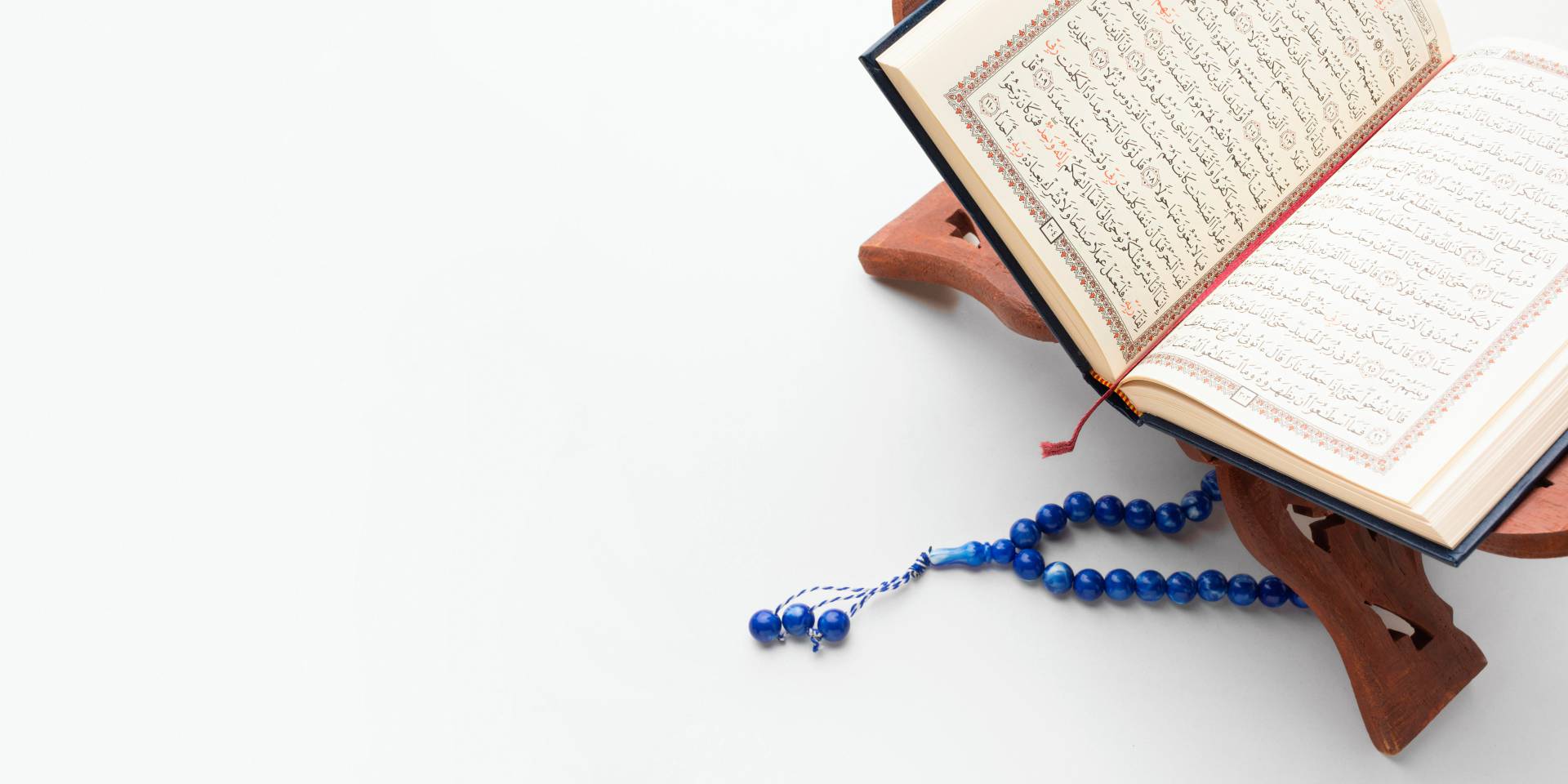
The structure of the Quran Book with Muslim Academy consists of 114 chapters, known as “Surahs,” each containing varying numbers of verses called “Ayahs.” The longest chapters appear near the beginning of the text, while the shortest chapters are located toward the end. This arrangement may seem unusual to those familiar with other religious texts, as it does not follow a strictly chronological order of revelation. Instead, the organizational structure reflects decisions made by the Prophet Muhammad and subsequent Muslim scholars regarding the most effective way to present the divine message.
The language of the Quran is Classical Arabic, the sophisticated and eloquent form of Arabic that was spoken and understood during the seventh-century Arabian Peninsula. The text employs a remarkable literary style, utilizing poetic devices, storytelling, repetition, and rhetorical questions to engage readers and listeners. This stylistic richness has made the Quran not only a religious text but also a masterpiece of Arabic literature, and its memorization and recitation have remained central to Islamic practice throughout history.
The Content and Themes
The Quran Book with Muslim Academy addresses an expansive range of topics that encompass theology, law, ethics, history, and practical guidance for daily life. Approximately one-quarter of the text consists of stories about the prophets and messengers who came before Muhammad, including Abraham, Moses, Jesus, and many others. These narratives are not presented as mere historical accounts but as spiritual lessons containing moral principles applicable to readers throughout time.
Another significant portion of the Quranic text deals with legal and ethical matters. These sections establish principles for personal conduct, family relationships, business transactions, inheritance law, and criminal justice. Scholars have extracted detailed legal frameworks from the Quran, which have influenced Islamic law systems adopted throughout Muslim-majority nations and communities. The text emphasizes justice, mercy, honesty, and respect for human dignity as foundational principles underlying these legal guidelines.
The Quran also extensively addresses theological concepts, particularly the oneness and attributes of God, the nature of the afterlife, and the relationship between God and humanity. It presents a comprehensive worldview in which God is described as eternal, all-powerful, all-knowing, and merciful. Humanity is portrayed as created with dignity and responsibility, endowed with free will to make choices, but ultimately accountable to God for those choices.
Historical Preservation and Transmission
One of the most remarkable aspects of the Quran Book with Muslim Academy is how it has been preserved with extraordinary accuracy over more than fourteen hundred years. Unlike many ancient texts that have survived only in fragmentary form or through multiple translations, the Quran has been meticulously maintained in its original language. This preservation occurred through multiple mechanisms that reinforced one another.
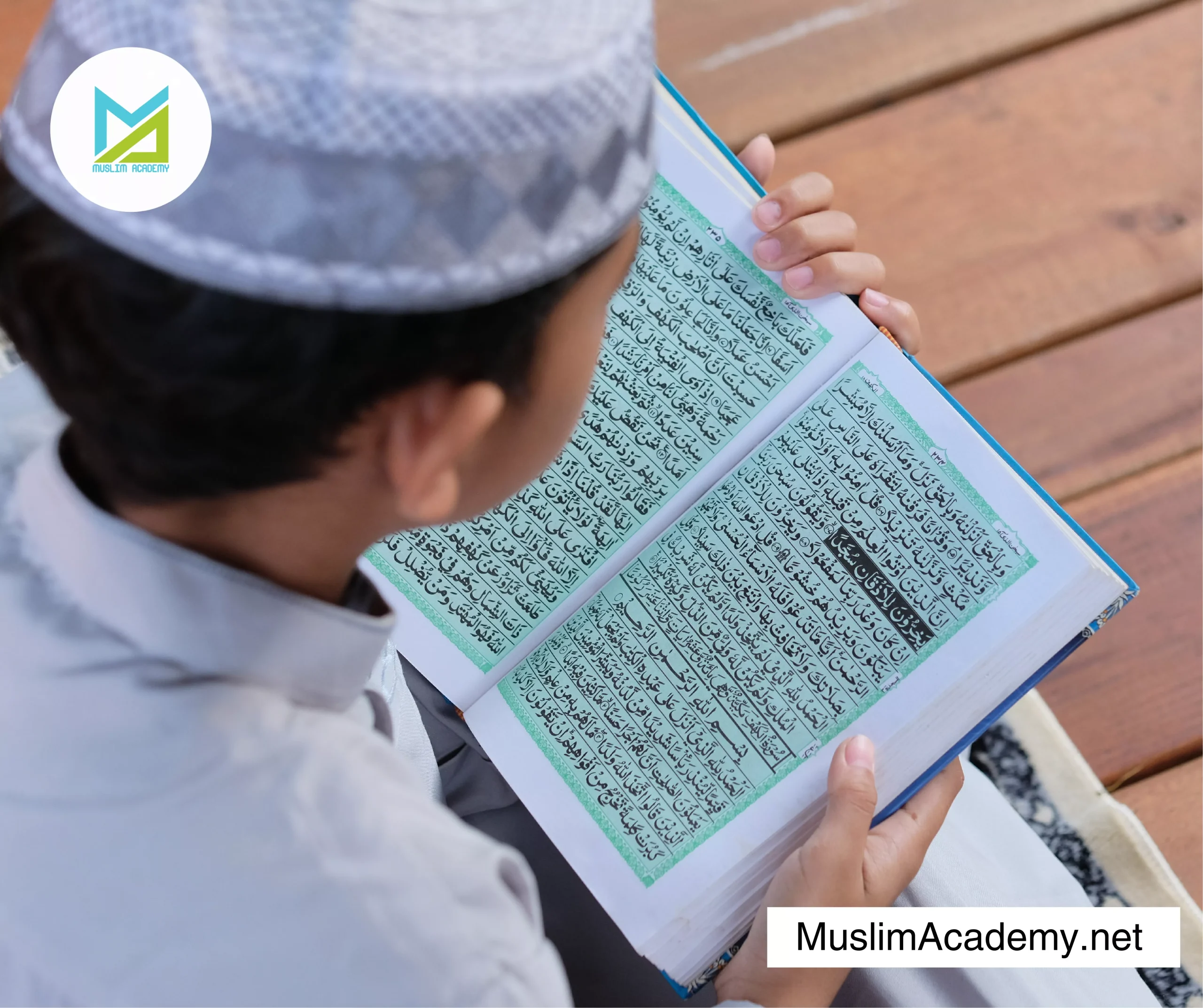
From the earliest period of Islam, memorization of the Quran formed a central component of religious education. Thousands of individuals, known as “Hafiz,” dedicated themselves to memorizing the entire text word for word. This practice continues today, with hundreds of thousands of people worldwide maintaining complete memorization of the Quran. This living tradition provided a remarkable safeguard against textual corruption, as any variation would be immediately detected by the numerous individuals who could recite the text from memory.
Written preservation also played a crucial role. During the lifetime of the Prophet Muhammad, the Quran was written on various materials, including parchment, palm leaves, and animal bones. After his death, the Caliph Uthman standardized the written text, ensuring consistency across the growing Islamic empire. Countless manuscripts were subsequently produced, and remarkably, these ancient manuscripts show virtually identical readings despite being produced centuries apart and in different geographic regions.
The Quran in Islamic Practice
The centrality of the Quran in Islamic religious life cannot be overstated. Muslims are encouraged to recite the Quran daily, and many perform complete readings during the sacred month of Ramadan. The recitation of Quranic verses forms an essential component of Islamic prayer. Scholars have developed sophisticated sciences for understanding the Quran, including studies of its language, interpretation, historical context, and legal implications.
The memorization and recitation of the Quran Book with Muslim Academy have elevated it beyond a merely written document. Quranic recitation has become an art form, with established styles of melodic recitation called “Tajweed.” Different reciters and regions have developed distinct styles while maintaining fidelity to the original text. Competitions and festivals celebrating Quranic recitation attract participants from around the world, demonstrating the continued reverence this scripture commands.
Influence on Islamic Civilization
The impact of the Quran on Islamic civilization has been profound and multifaceted. The text inspired the development of Islamic law, which has governed societies and shaped legal institutions across multiple continents. It motivated the establishment of educational institutions, libraries, and centers of learning that preserved and advanced human knowledge during periods when other regions experienced intellectual decline.
Quranic teachings emphasized the pursuit of knowledge and understanding, which contributed to what historians call the Islamic Golden Age. Scientists, mathematicians, philosophers, and physicians working in medieval Islamic societies made discoveries and advances that influenced European Renaissance thinkers centuries later. The Quran’s emphasis on careful observation, rational thought, and ethical application of knowledge created an intellectual environment that fostered significant scientific and mathematical advancement.
Beyond intellectual pursuits, the Quran inspired remarkable architectural achievements. Mosques built to house and honor the Quran represent some of the world’s most beautiful and significant buildings. Islamic calligraphy, developed primarily to beautifully transcribe Quranic verses, became a respected art form that influenced decorative and architectural traditions throughout Islamic societies.
Modern Accessibility and Interpretation
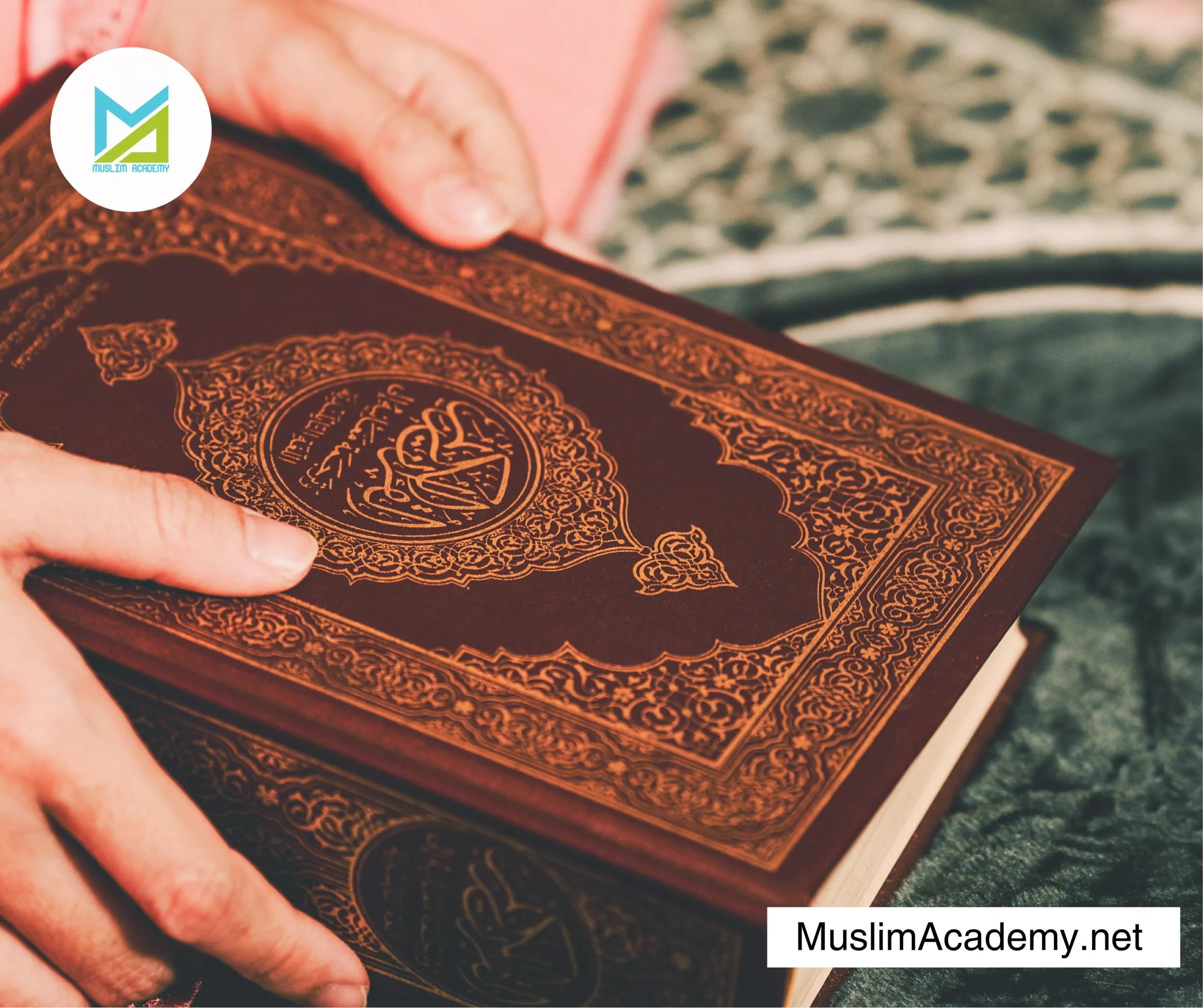
In the contemporary world, the Quran Book with Muslim Academy remains more accessible than ever before. Digital versions allow anyone with internet access to read the text in numerous translations and with various scholarly commentaries. Audio recordings enable individuals to listen to professional recitations, facilitating engagement with the text for those learning Arabic as a non-native language.
This modern accessibility has democratized Quranic learning, allowing people
outside traditional Islamic educational settings to engage directly with the
scripture. However, it has also created new challenges, as individuals without
Proper scholarly training may misinterpret verses, taking them out of context
or applying them without understanding their historical circumstances. Many
Contemporary Islamic scholars emphasize the importance of studying
interpretation alongside the text itself, recognizing that understanding
requires engagement with centuries of scholarly tradition.
The Quran’s Enduring Significance
The Quran Book with Muslim Academy represents far more than a religious
document. It is a historical record, a legal code, a moral guide, a work of
literature, and a spiritual cornerstone. Its influence extends beyond Muslim
communities, affecting world history, international relations, and cross-cultural
understanding. The text continues to shape the lives and worldviews of nearly
two billion Muslims, making it one of the most read, memorized, and revered texts in human existence.
Scholars from diverse academic disciplines—historians, linguists, literary
analysts, and theologians—continue to study the Quran, finding new insights
and deepening understanding of its meanings and implications. This ongoing
scholarly engagement ensures that the text remains relevant and meaningful
to successive generations, each finding within its verses guidance appropriate to their particular circumstances and era.
Conclusion
The Quran stands as a monument to human civilization, a text that has
preserved its integrity while adapting to the needs of diverse communities
across different times and places. Whether approached as a religious
scripture, a historical document, a literary masterpiece, or a source of moral
and legal wisdom, the Quran continues to demonstrate remarkable depth and
significance. Its journey from oral revelation to carefully preserved written text,
its influence on Islamic civilization and law, and its ongoing relevance to
contemporary Muslims all testify to its extraordinary place in human history.
The Quran Book with Muslim Academy will undoubtedly continue to shape
Islamic thought and practice for generations to come, maintaining its position
as one of humanity’s most important and transformative texts.