Start Online Quran Classes with Muslim Academy
https://muslimacademy.net/index.php/free-trial/
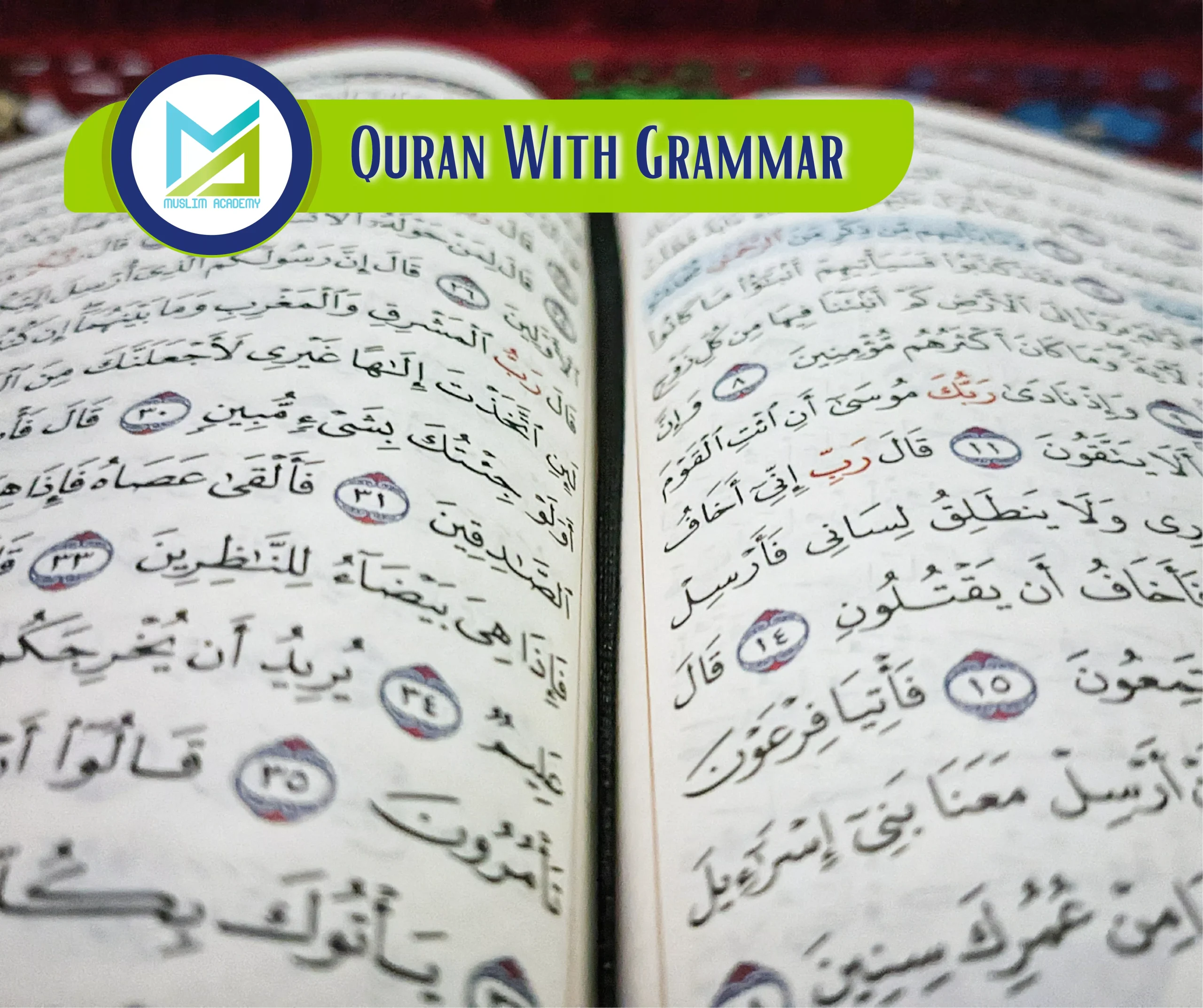
The Arabic language holds a singular place in human civilization — not merely as a means of communication, but as the vessel of a living scripture that has shaped the spiritual, intellectual, and cultural lives of over a billion people across fourteen centuries. At the heart of this experience lies one of the most rewarding academic and spiritual pursuits available to any student of Islam: studying the Quran with Grammar with Muslim Academy. This approach to the sacred text goes far beyond simple translation or recitation. It is a disciplined engagement with the language itself, allowing the reader to feel the weight of every word, appreciate the precision of every construction, and encounter the meanings that no translation can fully convey.
Why Grammar Is Inseparable from Quranic Understanding
Arabic is a language of extraordinary depth. Unlike many modern languages, its grammar is not merely a set of rules to avoid error — it is a system of meaning. A single vowel change at the end of a word can shift the subject of a sentence, alter the relationship between concepts, or even reverse the emphasis of an idea. In classical Arabic, the science of grammar (nahw) and morphology (sarf) were developed precisely because Muslim scholars understood that the Quran could only be fully grasped through rigorous linguistic analysis.
Consider a simple example: the word used for “lord” or “sustainer” in the Quran — Rabb — carries layers of meaning encoded in its root, its pattern, and its grammatical context. Understanding whether it appears as a subject, possessive noun, or object in a given verse changes not only its translation but also its theological implication. This sensitivity to form and function is what makes studying the Quran with Grammar with Muslim Academy such a transformative intellectual exercise.
Classical scholars such as Sibawayh, Al-Khalil ibn Ahmad al-Farahidi, and Ibn Hisham dedicated their lives to codifying the grammar of Arabic, and their motivations were rooted in the desire to protect the meaning of the Quran from misinterpretation. When Imam Ali ibn Abi Talib reportedly commissioned early grammatical work after hearing someone mispronounce a Quranic verse, he understood that a grammatical error was not a minor slip — it was a distortion of divine speech.
The Core Tools: Nahw and Sarf
To engage seriously with the Quranic text, students typically master two foundational disciplines:
Nahw (Syntax and Morphology of Sentence Structure) deals with the relationships between words in a sentence — who is doing what to whom, which words modify others, how emphasis is created, and how sentences are logically organized. In Arabic, the role of a word is signaled primarily through case endings (i’rab), which indicate whether a noun is a subject (marfu’), an object (mansub), or in a genitive construction (majrur). Every Quranic verse can be subjected to a process of i’rab — a detailed grammatical analysis that scholars have practiced for over a thousand years.
Sarf (Morphology) deals with the internal structure of individual words — how roots of three or four consonants generate verbs, nouns, adjectives, and verbal nouns through patterns. Because Arabic is a root-based language, recognizing a root unlocks a field of related meanings. The root k-t-b, for example, gives rise to kataba (he wrote), kitab (book), maktaba (library), maktub (written/letter), and katib (writer). Recognizing these patterns in Quranic verses reveals the deliberate interconnection of ideas across the text.
Grammatical Nuances That Reveal Deeper Meanings
One of the most compelling reasons to pursue the study of the Quran with Grammar with Muslim Academy is the way it opens up layers of meaning invisible to the non-specialist. Take the opening chapter of the Quran, Surah Al-Fatiha. The phrase “Iyyaka na’budu wa iyyaka nasta’in” — meaning “You alone we worship and You alone we ask for help” — is grammatically remarkable. The pronoun iyyaka (You) is placed before the verb in both clauses, which in Arabic signifies exclusivity and emphasis. A grammar-aware reader immediately perceives that the verse is not simply saying “we worship You” but stressing that the worship is directed to God exclusively — a nuance that is grammatically encoded but often lost in translation.
Similarly, the shift between singular and plural verbs, the use of the definite article (al-), the distinction between past and present tense verbs, and the use of conditional structures (shurut) in the Quran are all features that a grammatically trained reader navigates with conscious awareness. These details are not decorative — they are meaning-bearing.
Classical and Modern Resources for Grammatical Study
The tradition of Quranic grammatical commentary is vast. Works like the I’rab al-Quran by Al-Nahhas, the Mushkil I’rab al-Quran by Makki ibn Abi Talib, and the comprehensive commentaries of later scholars represent centuries of accumulated grammatical insight. These texts analyze every verse, often word by word, cataloguing the grammatical positions of each element and noting where classical grammarians disagreed.
In the modern era, a rich body of resources has emerged to make Quranic
grammar accessible to a new generation of learners. Structured curricula that
teach Arabic grammar specifically through Quranic vocabulary — rather than
through unrelated classical texts — have proven especially effective. Online
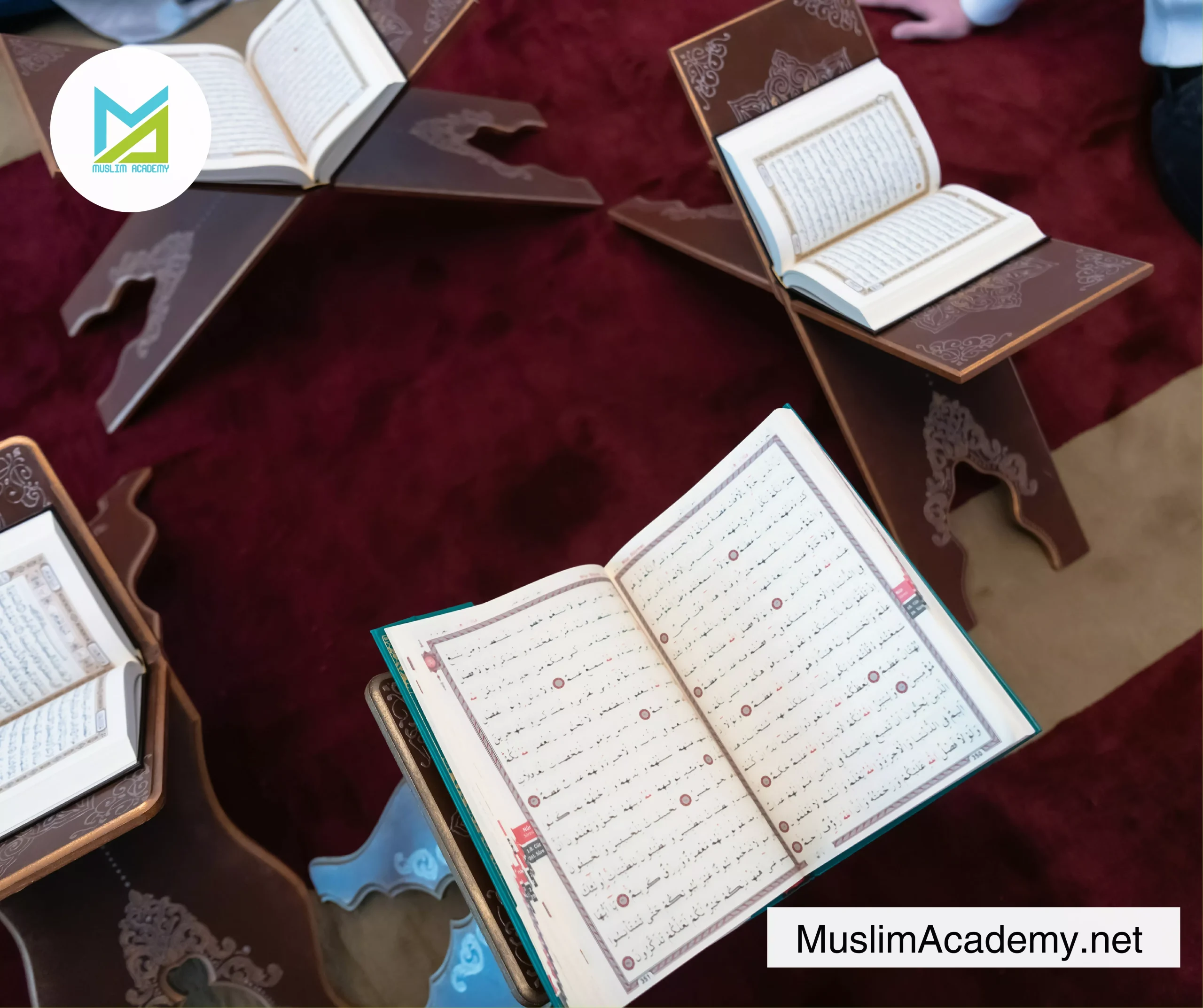
platforms, audio-visual courses, and annotated Qurans with grammatical notes
now enable students worldwide to begin engaging with the text’s grammatical dimensions.
Learners who approach the Quran with Grammar with Muslim Academy as
Their guiding framework often reports a turning point in their relationship with
The text: the moment when they can read a verse and feel the grammar, when the structure itself becomes a source of beauty and wonder.
The Spiritual Dimension of Grammatical Study
It would be a mistake to treat this pursuit as purely academic. Muslim scholars
have always insisted that the grammatical study of the Quran is an act of
worship. To pause over a word, to consider its root, to trace its grammatical
role in a verse — this is to honor the text with attention and care. The Prophet
Muhammad is reported to have said that the best among people is one who
learns the Quran and teaches it. The classical tradition understood this to encompass not only recitation but understanding.
There is also a deeply humbling dimension to this study. The more one learns
about the grammar of the Quran, the more one encounters phenomena that
challenge easy explanation — patterns of word choice, syntactical structures,
and rhetorical devices that appear, on analysis, to be operating simultaneously
on multiple levels of meaning. This experience of the text’s inexhaustibility has
sustained the scholarly tradition for fourteen centuries and continues to draw new students to the discipline.
Practical Steps for the Modern Learner
For those who wish to begin studying the Quran with Grammar with Muslim Academy, a structured path is available:
First, a foundation in Modern Standard Arabic or Classical Arabic is helpful but
not strictly necessary if a course is designed specifically around Quranic
vocabulary. Many students find it more motivating to learn grammar through Quranic examples from the outset.
Second, selecting a reliable grammar course or textbook that addresses both
nahw and sarf ensures systematic coverage. Works such as the Ajurrumiyya,
Qatr al-Nada, and modern adaptations designed for English-speaking students are all viable starting points.
Third, regular practice with actual Quranic verses — attempting to identify the
grammatical function of each word — builds the intuition that separates a
competent grammar student from a true reader of the text.
This practice, known as i’rab al-Quran, is the lived application of the theory.
Finally, engaging with a teacher or community of fellow learners transforms a
solitary intellectual exercise into a living tradition — which is precisely what the study of the Quran has always been.
Conclusion
Language is the medium through which meaning moves, and the Arabic of the
Quran is one of the most precisely constructed linguistic systems ever
recorded. To approach it without grammatical understanding is to stand at the
door of a vast library and read only the titles on the spines. The discipline of
studying the Quran with Grammar with Muslim Academy is the key that opens
the door, revealing an interior architecture of meaning, beauty, and theological
precision that has captivated scholars, saints, and students across the
centuries. Whether one is a beginner taking the first steps in Arabic or an
advanced student deepening an existing foundation, the grammatical study of
the Quran is a pursuit that yields rewards — intellectual, spiritual, and aesthetic — that are genuinely without end.