Start Online Quran Classes with Muslim Academy
https://muslimacademy.net/index.php/free-trial/
The very first word revealed to the Prophet Muhammad, peace be upon him, was not pray, or fast, or give charity. It was Iqra — Read. This single word set the tone for an entire civilization. It announced, from the very beginning, that knowledge would sit at the heart of the Islamic faith. Studying in Islam with Muslim Academy is not merely an academic exercise or a worldly pursuit. It is a spiritual duty, a form of worship, and one of the highest callings a human being can answer. Understanding this changes how a Muslim approaches every book, every lesson, and every moment of learning throughout their life.
Knowledge as a Divine Command
Islam places knowledge at a level that few other traditions match in such explicit terms. The Quran repeatedly calls on human beings to reflect, to observe, and to think. Allah asks, in multiple verses, whether those who know are equal to those who do not know. The answer is clear. Knowledge elevates the human being in the sight of Allah and in the eyes of the community.
The Prophet Muhammad, peace be upon him, made the obligation of seeking knowledge universal. He declared that seeking knowledge is a duty upon every Muslim, male and female alike. Furthermore, he encouraged his companions to seek knowledge even if it required traveling to distant lands. This was not a casual suggestion. It was a directive that shaped how early Muslim civilization organized itself. Schools, libraries, and centers of learning spread rapidly across the Muslim world as a direct result of this ethos.
Moreover, Islam does not limit knowledge to religious studies alone. Scholars of the classical Islamic tradition studied medicine, astronomy, mathematics, philosophy, chemistry, and architecture alongside theology and jurisprudence. They understood that any knowledge that benefits humanity connects to the divine purpose of caring for the world and the people in it. Therefore, the Muslim student who studies biology, engineering, or law today stands in a long and proud tradition.
The Status of the Scholar in Islam
Islam grants scholars a remarkable place in the community. The Prophet, peace be upon him, said that the scholars are the inheritors of the prophets. This statement carries enormous weight. Prophets carried the divine message to humanity. Scholars carry and preserve that message after the prophets. Consequently, the role of the scholar is not just intellectual but prophetic in its service.
The Prophet also compared the superiority of a scholar over a simple worshipper to the superiority of the full moon over all the stars. This comparison highlights that worship without knowledge lacks the fullness that worship with knowledge possesses. In other words, understanding what one does in prayer, fasting, and charity deepens the quality and sincerity of those acts. Studying, in this context, does not compete with worship. Instead, it completes it.
Additionally, the angels lower their wings for the one who seeks knowledge, as a sign of honor and support. This image from the hadith tradition paints a beautiful picture. The student sitting with a book, struggling with a difficult concept, or walking to a class early in the morning is not alone. The entire unseen world supports and honors that effort.
Studying In Islam with Muslim Academy: The Balance Between Religious and Worldly Knowledge
One of the most important questions Muslim students face today is how to balance religious learning with the demands of modern education. Some families emphasize Islamic studies almost exclusively. Others focus entirely on academic and professional success. Neither extreme serves the Muslim student well.
Islam encourages a balanced approach. The Quran itself draws attention to both the visible and the unseen dimensions of reality. It invites human beings to explore the physical world while maintaining awareness of its spiritual dimension. A Muslim doctor who understands the human body as a sign of divine creation brings something to their practice that pure materialist training cannot provide. A Muslim engineer who sees their work as a service to humanity and a form of worship approaches their profession with a sense of purpose that transcends salary and status.
Therefore, Studying In Islam with Muslim Academy means integrating faith into every area of learning. It means asking not just how something works but also why it exists and how understanding it can serve others. This integration is not an add-on to education. It is the very spirit that makes education meaningful.
The Etiquette of the Student in Islam
Islam also pays great attention to how one seeks knowledge, not just what one seeks. The classical scholars developed a rich tradition of student etiquette that shaped Muslim learning for centuries.
Sincerity of intention stands as the first and most fundamental requirement. The student must seek knowledge for the sake of Allah and for the benefit of themselves and others. Seeking knowledge to show off, to compete with peers, or to gain status alone corrupts the act at its root. The intention must be pure. When it is pure, even the walk to a classroom becomes an act of worship.
Respect for teachers holds equal importance. Islam teaches that the teacher holds a position of great honor. The student who dismisses or disrespects their teacher cuts themselves off from the full blessing of what they are learning. Classical scholars traveled for years to sit at the feet of a single master. They served their teachers, valued their time, and absorbed not just their words but their character.
Patience and persistence round out the etiquette of the Islamic student. Knowledge does not come overnight. It requires years of consistent effort. The scholars of the past did not become masters of their fields in a semester. They dedicated decades to their disciplines. In an age of instant results and short attention spans, this Islamic emphasis on patient, long-term commitment to learning stands as a powerful counter-narrative.
The Role of the Learning Environment
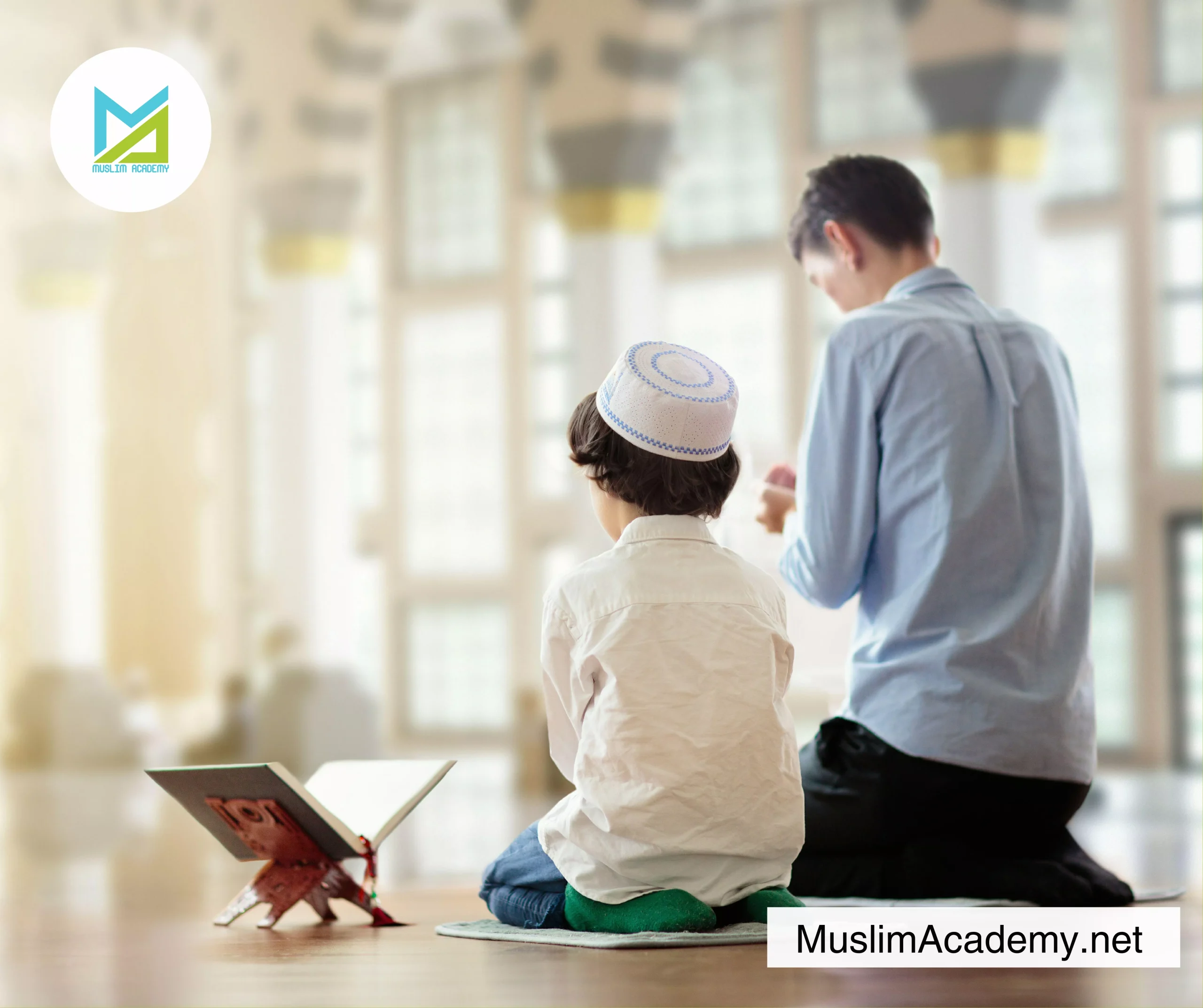
Islam also recognizes that learning does not happen in isolation. The environment surrounding the student shapes the quality and direction of their growth. The mosque historically served as the first school in Islam. The Prophet, peace be upon him, taught his companions in the mosque. Knowledge, worship, and community life are intertwined in a single space.
As Muslim civilization expanded, dedicated institutions of learning called madrasas emerged. These schools taught a wide range of subjects and produced some of history’s greatest minds. Scholars like Ibn Sina, Al-Khwarizmi, and Ibn Rushd all came from a civilization that took Studying In Islam with Muslim Academy seriously, not just in terms of religious knowledge but in terms of all knowledge that benefits humanity.
Today, Muslim students study in universities around the world. The challenge they face is carrying the spirit of Islamic learning into environments that often separate knowledge from values and facts from purpose. The answer to this challenge is not isolation but integration. The Muslim student engages fully with their environment while holding onto the spiritual framework that gives their education meaning.
Knowledge That Leads to Action
Islam draws a firm distinction between knowledge that benefits and knowledge that does not. The Prophet, peace be upon him, regularly sought refuge in Allah from knowledge that brings no benefit. This is a striking supplication. It acknowledges that not all learning moves a person forward. Knowledge that puffs up the ego, knowledge that paralyzes with doubt, or knowledge that serves no one carries little value in the Islamic framework.
Beneficial knowledge, by contrast, leads to action. The person who learns about the rights of the poor acts on that knowledge by giving charity. person who learns about health acts on it by caring for their body. person who learns about justice speaks up when they witness injustice. In Islam, the gap between knowing and doing should always remain as small as possible. The scholar who does not act on their knowledge draws sharp criticism in the tradition.
Conclusion
The Islamic approach to learning is one of the most complete and compelling visions of education that any civilization has ever produced. It combines the pursuit of worldly understanding with spiritual awareness, individual excellence with community responsibility, and intellectual rigor with moral integrity. Every Muslim who sits down to study, whether they open a textbook of physics or a volume of Quranic commentary, participates in one of the oldest and most honored traditions in human history. Knowledge, in Islam, is not just power. It is light. And the world, in every age, stands in deep need of both.