Start Online Quran Classes with Muslim Academy
https://muslimacademy.net/index.php/free-trial/
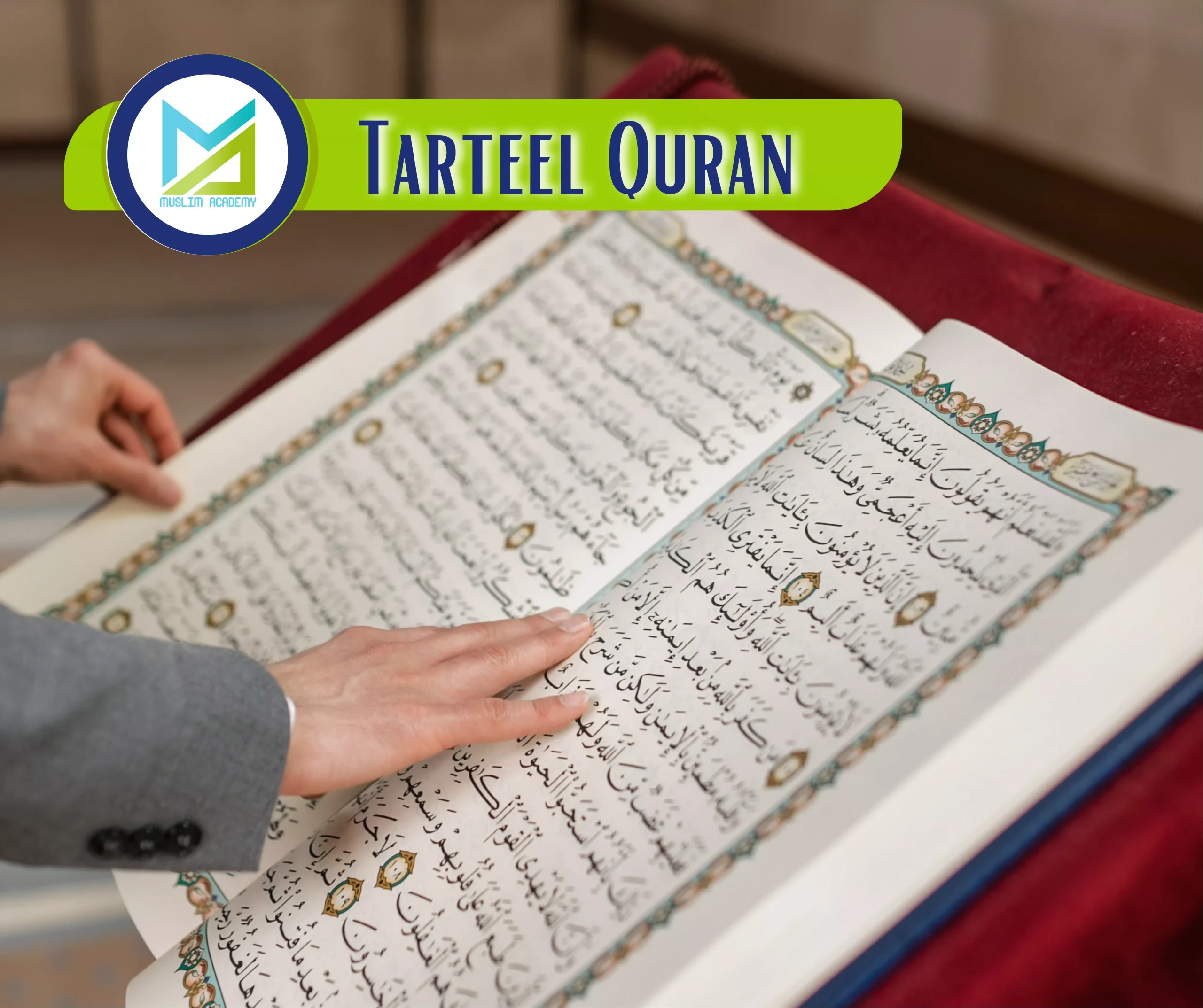
The Quran, revered as the sacred text of Islam, has inspired artistic and spiritual expression throughout history. One of the most significant and meaningful ways Muslims engage with the Quran involves reciting it with proper attention, rhythm, and melodious intonation. The practice of Tarteel Quran with Muslim Academy represents a sophisticated and deeply meaningful approach to Quranic recitation that goes far beyond simple word pronunciation. This traditional discipline combines technical knowledge, spiritual devotion, and artistic expression to create a transformative experience for both the reciter and the listener.
Understanding Tarteel: Definition and Significance
The Arabic term “tarteel” derives from a root meaning to order, arrange, or organize methodically. When applied to Quranic recitation, tarteel refers to the practice of reciting the Quran in a measured, deliberate manner with proper articulation and attention to the rules governing pronunciation and intonation. The Quran itself contains references to this practice, mentioning the importance of reciting it with “tarteel,” emphasizing that Quranic recitation should not be rushed or careless but rather conducted with careful attention and reverence.
Tarteel is fundamentally different from casual reading. While one might read text quickly to gather information, tarteel involves a completely different approach. The reciter slows down, carefully enunciates each letter, observes proper pauses, and allows the rhythmic and melodic qualities of the Arabic language to emerge naturally. This approach transforms Quranic recitation from a mere informational exercise into a spiritual and artistic practice that touches the heart and engages the soul.
The significance of tarteel extends deeply into Islamic tradition and practice. Muslims have long understood that the way one recites the Quran affects both the meaning conveyed and the spiritual impact on listeners. Proper recitation with attention to the rules of tarteel ensures that the Quranic text is presented with the dignity and respect it deserves. This practice represents an act of worship, a demonstration of reverence toward the divine message, and a means of deepening one’s connection with the Quranic text.
The Rules of Tajweed: The Foundation of Proper Recitation
Closely related to tarteel is the science of tajweed, which refers to the rules governing proper Quranic pronunciation and recitation. While tarteel describes the overall approach of measured and careful recitation, tajweed provides the specific technical rules that enable such recitation. These rules address how letters should be articulated, which sounds should be elongated and for how long, where pauses should occur, and how various letters interact when positioned next to each other.
The rules of tajweed developed over centuries as scholars observed how the Prophet Muhammad and his companions recited the Quran and how master reciters in subsequent generations preserved this tradition. These rules were eventually systematized and documented, creating a comprehensive framework that guides proper recitation. Learning tajweed involves understanding these technical specifications and developing the practical ability to apply them while reciting.
Some fundamental rules address the proper point of articulation for each letter. Arabic letters emanate from specific locations in the mouth, throat, and nasal passages, and tajweed specifies the precise articulation point for each letter. Other rules address the characteristics of letters, describing qualities like heaviness or lightness, strength or weakness. Still other rules govern how letters interact when they appear in sequence, addressing phenomena like assimilation, where one letter influences the pronunciation of an adjacent letter.
Rules regarding elongation, or “madd,” specify how long certain vowels should be held during recitation. These rules prevent both excessive elongation that would distort the text and insufficient elongation that would fail to give proper expression to the Quranic language. Understanding when to apply different types of elongation represents an important aspect of tajweed mastery.
The Spiritual Dimension of Tarteel Quran with Muslim Academy
Beyond the technical aspects, Tarteel Quran with Muslim Academy embodies profound spiritual significance. Islamic tradition emphasizes that the Quran is not merely a text to be read but a divine communication deserving reverence and careful attention. The practice of reciting with tarteel represents an expression of respect and love for the Quranic text. When a Muslim takes time to recite slowly, articulate clearly, and reflect on the meaning, this recitation becomes an act of worship and spiritual connection.
Many Muslims describe the experience of hearing or engaging in tarteel recitation as deeply moving and spiritually transformative. The combination of beautiful language, proper articulation, and a reverential approach creates an environment conducive to reflection, meditation, and spiritual experience. For many believers, listening to skilled reciters practicing tarteel represents one of the most powerful spiritual experiences available within Islamic practice.
The spiritual dimension of tarteel also involves contemplation of meaning. When recitation is conducted at a measured pace rather than rushed, listeners and reciters have the opportunity to consider the content of what is being recited. This integration of proper form with thoughtful engagement with meaning creates a holistic experience that addresses both the intellectual and emotional dimensions of spirituality.
The Artistic Excellence of Tarteel Recitation
While tarteel remains fundamentally a spiritual practice rooted in Islamic tradition, it also represents a significant artistic achievement. The Arabic language possesses inherent beauty and musicality, and proper recitation according to tarteel rules allows this beauty to emerge fully. The careful articulation of letters, the deliberate pacing, and the natural melody that arises from proper pronunciation create an aesthetically compelling experience.
The artistic dimension of tarteel has inspired the development of various styles of recitation across different regions and time periods. While all practitioners of tarteel adhere to the fundamental rules of tajweed, individual reciters develop their own approaches, emphasizing different aspects and bringing their own emotional depth to their recitation. These variations in style, while grounded in the same technical foundation, create diversity in how tarteel is expressed.
Throughout Islamic history, renowned reciters became celebrated figures in their communities. Their recitations were attended by large audiences, and their particular styles and interpretations influenced how others approached Quranic recitation. This tradition continues today, with master reciters traveling internationally to share their recitations, while others have become well-known through recordings that spread their work to audiences across the globe.
Learning and Mastering Tarteel Quran with Muslim Academy
Developing proficiency in tarteel recitation requires dedicated study and practice. While some individuals possess natural talents for recitation, all serious practitioners must engage in systematic learning under qualified instruction. Students typically begin by learning the basic rules of tajweed and the correct pronunciation of letters. This foundational knowledge provides the technical basis necessary for proper recitation.
As students progress, they work on developing the ability to apply rules while reciting continuously rather than in isolated segments. This integration of technical knowledge with flowing recitation requires extensive practice and refinement. Students practice regularly, often for extended periods, gradually increasing their speed while maintaining proper application of all rules. Many students continue studying for years, working with qualified teachers to refine their skills and deepen their understanding.
The learning process typically involves several stages. Initial instruction focuses on letter recognition and basic pronunciation. As students progress, teachers introduce the rules of tajweed systematically, explaining each rule and demonstrating its application through their own recitation. Students then practice applying rules individually before integrating them into continuous recitation.
Advanced students may work on specific challenging passages, address persistent pronunciation difficulties, or develop their individual recitation style while remaining grounded in proper technique. Some students eventually become teachers themselves, transmitting this valuable knowledge to subsequent generations. Others focus on maintaining and refining their own recitation practice throughout their lives.
The Global Practice of Tarteel Recitation
The practice of tarteel extends across Muslim communities worldwide, transcending geographical, linguistic, and cultural boundaries. While the rules of tajweed remain consistent, they are applied within the context of modern global society. Today, people from diverse backgrounds, native Arabic speakers and non-native speakers alike, engage in learning and practicing tarteel recitation.
Online platforms have made learning tarteel more accessible than ever before. Students can access instruction from renowned teachers, view demonstrations of proper articulation, and receive feedback on their recitation through digital means. This technological expansion has democratized access to knowledge that was previously available only to those who could study directly with qualified teachers in specific locations.
International competitions celebrating Quranic recitation have become
significant events, with competitors from numerous countries participating and
audiences from around the world following the competitions. These events
celebrate excellence in Quranic recitation and inspire many individuals to
engage more seriously with tarteel practice.
Contemporary Significance and Future Prospects
In contemporary society, where rapid communication and constant stimulation
characterize daily life, the practice of tarteel recitation offers something
increasingly valuable: an opportunity for deliberate slowing down, careful
attention, and spiritual connection. For many Muslims, engaging with tarteel
represents a counterbalance to the pace and distractions of modern existence.
The preservation and transmission of tarteel knowledge remains an important
concern for Muslim communities. Cultural and religious institutions work to
ensure that this knowledge continues to be taught and practiced by new
generations. Educational programs, mosque-based classes, and individual
mentorship relationships all contribute to maintaining this tradition.
As Muslim communities become increasingly diverse globally, creative
approaches to teaching tarteel continue to develop. Teachers adapt methods to
address the needs of students from various backgrounds while maintaining the
integrity and authenticity of the traditional practice. This balance between
preservation and adaptation ensures that tarteel remains a vital and
meaningful practice in contemporary Islamic life.
Conclusion
The practice of Tarteel Quran with Muslim Academy represents far more than a
technique for reading; it embodies a comprehensive approach to engaging with
the Quran that integrates technical knowledge, spiritual intention, and artistic
expression. Rooted in centuries of Islamic tradition, this practice continues to
provide Muslims with a meaningful way to connect with their sacred text,
deepen their spiritual understanding, and experience the beauty of their
religious heritage. As Muslim communities worldwide continue to engage with
this ancient practice, they maintain a vital link to Islamic tradition while
adapting its expression to contemporary contexts. Whether pursued by serious
scholars dedicated to mastery or by ordinary believers seeking deeper spiritual
connection, the practice of tarteel recitation continues to enrich Muslim life
and preserve one of Islam’s most beautiful and spiritually significant traditions.