Start Online Quran Classes with Muslim Academy
https://muslimacademy.net/index.php/free-trial/
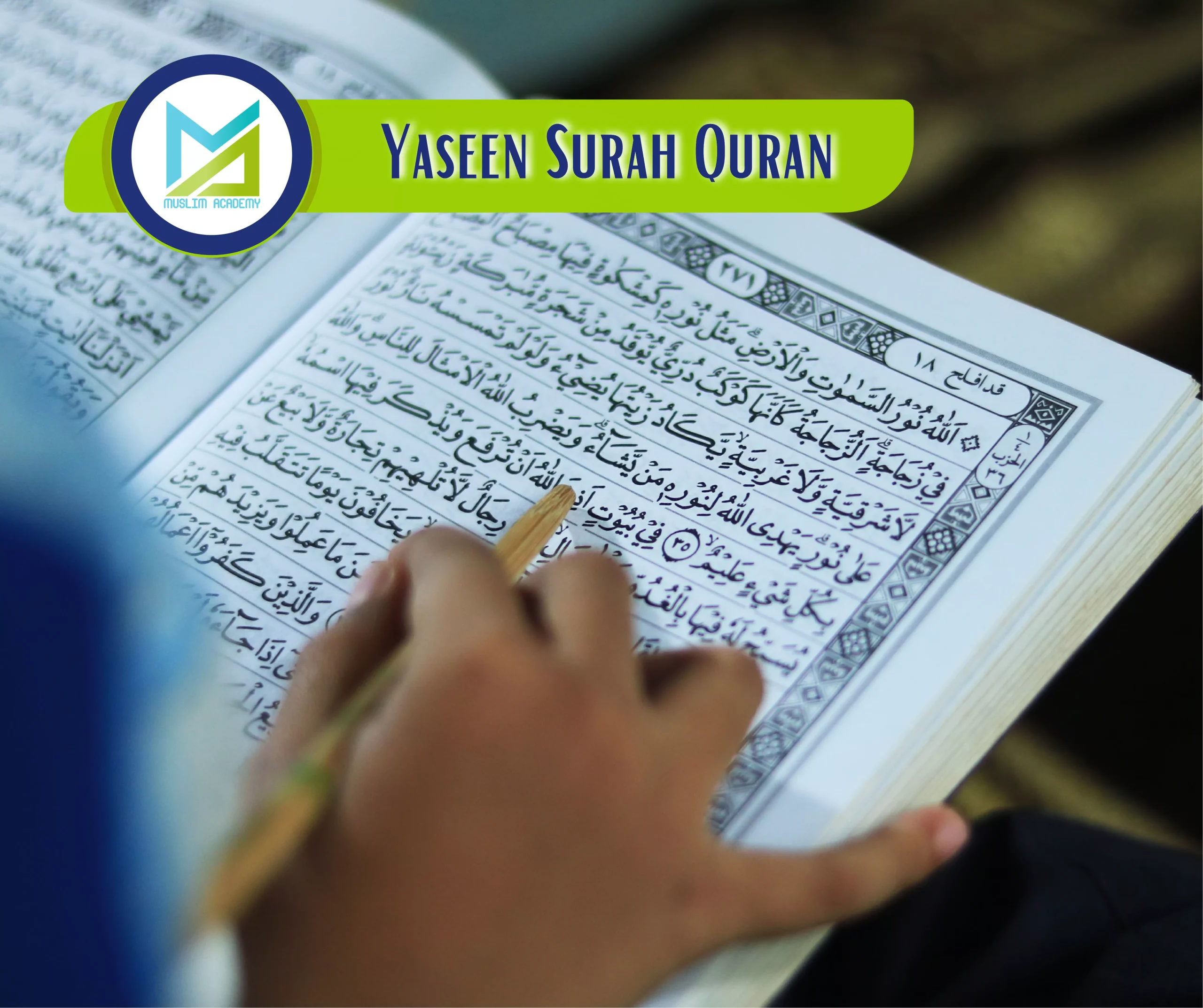
Walk into any mosque during the morning hours, and you will likely hear someone reciting the same chapter. Visit a Muslim home where a loved one is ill, and that chapter will almost certainly be present. Attend a gathering held for someone who has passed away, and its verses will fill the room. Surah Yaseen holds a place in Muslim life that no other chapter quite matches. Yaseen Surah Quran with Muslim Academy sits at chapter thirty-six of Islam’s sacred scripture, and its eighty-three verses carry a spiritual weight that fourteen centuries of devoted recitation have only deepened.
This article explores Surah Yaseen in full — its historical background, its structure, its major themes, and its enduring role in the lives of Muslims around the world. Whether you are encountering it for the first time or returning to deepen your understanding, what follows offers a comprehensive guide to one of the Quran’s most treasured chapters.
The Historical Context of Surah Yaseen
Scholars of Quranic sciences classify Surah Yaseen as a Makkan surah. Allah revealed it to the Prophet Muhammad during the years he and the early Muslim community spent in Mecca — a period defined by fierce opposition, social pressure, and relentless persecution of the new faith.
During this time, the Prophet needed both personal strength and powerful arguments to present to those who rejected his message. Many Meccans dismissed the idea of resurrection entirely. Others denied prophethood. Still others accepted neither divine accountability nor the authority of divine revelation. Surah Yaseen addressed all of these rejections directly and systematically, providing the Prophet and his small community of believers with a complete theological response to the dominant objections of their time.
Furthermore, the chapter carried a specific consolation for the Prophet himself. Its opening verses affirm his prophetic mission clearly and unconditionally. This affirmation arrived not as a minor reassurance but as a direct statement from Allah — reminding Muhammad that his message came from the All-Knowing and the All-Mighty, regardless of how his society responded to it.
The Opening: Mysterious Letters and a Bold Affirmation
Surah Yaseen begins with two Arabic letters — Ya and Seen. These letters belong to a special category that appears at the opening of twenty-nine Quranic chapters. Scholars call them muqatta’at, or the disconnected letters. Their precise meaning remains with Allah alone. Classical commentators have offered various interpretations over the centuries. However, all agree that their presence creates an immediate sense of mystery and draws the reader’s full attention to what follows.
After these letters, the chapter swears by the Quran itself — describing it as a book full of wisdom. This opening oath immediately establishes the divine authority of the revelation and the nobility of its purpose. Moreover, it sets the tone for everything that follows: the chapter speaks with absolute confidence, making no apologies and offering no qualifications.
The Story of the City and Its Messengers
One of the most compelling narratives in Yaseen Surah Quran with Muslim Academy tells the story of a city that received divine messengers and rejected them. The city is not named. Its inhabitants responded to the first messenger with denial. They treated the second the same way. When a third messenger arrived alongside the first two, the people intensified their resistance and threatened violence.
At this critical point in the story, a man from the far side of the city ran forward. He urged his people to follow the messengers. His argument was simple, direct, and courageous: why would you reject people who ask nothing of you and who clearly carry divine guidance? His community rejected his plea. Yet his faith remained unshaken, and Allah honoured him in a way that the chapter describes with moving economy.
This story carried direct relevance for the early Muslims in Mecca. They, too, faced a community determined to reject divine guidance. Consequently, the narrative offered them both a mirror and a model — showing them that rejection of truth is an old pattern, and that courage in its face is the mark of the true believer.
Signs in the Natural World
Following the narrative section, Surah Yaseen shifts into a powerful meditation on the natural world as evidence of divine existence and power. The chapter draws the reader’s attention to phenomena that are so familiar they risk becoming invisible.
The sun travels its appointed course without deviation. The moon passes through its phases in perfect sequence. Night and day follow each other with the precision of a finely calibrated system. Ships sail across the sea, carrying human beings and their goods across vast distances. Dead earth receives rain and responds with an eruption of life and green.
Each of these observations serves a deliberate purpose. Rather than simply pointing to divine power in the abstract, the chapter asks the reader to look carefully at what is already in front of them. Furthermore, it makes a specific logical argument: the Creator who sustains this intricate, interdependent natural order with such precision is certainly capable of restoring the dead to life. The resurrection that some reject as impossible is, from this perspective, far less surprising than the natural world they already accept without question.
The Day of Resurrection
The final section of Surah Yaseen presents the Day of Resurrection with a vividness and urgency that few other Quranic passages match. A single blast of sound summons all of humanity from their resting places. People emerge confused, asking who has raised them from their sleep. The answer arrives immediately — this is what the messengers promised, and the Most Merciful has spoken the truth.
On that day, no false excuse will succeed. The mouths of the deniers will be sealed. Their own hands will speak. Their own feet will testify. Every action performed in the life of this world will stand as evidence, inescapable and precise. Moreover, the chapter makes clear that this accounting is not an act of cruelty but an act of justice — the natural culmination of a world in which every choice carries weight and every soul carries responsibility.
This section of the chapter arrives at the reader with a particular force because of what precedes it. By the time the resurrection scene unfolds, the chapter has already established the reality of divine power through natural signs and the necessity of prophetic guidance through the city narrative. The resurrection is therefore not an isolated claim but the logical conclusion of an argument built carefully across the entire chapter.
Surah Yaseen in Muslim Daily Life
A few chapters of the Yaseen Surah Quran with Muslim Academy have embedded themselves so deeply into the texture of Muslim daily practice. Surah Yaseen appears in Muslim life at every significant threshold — birth, illness, death, and the quiet moments between them.
Many Muslims recite Surah Yaseen every morning as part of their daily devotional practice. Authentic narrations describe blessings associated with this habit, including the meeting of the day’s needs and protection from harm. Scholars encourage this practice not only for its specific rewards but also for the spiritual orientation it creates — beginning each day with a reminder of divine power, prophetic truth, and ultimate accountability naturally shapes how a person moves through the hours that follow.
At times of illness, families gather to recite Surah Yaseen at the bedside of the sick. This practice brings the words of Allah into a space heavy with anxiety and uncertainty. It reorients everyone present — patient and visitor alike — toward divine sovereignty over life and death. Additionally, it creates an atmosphere of collective prayer and care that strengthens both the patient’s spirit and the family’s solidarity.
When death arrives, Surah Yaseen remains close. Muslims recite it beside the dying to ease their passage. Communities gather to recite it in the days following a loss, seeking mercy for the departed and comfort for the grieving. Across centuries and continents, this chapter has accompanied Muslim souls to the threshold of the next world and comforted the hearts of those left behind.
Why This Chapter Endures
Fourteen centuries of devotion do not arise from sentiment alone. Surah Yaseen endures because it speaks directly and powerfully to the questions that every human being carries — about purpose, accountability, the meaning of what they observe around them, and what waits beyond the horizon of this life.
Its themes are universal. Language is accessible yet profound. structure takes the reader on a complete journey — from the affirmation of prophethood through natural signs and historical narrative to the vivid reality of the afterlife. Every section strengthens the one before it, and the whole chapter arrives with a force that individual verses alone cannot produce.
Conclusion
Surah Yaseen has earned its place at the heart of Muslim devotional life
through fourteen centuries of lived experience. Every person who has recited it
at a difficult moment, studied it with a patient teacher, or listened to it recited
at a loved one’s bedside has added their own testimony to its enduring power.
Engaging seriously with Yaseen Surah Quran with Muslim Academy — reading
its meaning, reflecting on its arguments, and allowing its imagery to settle in
the heart — transforms the experience from recitation into a genuine
encounter. This chapter does not merely inform. It calls, it warns, it comforts,
and it invites every sincere reader into a deeper and more honest relationship with the One who revealed it.
Return to Surah Yaseen with intention. Approach it with patience. Every time you do, it offers something new.