


Start Online Quran Classes with Muslim Academy
https://muslimacademy.net/index.php/free-trial/
Islam is one of the world’s major religions, with over 1.8 billion followers spread across every continent and diverse cultural backgrounds. Despite this significant global presence, many people outside the faith hold misconceptions about Islamic beliefs, practices, and history. Understanding 10 Facts About Islam with Muslim Academy is essential for anyone seeking to develop a comprehensive and accurate knowledge of this ancient faith and its contemporary relevance in our increasingly interconnected world. This article explores fundamental aspects of Islamic theology, practice, history, and culture that help contextualize the religion’s influence on billions of people and its contributions to human civilization.
Fact 1: Islam is Based on Monotheism and Divine Revelation
The foundation of Islamic belief rests upon the concept of strict monotheism, known as Tawhid in Arabic. Muslims believe in the existence of one God, Allah, who has no partners, no equals, and no intermediaries. This emphasis on absolute monotheism distinguishes Islam from polytheistic traditions and even from some interpretations of other Abrahamic religions that Muslims perceive as compromising pure monotheism.
According to Islamic teaching, God revealed His message to humanity through a series of prophets and messengers, beginning with Adam and continuing through Noah, Abraham, Moses, Jesus, and finally Muhammad. Muslims believe that the Quran, the holy book of Islam, represents the final and complete revelation from God to humanity. The Quran is believed to be the verbatim word of God, preserved in its original Arabic form, and it serves as the primary source of Islamic law, ethics, and spiritual guidance. This concept of divine revelation through prophets and the preservation of God’s final message through the Quran is central to how Muslims understand their relationship with the divine.
Fact 2: The Prophet Muhammad is Considered the Final Messenger
Muslims hold that Muhammad, who was born in Mecca in the year 570 CE, was the final prophet and messenger sent by God to humanity. According to Islamic tradition, Muhammad received revelations from God over a period of approximately twenty-three years, which were later compiled into the Quran. Muslims do not worship Muhammad as a god; rather, they recognize him as a human being chosen by God to convey His message to the human race
The life of Muhammad serves as a model for Islamic conduct and ethics. His teachings, sayings, and actions, collectively known as the Sunnah, form the second primary source of Islamic law and guidance. Muslims believe that by following the example of Muhammad in their daily lives, they can better understand how to implement Islamic principles in practical and meaningful ways. The reverence Muslims show toward Muhammad is not worship, but rather deep respect and admiration for his role as God’s final messenger.

Fact 3: Islam Encompasses Five Core Pillars of Practice
The structure of Islamic religious practice is built upon five fundamental pillars that every Muslim is expected to observe. These are not merely symbolic gestures but practical expressions of faith that connect believers to God and to the Muslim community. The first pillar is the Shahada, the declaration of faith, in which a person affirms that there is no god but Allah and that Muhammad is His messenger. This simple yet profound statement encapsulates the essence of Islamic belief.
The second pillar is Salah, or ritual prayer, which Muslims are obligated to perform five times daily. These prayers are conducted at specific times throughout the day and involve standing, bowing, and prostrating while reciting verses from the Quran and other supplications. The third pillar is Zakat, or almsgiving, which requires Muslims to give a portion of their wealth to those in need. This practice promotes social justice, reduces economic inequality, and fosters compassion within the Muslim community.
The fourth pillar is Sawm, or fasting, which Muslims observe during the holy month of Ramadan. During this month, Muslims abstain from food and drink from dawn until sunset, a practice that develops spiritual discipline, empathy for the less fortunate, and a closer connection to God. The fifth and final pillar is Hajj, the pilgrimage to the holy city of Mecca, which every able-bodied Muslim is expected to perform at least once in their lifetime. This annual gathering brings millions of Muslims from around the world together in spiritual unity.
Fact 4: The Quran is Considered the Literal Word of God
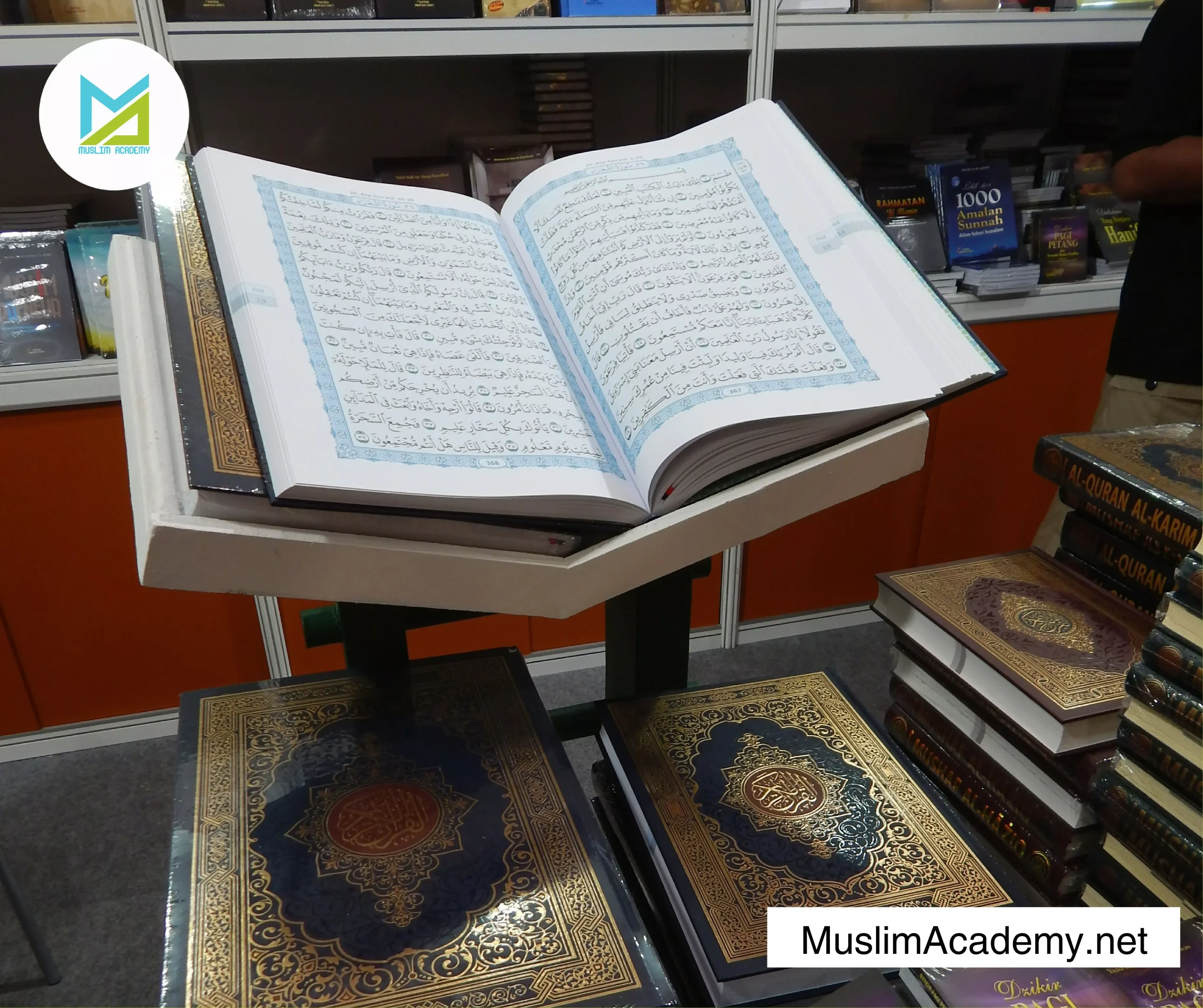
In Islamic theology, the Quran holds a unique and unparalleled position as the direct, unmediated word of God. Unlike other religious texts that Muslims believe may contain the human interpretation or narration of a divine message, the Quran is understood as God speaking directly to humanity through the medium of the Arabic language. This belief shapes how Muslims approach the text, studying it with immense reverence and seeking to understand its meanings at multiple levels.
The Quran addresses a wide range of topics, including theology, ethics, law, history, natural phenomena, and guidance for personal conduct. It provides specific instructions on matters such as family relations, commerce, justice, and spiritual development. The preservation of the Quran in its original Arabic has been maintained through rigorous memorization practices, manuscript copying, and scholarly verification throughout Islamic history. Millions of Muslims, known as Hafiz, have memorized the entire Quran word for word, ensuring its authentic preservation across generations.
Fact 5: Islam Shares Common Ground with Judaism and Christianity
Islam is part of the Abrahamic family of religions, sharing significant theological and historical connections with Judaism and Christianity. Muslims believe in the same God worshipped by Abraham, Moses, and Jesus. The Quran mentions many of the same prophets and patriarchs found in the Hebrew Bible and the Christian New Testament, including Abraham, Isaac, Jacob, Joseph, David, Solomon, and Jesus.
However, there are important theological differences among these three religions. While Muslims respect Jesus as a great prophet and messenger, they do not believe in his divinity or resurrection. Muslims also do not accept the Christian concept of the Trinity, maintaining that God is absolutely one and indivisible. Despite these differences, Islamic tradition emphasizes respect for other People of the Book, as Christians and Jews are called in Islamic terminology, and encourages peaceful coexistence and dialogue among the three faiths.
Fact 6: Islamic Law is Derived from Multiple Sources
The legal system in Islam, known as Sharia, is not derived from a single source but rather from multiple foundational sources applied through rigorous methodologies. The primary sources are the Quran and the Sunnah of the Prophet Muhammad. When these primary sources do not directly address a particular issue, Islamic scholars employ additional methods of legal reasoning.
Ijma, or scholarly consensus, represents the agreement of qualified Islamic scholars on a particular legal question. Qiyas, or analogical reasoning, involves applying principles from the Quran and Sunnah to new situations by drawing parallels with established precedents. This sophisticated legal framework has allowed Islamic jurisprudence to address issues in diverse contexts and different historical periods. Different schools of Islamic jurisprudence have developed various approaches to interpreting and applying these sources, creating a rich diversity of legal thought within Islam while maintaining core principles.
Fact 7: Islam Has a Rich Intellectual and Scientific Heritage
Throughout Islamic history, Muslim scholars made extraordinary contributions to science, mathematics, medicine, philosophy, and numerous other fields of human knowledge. During the Islamic Golden Age, spanning from approximately the eighth to the fourteenth centuries, Muslim scientists and scholars preserved Greek and Persian knowledge, translated important works, and built upon this foundation with their own innovative discoveries.
Muslim mathematicians developed algebra and advanced trigonometry.
Muslim physicians established the first hospitals, conducted detailed
anatomical studies, and developed pharmaceutical science. Muslim
astronomers made precise calculations of celestial movements and produced
accurate star catalogs. This intellectual legacy demonstrates that Islam, as a
civilization and intellectual tradition, has always encouraged the pursuit of knowledge and scientific understanding. The Quran itself contains numerous verses encouraging reflection, observation, and the study of natural phenomena, providing theological support for scientific inquiry.
Fact 8: Muslim Cultures Are Incredibly Diverse
A significant misunderstanding about Islam is the assumption that it represents a monolithic culture or that all Muslims share the same cultural practices. In reality, Islam is practiced by people of extraordinarily diverse ethnic, cultural, and linguistic backgrounds. Muslims live in countries ranging from Indonesia in Southeast Asia to Morocco in North Africa, from Turkey in the Middle East to the United States, Canada, and European nations.
Each Muslim culture has developed its own unique expressions of Islamic faith while maintaining the core religious principles. Arab Muslims may practice Islam differently from South Asian Muslims, who may practice differently from African Muslims or Western Muslims. Islamic celebrations, cuisine, architectural styles, music traditions, and social customs vary considerably across different regions and communities. This diversity reflects Islam’s universal message and its capacity to integrate with and adapt to different cultural contexts while preserving essential religious principles.
Fact 9: 10 Facts About Islam with Muslim Academy Reveals the Religion’s Emphasis on Social Justice
Islamic teachings contain extensive provisions for social justice, economic
fairness, and the protection of human rights. The concept of social
responsibility is embedded throughout Islamic law and ethics. The obligation of
Zakat, for instance, ensures that wealth circulates through society and that the
basic needs of all community members are met. Islamic law provides detailed
protections for workers, prohibits exploitative labor practices, and establishes rules for fair commerce.
Islam emphasizes the rights and dignity of women, orphans, the alternative,
and the vulnerable. The Prophet Muhammad taught that kindness to one’s
parents is a fundamental religious obligation, and that caring for neighbors,
both Muslim and non-Muslim, is essential to Islamic practice. The prohibition
of riba, or usurious interest, aims to prevent economic exploitation. These
principles reflect Islam’s holistic approach to spirituality, which includes not
only individual piety but also social responsibility and community welfare.
Fact 10: Modern Islam Addresses Contemporary Issues
Contemporary Islam continues to engage with modern challenges and
questions while remaining grounded in traditional theological principles.
Muslim scholars and leaders worldwide actively interpret Islamic teachings in
relation to issues such as democracy, women’s education and participation in
society, environmental protection, technological ethics, and interfaith dialogue.
This ongoing process of reinterpretation, known as Ijtihad, represents the
Islamic tradition of scholarly reasoning applied to new circumstances. Muslim
communities demonstrate remarkable adaptability, establishing Islamic
institutions, educational centers, and social organizations in diverse modern
contexts. The existence of Islam in pluralistic societies, the participation of
Muslims in democratic processes, and the contributions of Muslim intellectuals
to contemporary discourse demonstrate that 10 Facts About Islam with Muslim
Academy cannot possibly capture the full complexity and contemporary relevance of this global religion.
Conclusion
Understanding 10 Facts About Islam with Muslim Academy provides a
foundation for appreciating the depth, diversity, and contemporary relevance
of this major world religion. From its theological foundations in monotheism
and divine revelation to its practical expressions in daily worship and social
ethics, Islam offers a comprehensive framework for spiritual life and human
community. The intellectual contributions of Muslim civilization, the social
justice principles embedded in Islamic law, and the remarkable diversity of
Muslim cultures worldwide all testify to Islam’s profound influence on human
history and contemporary society.
As the world becomes increasingly interconnected, accurate knowledge about
Islam becomes more important than ever. By understanding these foundational
facts about Islam, people of all backgrounds can engage in more informed and
respectful dialogue with Muslim communities, appreciate Islam’s contributions
to global civilization, and work toward greater mutual understanding across
religious and cultural boundaries. Whether approached from academic
interest, interfaith dialogue, or personal inquiry, a study of Islam’s core
principles and practices reveals a rich, dynamic, and enduring religious
tradition that continues to shape the lives of nearly two billion people worldwide.