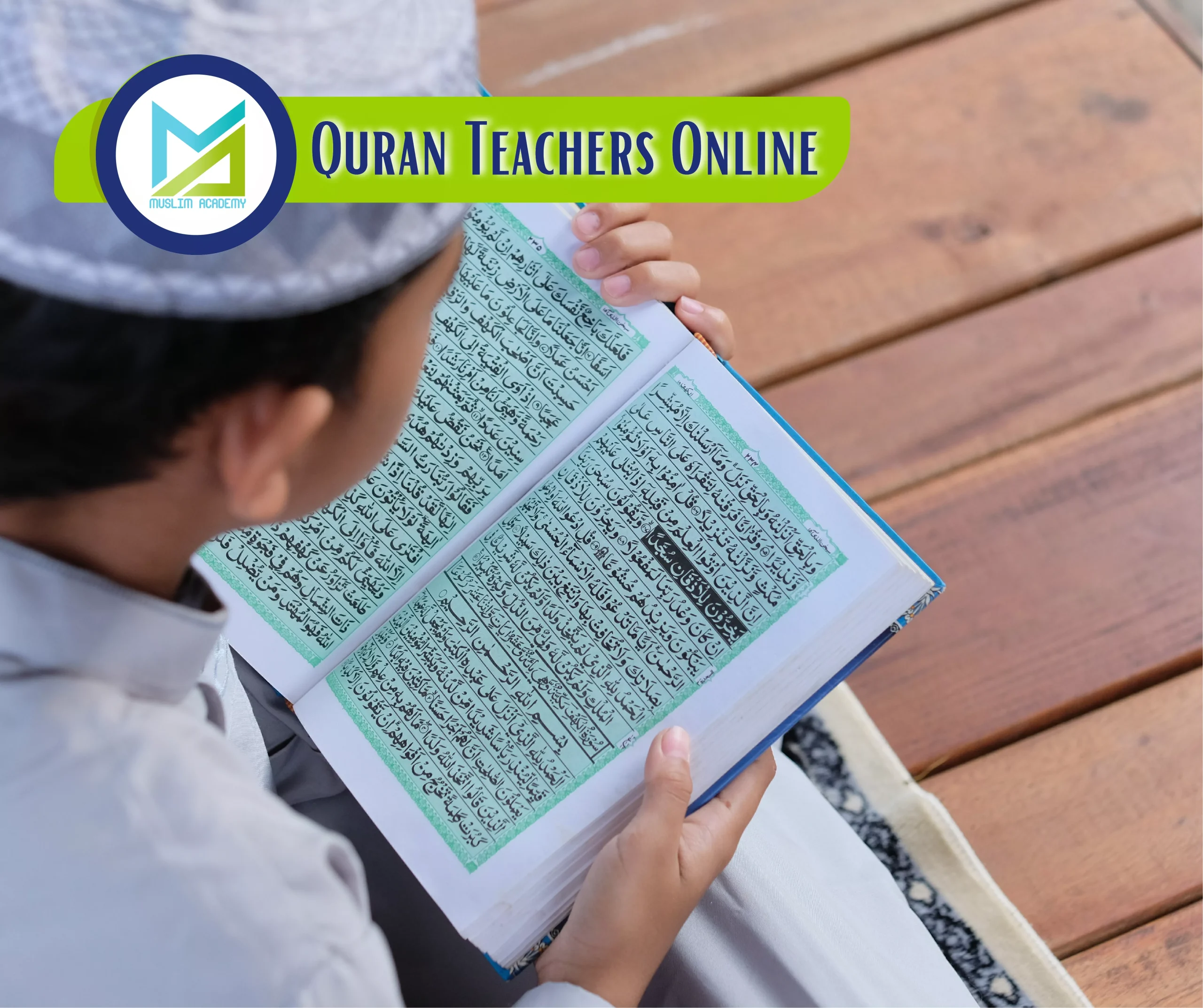
Start Online Quran Classes with Muslim Academy
https://muslimacademy.net/index.php/free-trial/
Finding a great Quran teacher used to depend entirely on where you lived. If your city had a mosque with qualified scholars, you were fortunate. If it did not, your options were limited. Today, however, that reality has changed completely. Quran Teachers Online with Muslim Academy has made expert Islamic instruction available to learners in every corner of the world. Whether you live in London, Lagos, Melbourne, or Montreal, a certified Quran teacher is now just a screen away.
This shift is not simply a matter of convenience. It represents a genuine transformation in how Muslims access religious education. It opens doors that geography, culture, and circumstance once firmly shut. Moreover, it brings the oldest oral tradition in Islamic history into the digital age — without sacrificing the human connection that makes great teaching possible.
Why the Teacher Matters So Much in Quranic Learning
In many academic subjects, a student can read a textbook and learn independently. Quranic education works differently. The Quran is, first and foremost, an oral tradition. Its recitation follows a precise set of rules called tajweed. These rules govern every letter, every vowel, and every pause. A student cannot master tajweed by reading alone. They need a trained human ear to catch errors they cannot hear in themselves.
This is why Islamic scholars have always emphasized direct, personal instruction. The Arabic term talaqqi describes the face-to-face method of Quranic transmission. A student sits with a teacher, recites aloud, and receives immediate correction. This method has preserved the Quran’s exact pronunciation across fourteen centuries. Furthermore, it has maintained an unbroken chain of oral transmission from the Prophet Muhammad to every certified reciter alive today.
A qualified Quran teacher, therefore, is not simply an instructor. They are a living link in a sacred chain. They carry an ijaza — a certificate of authorization — that connects their teaching to generations of scholars before them. Consequently, the quality of the teacher directly determines the quality of the student’s connection to that tradition.
The Rise of Quran Teachers Online with Muslim Academy
The emergence of high-speed internet and reliable video technology changed everything for Quranic education. Suddenly, a student in rural Canada could connect live with a certified scholar in Cairo. A working mother in Germany could schedule a session at midnight with a teacher in Islamabad. A new Muslim in Japan could begin learning the Arabic alphabet with an instructor who spoke fluent English and Arabic simultaneously.
Quran Teachers Online, with Muslim Academy, operates through dedicated platforms that match students with qualified instructors. These platforms typically offer several important features. First, they provide teacher profiles with credentials, specializations, and student reviews. Second, they offer flexible scheduling that adapts to any time zone. Third, they use live video technology that allows real-time recitation correction — exactly as in traditional face-to-face learning. Fourth, many platforms offer trial lessons so students can find the right fit before committing long-term.
This model has proven remarkably effective. Students report consistent progress. Teachers report engaged, motivated learners. Furthermore, the one-on-one format — which mirrors the traditional talaqqi method — ensures that each session focuses entirely on the individual student’s needs and pace.
What Subjects Do Online Quran Teachers Cover?
Many people assume that online Quran instruction covers only basic recitation. In reality, the range of subjects is broad. Qualified online instructors teach across several disciplines.
Noorani Qaida and Beginner Arabic
Every Quranic journey begins with the Arabic alphabet. Teachers guide complete beginners through Noorani Qaida — a foundational reading primer widely used across the Muslim world. Students learn letter shapes, sounds, and basic joining rules. As a result, they gain the tools to begin reading the Quran independently.
Tajweed Rules
Intermediate students focus on the science of tajweed. Teachers introduce rules one by one, apply them to real Quranic verses, and provide consistent feedback on pronunciation. This stage transforms a student from someone who reads Arabic letters into someone who recites the Quran correctly and beautifully.
Quran Memorization (Hifz)
Many students aspire to memorize the entire Quran. Online teachers support this goal through structured daily schedules, revision systems, and accountability check-ins. Moreover, they use proven memorization techniques, including spaced repetition, to help students retain large amounts of text over time.
Tafsir and Quranic Meaning
Advanced students often move beyond recitation to understanding. Online scholars teach tafsir — Quranic interpretation — drawing on classical commentaries and contemporary scholarship. Consequently, students develop a deeper intellectual and spiritual relationship with the text they recite.
Islamic Studies for Children
Many platforms offer specialized programs for young learners. Child-friendly teachers use engaging methods, visual tools, and patient encouragement to make Quranic learning enjoyable for children as young as four or five years old. In addition, these programs often include basic Islamic knowledge, supplications, and manners alongside Quranic reading.
Who Benefits Most From Online Quran Instruction?
The diversity of students turning to online Quran teachers is striking. People from vastly different backgrounds and circumstances find this model ideal for their situation.
Muslim Alternative in Non-Muslim Countries
Muslims living in cities with small Islamic communities often lack access to qualified local teachers. Online instruction solves this problem directly. A family in a small Swedish town, for example, can now give their children the same quality of Quranic education as a family living near Al-Azhar in Cairo.
Converts to Islam
New Muslims frequently feel overwhelmed by the challenge of learning Arabic and Quranic recitation simultaneously. Online teachers who specialize in teaching converts approach the subject with patience and cultural sensitivity. They start from zero and build confidence gradually.
Adult Learners Returning to Their Faith
Many Muslims grew up reciting the Quran phonetically without truly reading Arabic. As adults, they feel a deep desire to correct this gap. Online teachers provide a judgment-free environment where adults can learn at their own pace without embarrassment.
Women With Domestic Responsibilities
Flexible scheduling makes online instruction especially valuable for mothers and homemakers. They can book sessions around school runs, nap times, and household commitments. Furthermore, female students who prefer learning from female teachers can specifically request women instructors — an option many platforms actively support.
Professionals With Demanding Schedules
Doctors, engineers, business owners, and other busy professionals often cannot commit to fixed weekly classes at a mosque. Online sessions at 6 AM, during lunch, or late at night fit naturally into demanding work schedules without requiring travel or rigid timetables.
How to Choose the Right Online Quran Teacher
Not every platform and not every instructor delivers the same quality. Students should evaluate several key factors before committing to a teacher.
Credentials and Ijaza
Always check whether the teacher holds a recognized ijaza in the subjects they teach. A genuine ijaza confirms that their recitation and knowledge meet the standards of the scholarly tradition. Reputable platforms publish this information clearly on teacher profiles.
Teaching Experience
Knowledge and teaching ability are two separate skills. An experienced teacher knows how to explain concepts clearly, adapt to different learning styles, and motivate students through challenges. Therefore, look for teachers with documented experience working with students at your level.
Language Compatibility
The best Quranic instruction happens when teacher and student communicate comfortably. Many online platforms offer teachers who are fluent in English, French, Urdu, Bahasa Indonesia, Turkish, and other major languages, alongside Arabic. Consequently, language barriers need not be an obstacle to excellent instruction.
Trial Lessons
Most reputable platforms offer a free or low-cost trial lesson. Use this opportunity wisely. Assess the teacher’s communication style, patience, and ability to identify your specific strengths and weaknesses. A good trial lesson reveals a great deal about long-term compatibility.
Student Reviews
Honest feedback from previous and current students provides valuable insight. Look for patterns across multiple reviews rather than relying on a single comment. Consistent praise for patience, clarity, and results is a strong indicator of teaching quality.
The Technology Behind the Experience
Modern video platforms have made live online Quranic instruction remarkably smooth. High-definition video allows teachers to observe a student’s mouth position and articulation — crucial for correcting pronunciation. Crystal-clear audio lets teachers hear subtle errors in vowel length and letter quality. Furthermore, screen-sharing tools allow teachers to display Quranic text, annotate tajweed rules, and highlight specific passages in real time.
Many platforms also provide dedicated student dashboards. These track lesson history, revision schedules, hifz progress, and teacher notes. As a result, both student and teacher maintain a clear picture of progress over time. This level of organization was simply not available to traditional mosque students a generation ago.
Preserving Tradition Through Modern Means
Some traditional scholars initially expressed concern about online Quranic education. They worried that removing the physical dimension of learning would weaken the sacred transmission. However, experience has largely addressed these concerns. The ijaza system still operates online. The live, interactive format still replicates the core of talaqqi. And students still receive human correction, human encouragement, and human connection.
The tradition, at its core, is about the faithful transmission of divine words from one human heart to another. The medium of transmission — whether a mosque courtyard in medieval Cairo or a video call in the twenty-first century — matters far less than the sincerity, qualification, and care of the teacher involved.
Conclusion
Access to great Islamic instruction should never depend on an accident of geography. Every Muslim, regardless of where they live or what constraints they face, deserves the opportunity to learn the Quran correctly from a qualified, caring teacher. Quran Teachers Online with Muslim Academy has made this vision a practical reality for millions of learners worldwide.
The tradition is alive. The teachers are qualified. The technology is ready. All that remains is for the student to take the first step — open a screen, book a lesson, and begin the most rewarding journey of their spiritual life.