Start Online Quran Classes with Muslim Academy
https://muslimacademy.net/index.php/free-trial/
The Quran is unlike any other book in existence. It carries a divine origin, a living oral tradition, and a set of governing principles that have guided its recitation for over fourteen centuries. Every Muslim who engages with the Quran — whether as a beginner sounding out letters or as an advanced student memorizing the final chapters — encounters the Rules Of Quran with Muslim Academy recitation at every step. Furthermore, these rules are not arbitrary restrictions. They are a precise and carefully preserved system that protects the meaning, the sound, and the spiritual integrity of the sacred text. This article explores the most essential categories of these rules, why they matter, and how any learner can begin applying them with confidence and consistency.
What Is Tajweed?
Tajweed is the Arabic term for the science of correct Quranic recitation. The word itself comes from a root meaning to make something excellent or to do something well. Consequently, Tajweed is not merely about avoiding mistakes — it is about elevating recitation to its highest possible standard. Moreover, classical scholars considered learning Tajweed an individual obligation for every Muslim who recites the Quran. Reading without Tajweed is permissible for beginners who are still learning. However, continuing to neglect these rules once they become accessible is something scholars have consistently discouraged.
The Rules of Quran with Muslim Academy recitation cover several major areas: the correct articulation of letters, the proper treatment of vowels and their lengths, the rules governing pausing and stopping, and the various assimilations and transformations that letters undergo when they meet each other. Together, these areas form a complete system that any dedicated student can master with proper guidance and consistent practice.
The Articulation Points of Arabic Letters
Every letter in the Arabic alphabet originates from a specific point in the mouth or throat. Scholars call these points makhaarij al-huroof, meaning the exits or articulation points of the letters. Furthermore, the Arabic language contains sounds that do not exist in most other languages. The letters ع (Ayn), غ (Ghain), ح (Ha), خ (Kha), and ق (Qaf), among others, require precise physical placement that learners must develop through practice and direct instruction.
Mispronouncing a letter at the wrong articulation point is one of the most common and serious errors in Quranic recitation. In some cases, it changes one letter into another entirely. Additionally, even when the error does not change the letter completely, it weakens the sound in a way that distances the recitation from how the Quran was originally revealed. Therefore, working with a qualified teacher who can hear and correct pronunciation is invaluable at this stage of learning.
The Characteristics of Letters
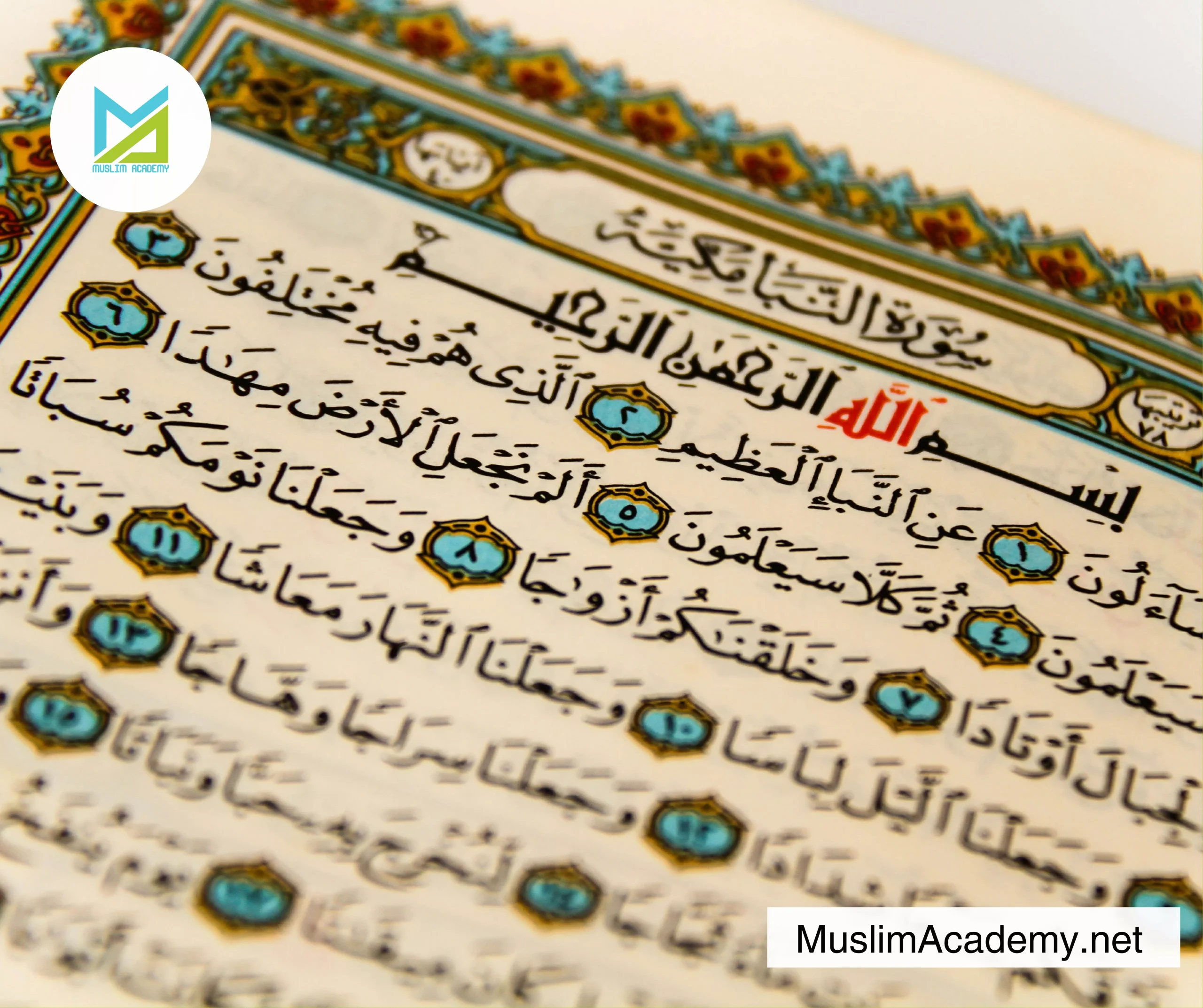
Beyond their articulation points, each Arabic letter carries a set of characteristics — sifaat al-huroof — that shape how it sounds. Some letters are heavy, producing a full and resonant sound. Others are light, producing a thin and clear sound. Some letters carry a unique echo or vibration. Others require a complete stoppage of airflow before release.
Moreover, certain characteristics are permanent — they belong to the letter always, in every context. Others are conditional — they appear only when specific surrounding conditions are met. Consequently, a thorough understanding of letter characteristics allows the reciter to produce authentic Quranic sounds rather than approximations shaped by their native language background.
The Rules of Noon Saakin and Tanween
Among the most important rules of the Quran with Muslim Academy recitation are those governing the noon saakin — a noon letter carrying no vowel — and tanween, which is the double vowel sound at the end of certain words. When these meet other letters, four distinct rules apply.
Idh-haar requires the noon to sound clearly and distinctly. It applies when the noon saakin or tanween meets one of six specific throat letters. Furthermore, no merging or nasality occurs — the noon stands on its own with full clarity.
Idghaam requires the noon to merge completely into the following letter. Additionally, Idghaam divides into two sub-types: one with nasality and one without, depending on which letter follows the noon.
Iqlaab applies when the noon saakin or tanween meets the letter Ba. In this case, the noon transforms completely into a Meem sound accompanied by nasality. Consequently, the reciter must train the ear to recognize this transformation and the mouth to produce it naturally.
Ikhfaa is perhaps the most nuanced of the four rules. Rather than pronouncing the noon fully or merging it completely, the reciter produces a nasal sound that sits somewhere between the two. Moreover, Ikhfaa applies across a wide range of letters, making it the most frequently encountered of these four rules in the Quran.
The Rules of Meem Saakin
The meem saakin — a Meem letter carrying no vowel — also triggers specific rules when it meets other letters. Three rules govern this situation.
When the Meem saakin meets another Meem, complete merging occurs with nasality. When it meets a Ba, a concealment similar to Ikhfaa applies, accompanied by a nasal sound produced through the lips. Furthermore, when the Meem saakin meets any other letter, it sounds clearly and distinctly without any merging or concealment. These rules are straightforward once the student understands the principle behind them and practices them consistently within actual Quranic verses.
Elongation: The Rules of Madd
The rules of Madd — elongation — govern how long certain vowel sounds are held during recitation. Arabic distinguishes between short and long vowels, and the Quran encodes these distinctions with great precision. Moreover, elongation is not a stylistic choice left to the reciter’s preference. It follows fixed rules with specific durations measured in units called harakaat.
The most basic form of elongation — Madd Asli — requires two beats of elongation and applies whenever a long vowel letter appears without any additional triggering cause. Secondary forms of elongation extend this duration to four or six beats, depending on whether a hamzah or a sukoon follows the Madd letter. Additionally, whether that cause appears within the same word or across a word boundary further determines which specific rule applies. Mastering elongation is essential because holding a vowel too long or cutting it too short both represent clear violations of correct recitation.
The Rules of Laam and Raa
Two letters in Arabic receive special treatment in terms of heaviness and lightness: the Laam (ل) and the Raa (ر). Furthermore, the divine name Allah contains a heavy Laam in certain contexts and a light Laam in others — a detail that makes correct pronunciation of the most frequently mentioned name in the Quran a matter of direct scholarly importance.
The Raa letter can sound heavy or light depending on the vowels surrounding it and the presence of certain letters nearby. Consequently, the student must learn to read the context around each Raa and adjust accordingly. These rules reward careful attention and regular practice with a qualified teacher.
Pausing and Stopping in Recitation
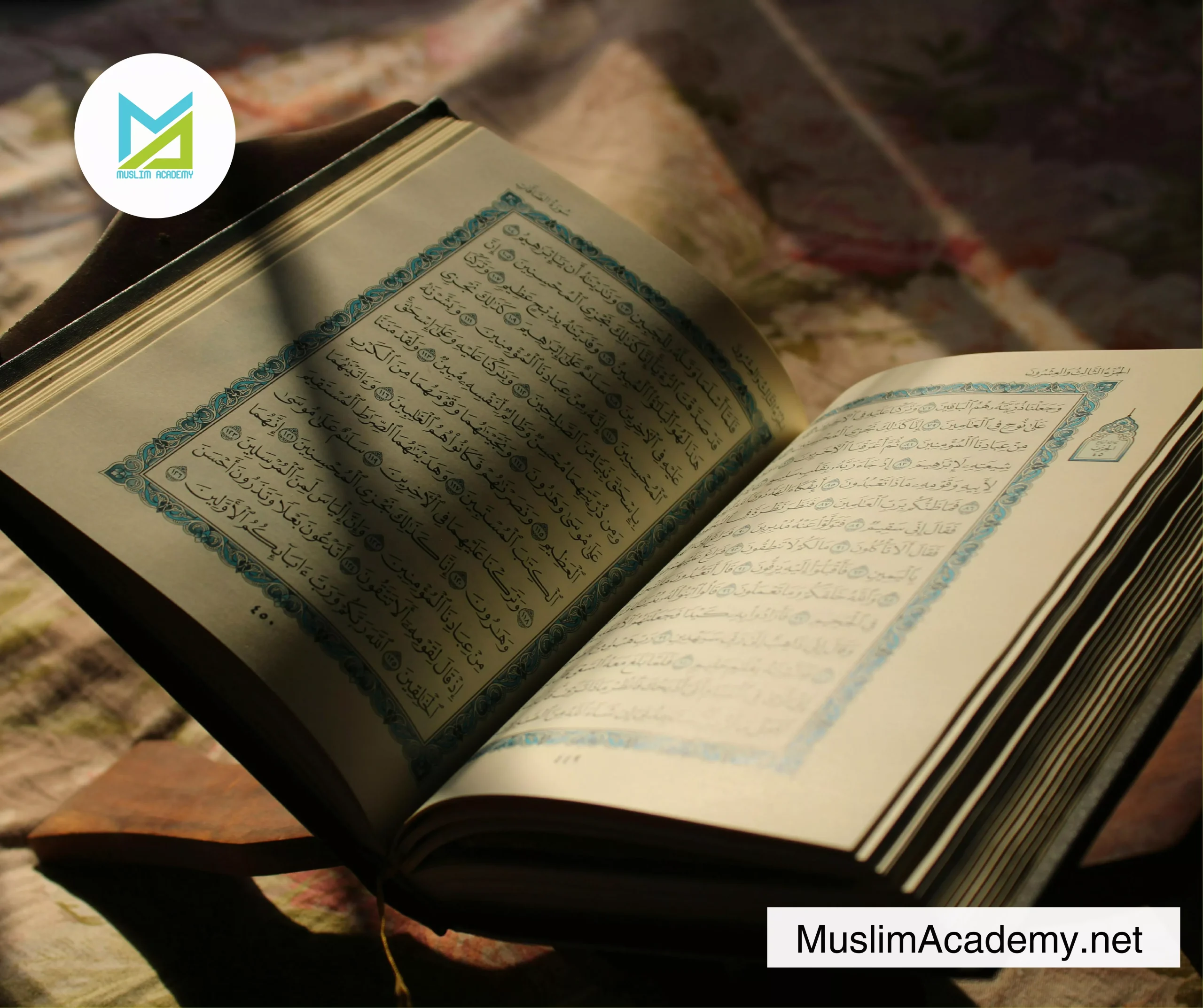
Knowing where to pause and where to stop is among the most practically significant of the Rules of the Quran with Muslim Academy recitation. Pausing at the wrong place can join two ideas that the text separates, or separate two ideas that the text joins. Moreover, the Quran itself contains symbols — printed in most standard copies — that guide the reciter on mandatory stops, preferred stops, acceptable pauses, and places where stopping is discouraged.
Additionally, when a reciter stops mid-verse for breath, specific rules govern how to handle the final word of the pause. If the word ends with a vowel, the reciter typically cuts the vowel and holds the final consonant briefly before resuming. These details matter enormously for preserving the meaning and flow of the sacred text.
How to Begin Learning These Rules
The most effective path into Quranic recitation begins with a qualified and certified teacher. Reading about these rules builds understanding. However, the sounds themselves require a living human model — a voice that demonstrates correct articulation, elongation, and rhythm in real time. Therefore, enrolling in a structured Tajweed course, whether in person or online, remains the most reliable approach for any learner at any level.
Consistent daily practice over short sessions consistently outperforms occasional long ones. Furthermore, listening regularly to skilled reciters trains the ear alongside the voice, building an intuitive sense of correctness that carries over into independent recitation. The Rules of the Quran with Muslim Academy recitation are not a burden. They are a doorway — and every step through that doorway brings the reciter closer to the Quran as it was meant to be heard.
Conclusion
The Quran deserves to be recited with the same precision and care with which it was revealed and transmitted. Its rules govern articulation, elongation, letter behavior, and the art of pausing — all in service of preserving divine speech in its most authentic form. Every student who commits to learning these principles takes a meaningful step in a journey that generations of Muslims before them have walked. The tradition is strong. The guidance is available. The effort is always worthwhile.