


Start Online Quran Classes with Muslim Academy
https://muslimacademy.net/index.php/free-trial/
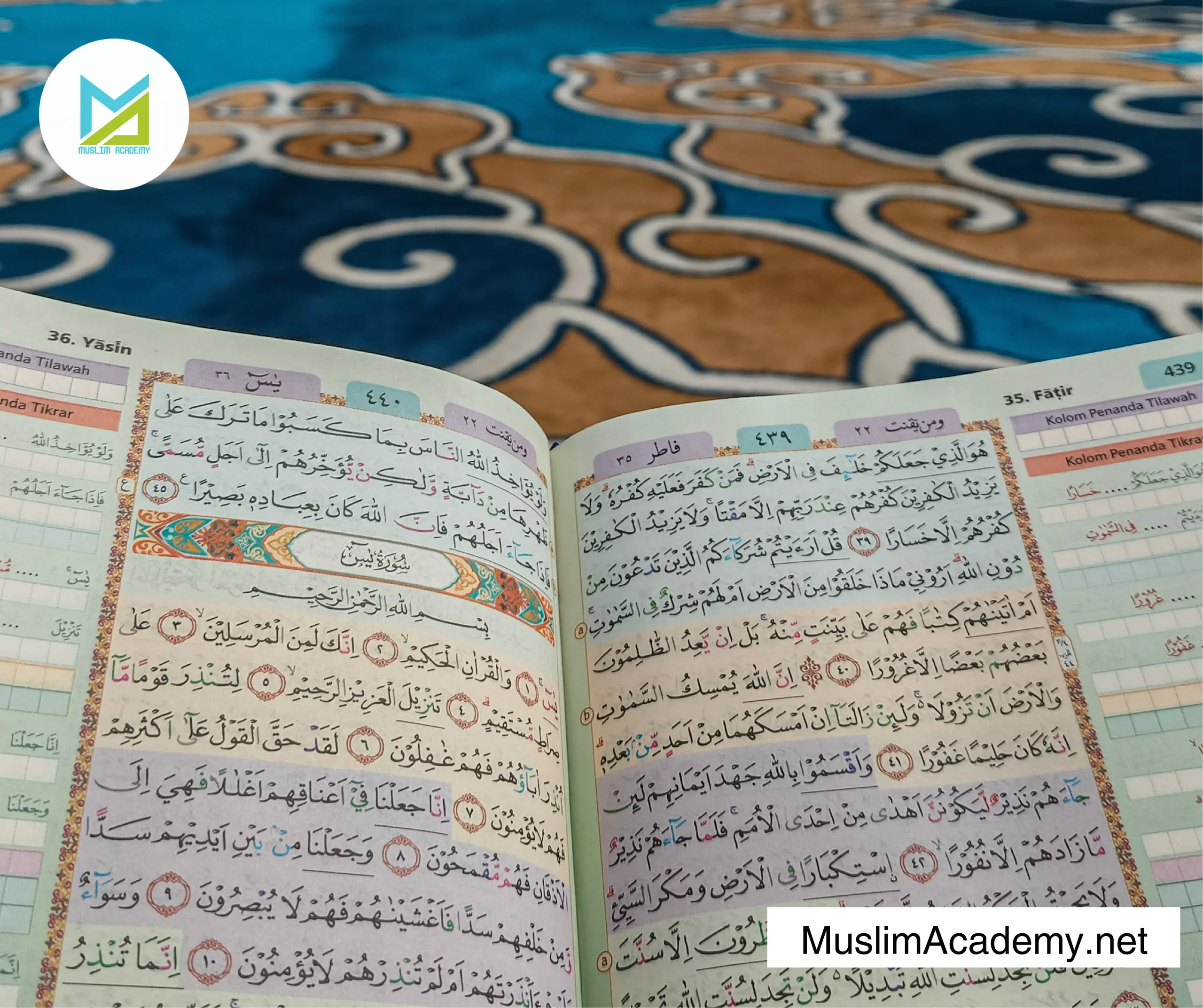
Among all the chapters that make up the Quran, few hold a place in Muslim hearts as warm, as deep, or as consistently present as Surah Yaseen, Complete with Muslim Academy. Muslims across every culture and every generation have turned to this surah in moments of grief, in times of spiritual seeking, and in the quiet hours before sleep — drawn by a chapter that scholars have described as the heart of the Quran itself. This title, attributed to the Prophet Muhammad in well-known narrations, hints at something most readers feel the moment they engage seriously with its verses: Surah Yaseen carries within it the essential pulse of Quranic teaching, delivered with a power and beauty that makes it unlike almost any other passage in the entire text.
The surah opens with two Arabic letters — Ya and Seen — whose precise meaning remains a matter of scholarly reflection rather than settled consensus. From this mysterious opening, the chapter moves through a sweeping arc of themes: the nature of prophethood, the fate of communities that rejected divine guidance, the signs of God spread across the natural world, the reality of resurrection and judgment, and the intimate relationship between the Creator and the creatures who depend on Him for every breath they take. Furthermore, the surah addresses these themes not in abstract theological language but in vivid, immediate terms that speak directly to human experience and human doubt.
The Opening and the Prophet’s Mission
The surah begins by affirming the prophetic mission with a clarity and certainty that sets the tone for everything that follows. God swears by the Quran itself — described as full of wisdom — that Muhammad stands among the messengers, sent on a straight path, carrying a revelation from the Almighty, the Merciful.
This opening establishes two things simultaneously. First, it honors the Prophet by confirming his status directly and unambiguously. Second, it defines the purpose of the entire prophetic mission — to warn a community whose ancestors received no warning and who consequently lived without the guidance that the human soul genuinely needs. Consequently, the surah frames prophethood not as a privilege but as a mercy extended to people who would otherwise navigate life without the light of divine guidance.
The Parable of the City and Its Messengers
One of the most memorable passages in Surah Yaseen, Complete with Muslim Academy, presents a parable about a city that received messengers and rejected them. God sent two messengers, then strengthened them with a third. The city’s people rejected all three, dismissing their message as nothing more than bad omens brought by superstitious wanderers.
Into this hostile environment stepped a man from the far side of the city — running, urgent, and unafraid — urging his people to follow the messengers. He appealed to their reason, their gratitude, and their sense of accountability before God. The city ultimately rejected the message. However, the man who defended the truth did not lose his reward. God honored his faith, and the surah uses his story to establish one of its central moral principles: sincerity before God does not depend on the approval of the crowd. Therefore, this parable speaks as directly to the modern believer navigating social pressure as it did to the earliest Muslim community.
The Signs Spread Across the Natural World
After the city’s parable, the surah shifts into one of the Quran’s most sustained and beautiful passages of reflection on the natural world. God draws the listener’s attention to the dead earth that springs to life when rain arrives, to the sun running its precise course, to the moon moving through its ordained phases, to the loaded ship that carries human beings safely across the sea.
Each of these signs carries the same underlying message — that the universe operates with deliberate precision, and that this precision points unmistakably toward a Creator who designed it with purpose and sustains it with constant attention. Furthermore, the surah challenges the reader directly: Will you not reflect? This rhetorical invitation transforms the natural world from a backdrop to daily life into a continuous source of evidence and wonder. Consequently, the reader who engages with this passage honestly finds that the created world speaks a language of divine presence that attentive eyes can read in every direction they look.
The Reality of Resurrection
The surah then confronts one of the central theological disputes of its original audience — the denial of resurrection. The Meccan opponents of the Prophet considered the idea of physical resurrection after death to be absurd, and they expressed this rejection with a mixture of mockery and philosophical challenge. The surah engages their objection head-on.
God points to the original creation as the most decisive argument: the being who created human beings from nothing the first time encounters no greater difficulty in recreating them after death. Furthermore, God describes Himself as the one who initiated all creation and to whom all creation returns — a framing that places the resurrection not as a surprising new event but as the natural completion of a cycle that began with the first act of creation. Therefore, the surah dismantles the denial of resurrection not through abstract philosophy but through the straightforward logic of origin and return.
The Day of Judgment in Surah Yaseen
Having established the reality of resurrection, the surah moves into a vivid description of the Day of Judgment itself. The trumpet sounds. The dead rise from their resting places. They move in the direction of their Lord. The wrongdoers find themselves sealed — their mouths silenced, their hands speaking, their feet bearing witness to everything they did in the world they left behind.
This passage carries one of the Quran’s most striking images of divine justice — the idea that the very limbs of the human body become witnesses against anyone who spent them in wrongdoing. God does not need accusers or prosecutors. The evidence lives in the body itself. Furthermore, the passage describes how God could have altered human beings entirely — removing their sight, fixing them to their places — as a reminder of how completely dependent every human being remains on divine mercy and permission. Consequently, the Day of Judgment in Surah Yaseen Complete with Muslim Academy, emerges not merely as a future event to fear but as a present reality that should shape how a person moves through every moment of their current life.
The Argument Against Polytheism
The surah dedicates a significant passage to dismantling the logic of polytheism — the worship of multiple deities alongside or instead of God. It challenges the polytheist directly: did the beings you worship create anything? Do they possess any power? Can they respond when called upon? The answer in every case is no.
The surah frames this challenge not as intellectual combat but as an appeal to reason and gratitude. The God who created human beings, who provides for them, who gives them the faculties of sight and thought and speech — this God alone deserves worship, love, and reliance. Furthermore, the surah draws a sharp contrast between the impotence of false objects of worship and the boundless power and mercy of the Creator. Therefore, the argument against polytheism in this surah rests on a foundation of logic, gratitude, and the honest examination of what human beings actually depend upon every moment of their existence.
The Intimate Closing Verses
As the surah approaches its end, its tone shifts from argumentation to something more intimate and more tender. God asks: does the human being not see that God created them from a drop, and yet they become an open disputant? Does the human being forget their own origin while challenging the power of their Creator?
These closing verses carry a quality of gentle but firm challenge — reminding the reader of their own smallness and their own dependence while simultaneously affirming God’s capacity to give life, to take it, and to restore it whenever He wills. Furthermore, the surah closes with a declaration of absolute divine power: God says “Be,” and it is. This final image — the universe springing into existence at a single word — returns the reader to the same awe that the natural world passages earlier in the surah invited. Consequently, Surah Yaseen Complete with Muslim Academy, moves its reader through a complete emotional and intellectual arc, arriving at its conclusion with a sense of both human humility and divine magnificence that lingers long after the recitation ends.
The Spiritual Practice of Reciting Surah Yaseen
Muslims recite Surah Yaseen in a remarkable variety of circumstances and with a remarkable consistency of purpose. Many families recite it in the presence of the dying, believing that it eases the transition from this life to the next and surrounds the departing soul with the Quran’s mercy. Many individuals recite it in the predawn hours, drawn by prophetic narrations that associate its recitation with abundant blessing and the forgiveness of sins. Friday evenings carry a special association with the surah in many Muslim communities, who gather its recitation of the surah is incorporated into their weekly rhythm of devotion.
However, beyond specific occasions and narrated merits, the most important reason Muslims return to this surah again and again is simpler and more personal. The surah speaks. It addresses the grief of losing a loved one, the uncertainty of what lies beyond death, the wonder of a natural world that operates with breathtaking precision, and the challenge of maintaining faith in the face of mockery and rejection. Therefore, every generation of Muslims discovers in Surah Yaseen a chapter that meets them exactly where they stand.
Learning and Memorizing Surah Yaseen
For students who pursue memorization of the Quran, Surah Yaseen occupies an honored position. Many teachers guide their students toward this surah early in their memorization journey — not only because of its spiritual significance but because of its structural qualities that support memorization effectively.
The surah flows with a distinctive rhythm and a consistent internal logic that helps the memorizer move naturally from one passage to the next. Its recurring themes and its building emotional arc give the student landmarks within the text that anchor their memory reliably. Furthermore, the widespread tradition of reciting this surah in community settings means that students hear it frequently, reinforcing their memorization through regular exposure. Consequently, a student who commits Surah Yaseen to memory gains not only a celebrated achievement within their Hifz journey but a lifelong companion that they can turn to in every season of their spiritual life.
Why This Surah Endures Across Every Generation
The question of why Surah Yaseen Complete with Muslim Academy, has maintained its central place in Muslim devotional life across fourteen centuries of history is not difficult to answer. It endures because the questions it addresses are permanent. Human beings in the 7th century CE and human beings in the 21st century share the same essential uncertainties — about death, about meaning, about whether the universe operates under a just and attentive authority or drifts without purpose or care.
The surah answers these questions with a directness, a beauty, and a depth that continues to satisfy the searching heart across every cultural and historical context that Muslims have inhabited. Moreover, its language carries the full weight of Classical Arabic at its most powerful — rhythmic, precise, and emotionally resonant in ways that translations can gesture toward but never fully reproduce. Therefore, every Muslim who chooses to learn, recite, and reflect on Surah Yaseen Complete with Muslim Academy, joins a company of believers stretching back to the earliest days of Islam — all of them drawn to the same heart, all of them finding in it something their own heart needed.
Conclusion
Surah Yaseen Complete with Muslim Academy, stands as one of the most complete and most beloved chapters in the entire Quran — a surah that encompasses the full range of Quranic themes within a single sustained and beautifully constructed arc. From its mysterious opening letters to its final declaration of divine power, it carries the reader through prophethood, natural signs, resurrection, judgment, and the intimate relationship between Creator and creature with a depth and economy of expression that continues to astonish careful readers.
For any Muslim who wishes to deepen their connection to the Quran, there is no better starting point than this chapter — reading it carefully, understanding its meanings, memorizing its verses, and returning to it again and again across a lifetime of devotion and discovery.