Start Online Quran Classes with Muslim Academy
https://muslimacademy.net/index.php/free-trial/
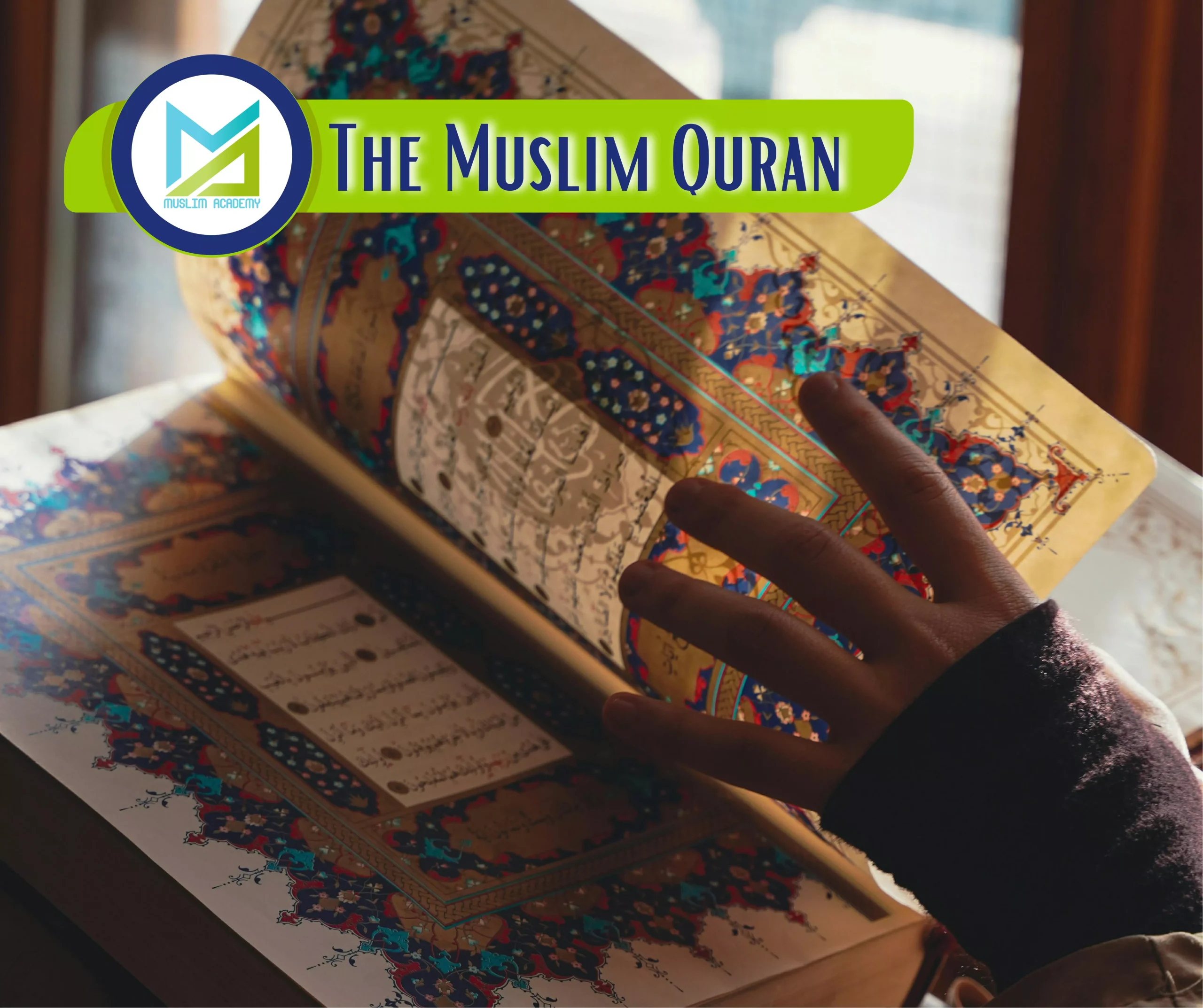
No book in human history has shaped the lives of its readers more profoundly than the Quran. It guides daily prayer and personal conduct. informs law, art, architecture, and science. It comforts the grieving, challenges the arrogant, and inspires the sincere. For over one billion Muslims around the world, the Muslim Quran with Muslim Academy is not simply a religious text. It is a living conversation between the Creator and His creation — one that began over fourteen centuries ago and continues with every recitation today.
Yet many people outside the faith know surprisingly little about what the Quran actually is, how it came to exist, and why it holds such a central place in Muslim life. This article explores those questions clearly and honestly, offering a genuine introduction to one of humanity’s most significant books.
What Is the Quran?
The Quran is the holy scripture of Islam. Muslims believe it contains the direct words of Allah, revealed to the Prophet Muhammad through the Angel Jibreel over a period of approximately twenty-three years. The revelations began in the year 610 CE, when Muhammad was meditating in a cave near Mecca. They continued until shortly before he died in 632 CE.
The Quran consists of 114 chapters, called surahs. Each surah contains a varying number of verses, called ayat. The shortest surah has only three verses. The longest contains 286. Together, they cover an enormous range of subjects. These subjects include theology, ethics, law, history, human psychology, the natural world, and the relationship between the human soul and its Creator.
The Arabic word Quran itself comes from a root meaning “to recite” or “to read aloud.” This etymology is significant. The Quran was always meant to be spoken, heard, and memorized — not merely read silently from a page. Consequently, its oral dimension is inseparable from its identity as a sacred text.
How the Quran Was Preserved
The preservation of the Quran is one of the most remarkable stories in the history of any civilization. From the very beginning, the Prophet Muhammad had trained his companions to memorize each new revelation as it arrived. Furthermore, scribes wrote the verses down on whatever materials were available — animal skins, flat bones, and palm leaves.
After the Prophet’s death, the early Muslim community faced a serious challenge. Many of the companions who had memorized large portions of the Quran were dying in military conflicts. Therefore, the first Caliph, Abu Bakr, ordered a complete written compilation of the Quran. Scribes gathered every written fragment and cross-checked it against the memories of living companions. The result was the first complete written Quran.
Later, the third Caliph, Uthman ibn Affan, standardized this compilation into a single authoritative text. He distributed copies to major Islamic cities and instructed that all variant written copies be destroyed. This decisive action preserved the text’s unity. As a result, Muslims today read from a text that scholars universally agree matches the original revelation with extraordinary precision.
The oral tradition reinforced this written preservation. Millions of Muslims in every generation have memorized the entire Quran. These individuals, known as huffaz, carry the complete text in their hearts. This living memorization has served as a constant check against any corruption of the written text across fourteen centuries.
The Language of the Quran
The Quran was revealed in Arabic — specifically, in the rich and sophisticated Arabic dialect of seventh-century Arabia. Muslims consider this Arabic to be part of the revelation itself. Therefore, the Quran is always recited in Arabic during Islamic prayer, regardless of what language a Muslim speaks in daily life.
This has driven one of history’s great linguistic achievements. Arabic spread across an enormous geographic region largely because of the Quran. Millions of non-Arab Muslims learned Arabic specifically to access their scripture directly. Furthermore, the Quran’s literary style — its rhythm, its imagery, its structural elegance — deeply influenced Arabic literature, poetry, and scholarship for over a millennium.
Translations of the Quran exist in dozens of languages. However, Muslims do not consider translations to be the Quran itself. They view them as interpretations of meaning. The original Arabic remains the only authentic form. Consequently, even Muslims who read a translation regularly are encouraged to also learn Quranic Arabic so they can engage with the text in its original form.
The Quran’s Major Themes
The Muslim Quran with Muslim Academy addresses the full range of human experience. Several major themes run through its chapters with remarkable consistency.
The Oneness of Allah (Tawhid)
The most central theme of the Quran is the absolute oneness of Allah. The Quran consistently affirms that Allah has no partners, no equals, and no rivals. He is the Creator of all things and the ultimate authority over all existence. This principle of tawhid forms the theological foundation of everything Islam teaches.
Prophethood and Human Guidance
The Quran tells the stories of many prophets — from Adam and Noah to Abraham, Moses, Jesus, and Muhammad. Each story carries lessons about faith, patience, obedience, and the consequences of rejecting divine guidance. Together, these narratives form a continuous account of Allah’s mercy toward humanity throughout history.
Accountability and the Afterlife
The Quran speaks extensively about life after death. It describes the Day of Judgment, when every soul will stand before Allah and account for its deeds. It describes paradise as the reward for faith and righteous living, and it describes the Fire as the consequence of arrogance and rejection of truth. These descriptions are vivid, detailed, and intentionally designed to motivate moral seriousness in this life.
Justice and Human Dignity
The Quran places enormous emphasis on justice. It defends the rights of the alternative, the orphan, the widow, and the vulnerable. It condemns oppression in strong terms. Furthermore, it establishes the inherent dignity of every human being as a creature honored by Allah. These principles shaped the legal and ethical systems of Islamic civilization for centuries.
Reflection on the Natural World
Throughout its chapters, the Quran repeatedly invites readers to observe the natural world as a sign of Allah’s existence and power. The alternation of day and night, the growth of plants from dry earth, the movement of clouds and rain — all of these become windows into divine wisdom. Consequently, many early Muslim scholars combined deep Quranic study with serious scientific inquiry, believing that understanding nature was itself a form of worship.
The Quran in Muslim Daily Life
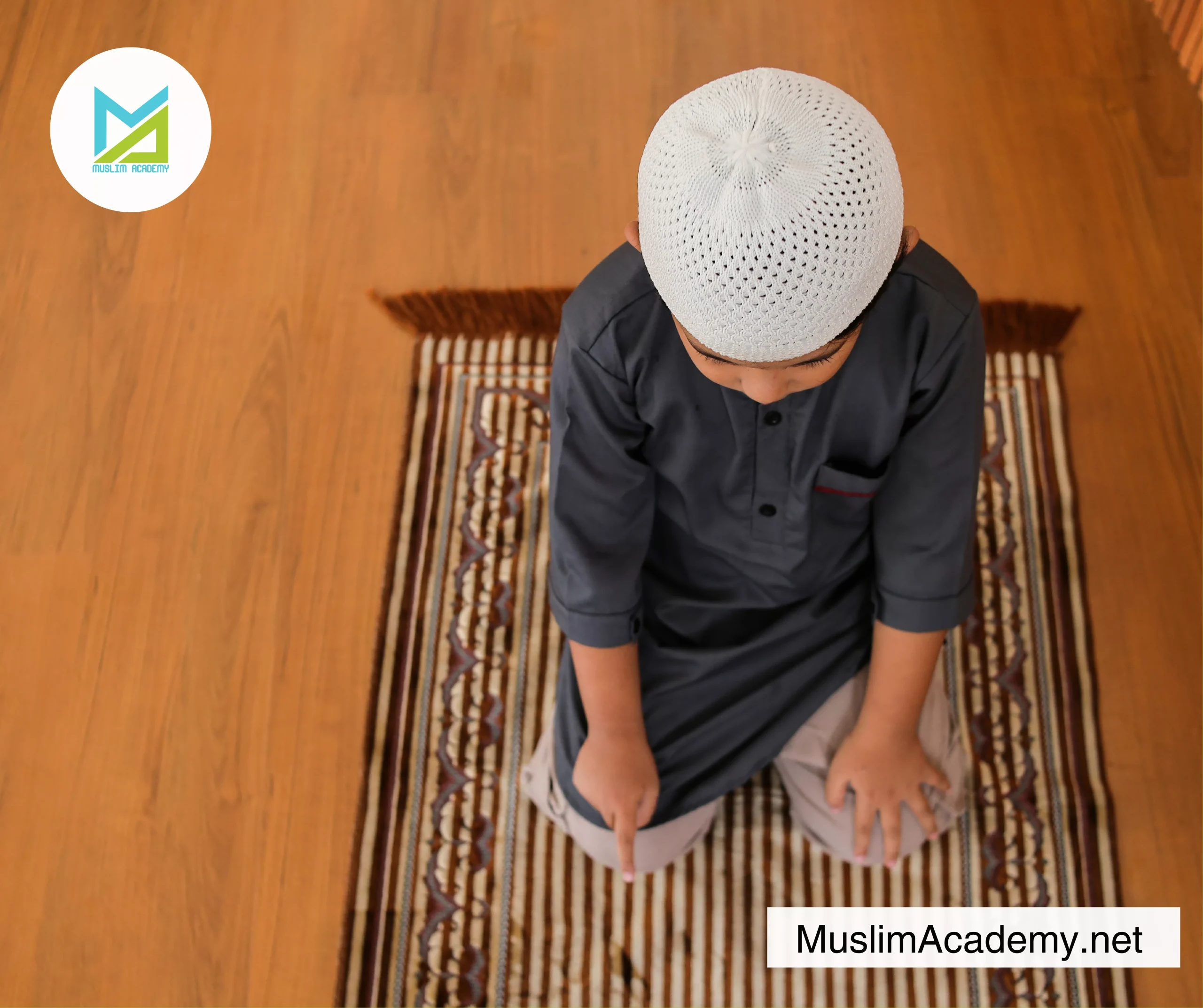
For practicing Muslims, the Quran is not a book they read occasionally on special occasions. It is a constant presence in daily life. Every Muslim who performs the five daily prayers recites Quranic verses in Arabic. The opening chapter, Al-Fatiha, appears in every unit of every prayer, at a minimum of seventeen times each day.
Beyond formal prayer, many Muslims maintain a personal daily reading habit. Some complete the entire Quran once each month. Others read a fixed portion each morning. During the month of Ramadan, Muslims traditionally increase their Quranic engagement significantly. Many complete the entire text at least once during this blessed month.
In addition, Quranic verses mark the major transitions of Muslim life. They appear at births and naming ceremonies.feature in wedding celebrations. comfort the dying and are recited at funerals. The Quran accompanies a Muslim from the first moments of life to the last — and, believers hold, into what lies beyond.
Conclusion
The Muslim Quran with Muslim Academy stands as one of the most extraordinary documents in human civilization. It has guided billions of lives, shaped entire cultures, inspired magnificent art and architecture, and driven the development of language, law, and learning across the globe. More than any of these external achievements, however, it remains — for every Muslim who opens its pages — a direct address from Allah to the human heart.
To understand the Quran is to understand Islam itself. And to understand Islam is to understand a tradition that has shaped, and continues to shape, the lives of more than a billion human beings with remarkable depth and enduring power.