Start Online Quran Classes with Muslim Academy
https://muslimacademy.net/index.php/free-trial/
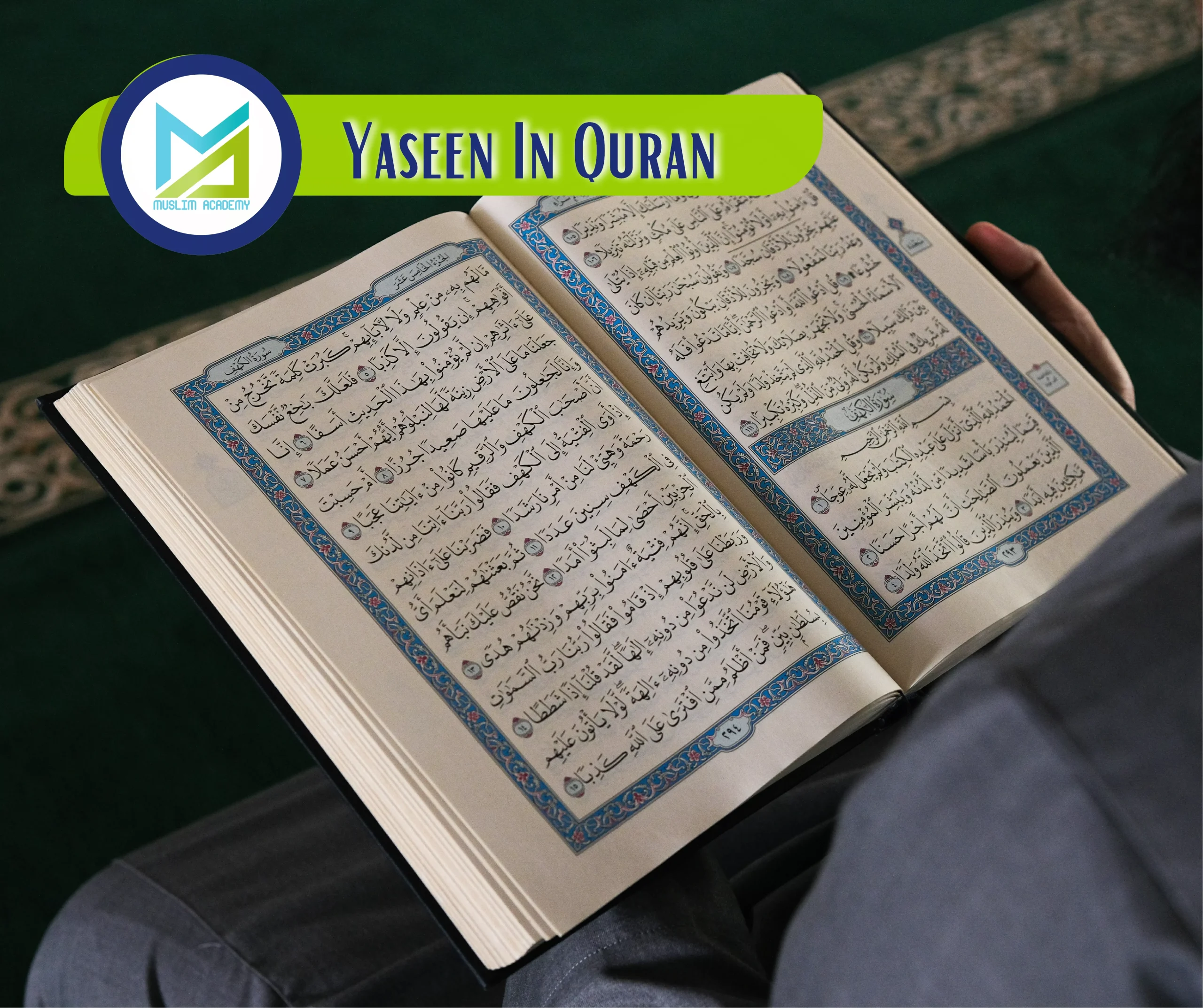
Some chapters of the Quran hold a place so special that Muslims return to them again and again throughout their lives. Surah Yaseen is one of them. Scholars describe it as the heart of the Quran. Families recite it during times of difficulty. Communities gather to listen to it at funerals, in hospitals, and on blessed nights. Understanding Yaseen in the Quran with Muslim Academy — its content, its virtues, and its place in Muslim life — opens a window into one of the most treasured chapters of the Islamic scripture.
This article explores Surah Yaseen in depth. It examines the chapter’s themes, spiritual significance, practical role in Muslim devotion, and the wisdom it offers to every sincere reader who approaches it with an open heart.
What Is Surah Yaseen?
Surah Yaseen is the thirty-sixth chapter of the Quran. Scholars classify it as a Makkan surah, meaning that Allah revealed most of it to the Prophet Muhammad during his years in Mecca — a period of intense opposition, spiritual struggle, and foundational teaching. The chapter contains eighty-three verses. Together, these verses cover some of the most fundamental themes in the entire Quran.
The chapter opens with two mysterious Arabic letters — Ya and Seen — from which it takes its name. These letters belong to a group that scholars call the muqatta’at, or disconnected letters. Fourteen chapters of the Quran begin with similar combinations. Their precise meaning belongs to the knowledge of Allah alone. However, their presence signals the beginning of something profound and draws the reader’s full attention immediately.
The Core Themes of Surah Yaseen
Surah Yaseen addresses several major theological and moral themes with remarkable depth and power. Each theme connects to the others, building a complete picture of faith, accountability, and divine mercy.
The Reality of Prophethood
Early in the chapter, Allah presents the story of a town that received divine messengers and rejected them. The residents dismissed each messenger in turn. Then a man from the far side of the city ran forward and urged his people to follow the guidance they had been given. His courage, his sincerity, and his ultimate fate carry a powerful message about the value of faith in the face of social pressure. Furthermore, this story affirms that prophethood is a mercy from Allah — and that rejecting it carries real consequences.
Signs in the Natural World
Surah Yaseen directs the reader’s attention repeatedly to the natural world as evidence of Allah’s existence and power. The sun moves in its orbit. The moon passes through its phases. Ships sail through the sea. Night and day alternate in perfect order. Each of these phenomena, the chapter insists, points unmistakably to a Creator who designed them with intention and precision. Consequently, the chapter invites not passive belief but active observation and reflection.
The Resurrection and the Day of Judgment
Perhaps the most vivid portion of Surah Yaseen describes the Day of Judgment in striking terms. On that day, a single blast of sound will summon all of humanity from their graves. People will stand before their Creator to account for everything they did in this life. Their own hands will speak. Their own feet will testify. No denial will be possible, and no deception will succeed. This section of the chapter produces a profound sense of urgency — reminding the reader that this life is preparation, not destination.
Divine Power Over Life and Death
Throughout its verses, Surah Yaseen returns consistently to the theme of Allah’s absolute power. He created human beings from a humble origin. gave them language and understanding. He controls their lives from beginning to end. Moreover, He holds the power to resurrect what has died — making the question of the afterlife not one of possibility but of divine will.
Why Yaseen in the Quran with Muslim Academy Holds Such a Special Status
Classical scholars and authenticated prophetic narrations describe Surah Yaseen with particular reverence. Several virtues have been attributed to this chapter that explain why Muslims return to it so consistently throughout their lives.
The most well-known description calls Surah Yaseen the heart of the Quran. Just as the physical heart sustains the body, this chapter is said to carry the essential spirit of the entire scripture — its core truths, its central call to faith, and its most urgent reminders about human accountability. Reading it is therefore described as reaching into the very centre of what the Quran teaches.
Additionally, scholars recommend reciting Surah Yaseen for those who are ill or approaching death. Sitting beside a dying person and reciting the chapter offers comfort to the departing soul and creates an atmosphere of spiritual peace for everyone present. This practice has continued across Muslim communities for centuries, making Surah Yaseen a companion not only in life but at its most sacred threshold.
Some scholars also recommend reciting Yaseen at the beginning of the day, citing narrations that describe specific blessings attached to this habit. As a result, many devout Muslims include it in their regular morning devotional routine alongside their daily prayers.
The Literary Brilliance of Surah Yaseen
Beyond its theological content, Surah Yaseen stands as a masterpiece of Quranic Arabic. Its rhythm is urgent and flowing. Short, powerful verses alternate with longer, more detailed passages in a pattern that keeps the reader fully engaged. The imagery shifts from cosmic — the sun and moon in their orbits — to intimate — a man running across his city to defend his faith.
Each transition carries the reader forward without losing the coherence of the chapter’s central message. Arabic scholars who have studied the Quran’s literary dimensions consistently single out Surah Yaseen as an example of the Quran’s unique rhetorical power. Neither poetry nor prose in the conventional sense, the chapter occupies a literary category entirely its own. This quality reinforces the Muslim conviction that no human author produced the Quran.
Surah Yaseen in Muslim Daily Life
The presence of Surah Yaseen in Muslim devotional life is both wide and deep. Recitation of this chapter appears in multiple contexts and carries meaning in each of them.
During Ramadan, many Muslims recite the Yaseen in the Quran with Muslim Academy with particular frequency, seeking its blessings during the holiest month of the Islamic calendar. Study circles gather to read it together and reflect on its meaning. Teachers use it as a starting point for introducing students to the Quran’s major themes because it covers so much essential ground in a relatively compact form.
At moments of personal crisis — illness, grief, fear, or uncertainty — many Muslims turn to Surah Yaseen instinctively. The chapter’s descriptions of Allah’s power and mercy provide genuine comfort. Reading it aloud, even when the meaning is not fully understood, carries the calming quality that characterises the Quran as a whole.
Families who have lost a loved one often arrange gatherings specifically for the recitation of Surah Yaseen in the days following a death. These gatherings serve multiple purposes simultaneously. They honour the deceased. bring the community together. Focus everyone’s attention on the reality of the afterlife and the mercy of Allah — exactly the reminders that grief most needs.
How to Engage With Surah Yaseen More Deeply
Simply reciting Surah Yaseen is valuable and rewarding. Going deeper, however, multiplies its benefit enormously. Several practical approaches help readers move from surface recitation to genuine engagement.
Reading a reliable translation alongside the Arabic text makes the chapter’s themes vivid and personal. When the verses about the natural world appear, pause and reflect on specific examples from your own experience. When the scenes of the Day of Judgment unfold, allow them to land with their intended emotional weight rather than rushing past them.
Listening to the chapter recited by a skilled qari — a trained Quranic reciter — adds another dimension entirely. The sound of the Arabic, delivered with proper tajweed and genuine feeling, can move the heart in ways that silent reading alone cannot replicate. Many recordings are freely available, and even a single attentive listening can leave a lasting impression.
Learning the meaning of the chapter’s opening verses by heart, alongside the Arabic, transforms daily recitation from a ritual into a living conversation with the divine.
Conclusion
Few chapters of any scripture have earned the devotion that Surah Yaseen commands among Muslims worldwide. Its themes are universal. Language is extraordinary. spiritual impact on sincere readers is well documented across fourteen centuries of Islamic experience.
Engaging seriously with Yaseen in the Quran with Muslim Academy — whether through recitation, study, reflection, or listening — connects the believer to the heart of the Quran’s message. That message is timeless: Allah is real, this life is a trust, and the journey does not end at death. For every Muslim who opens this chapter with genuine attention, the words respond with a clarity and a depth that never diminishes, no matter how many times they return.