


Start Online Quran Classes with Muslim Academy
https://muslimacademy.net/index.php/free-trial/
Few chapters in the entire human story carry the depth, the diversity, and the lasting significance of Muslims History with Muslim Academy. From the scorching deserts of 7th-century Arabia to the imperial courts of Istanbul, from the towering libraries of Baghdad to the marble minarets of Moorish Spain, the story of Muslim civilization traces one of the most remarkable journeys any community of people has ever undertaken. It is a story that encompasses spiritual revolution, intellectual brilliance, political power, painful division, catastrophic loss, and — above all — a persistent capacity for renewal that has carried this tradition forward across fourteen centuries without interruption.
Understanding Muslims History with Muslim Academy honestly requires moving beyond both idealization and prejudice. This history contains moments of extraordinary generosity and episodes of destructive conflict. It produced scholars who shaped the foundations of modern science and rulers who betrayed the ethical principles their faith demanded. However, taken in its fullness, this history stands as one of the most consequential and richly instructive bodies of human experience available to any thoughtful student of civilization.
Arabia Before the Coming of Islam
The world into which Islam arrived in the early 7th century was a land of sharp contrasts. The Arabian Peninsula hosted a vibrant culture of poetry, oral tradition, and fierce tribal loyalty. Arab poets had developed one of the most sophisticated literary traditions in the ancient world, competing in celebrated gatherings where the finest verses earned their authors lasting fame and social honor.
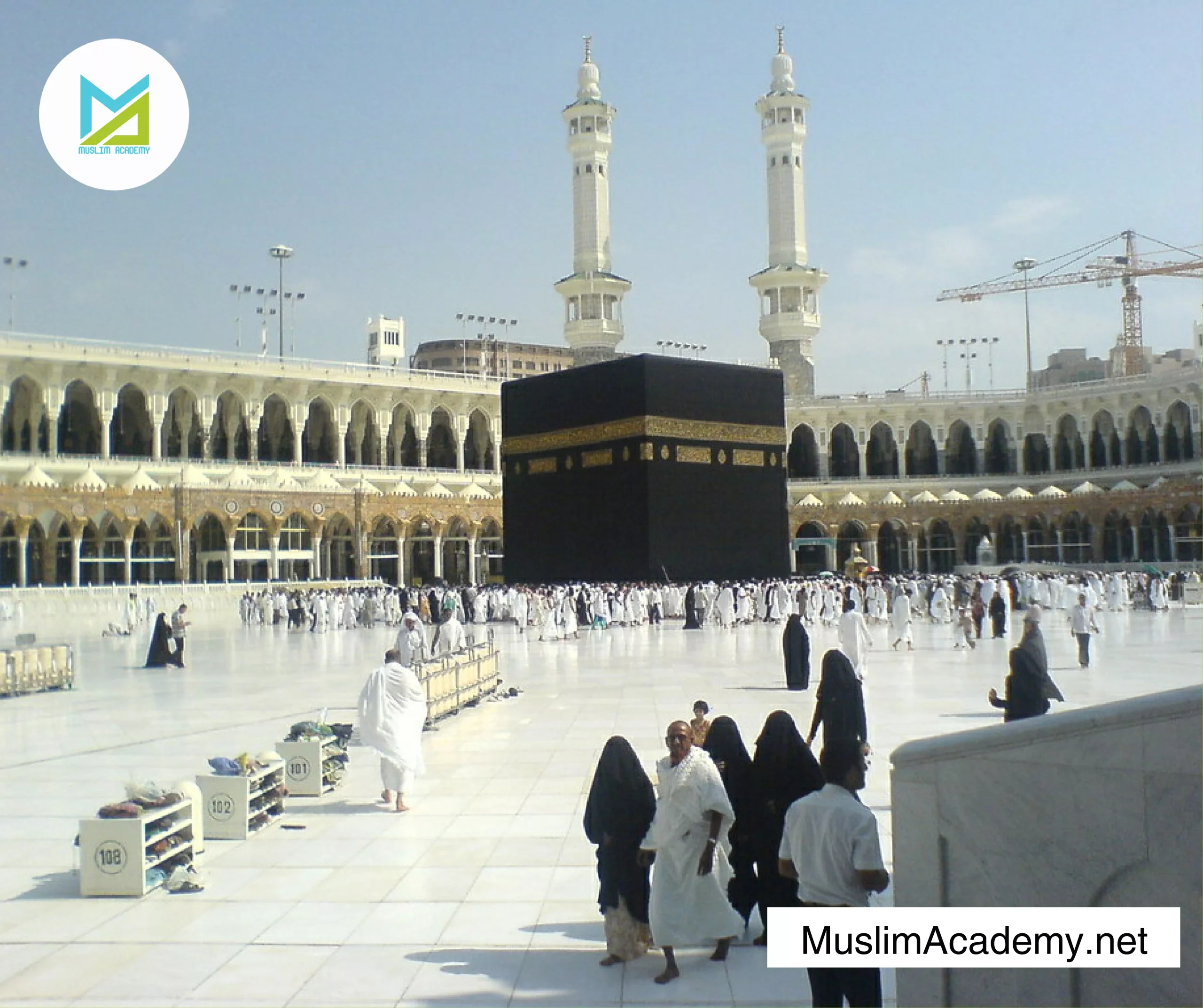
Yet beneath this cultural vitality ran deep currents of inequality and division. Arab society organized itself around tribal structures that prioritized kinship loyalty above all other values. Slavery was widespread. Women held few recognized rights. The gap between the powerful and the vulnerable was vast and rarely challenged. Furthermore, the region’s religious landscape centered on polytheism, with the Kaaba in Mecca housing hundreds of idols that the surrounding alternative venerated as intercessors with the divine. Consequently, the Arabia that Islam entered was both culturally accomplished and morally ripe for transformation.
The Prophet Muhammad and the Birth of a New Community
In 610 CE, a Meccan merchant named Muhammad received the first revelation of the Quran during a period of solitary reflection in the Cave of Hira outside the city. This moment launched a prophetic mission that would unfold over twenty-three years and redirect the course of human civilization.
Muhammad began sharing his message among close companions before gradually expanding his preaching to the wider Meccan public. The message called on people to abandon polytheism, worship one God alone, treat every human being with dignity, and live with conscious awareness of divine accountability. The Meccan establishment responded with fierce resistance, subjecting early Muslims to persecution, economic boycott, and physical violence. Therefore, in 622 CE, Muhammad and his followers migrated to the city of Medina — an event known as the Hijra that Muslims regard as the beginning of their calendar and the founding moment of the first Islamic community.

Building the First Muslim Society
In Medina, Muhammad established far more than a religious congregation. He built a political community governed by principles of justice, consultation, and mutual responsibility that cut across tribal boundaries and created a new kind of social solidarity. The Constitution of Medina formalized the rights and obligations of every community living under this new order — including the Jewish alternative — and stands as one of the earliest written constitutional documents in recorded history.
Over the years that followed, the Muslim community grew steadily in strength and unity. By 630 CE, Muhammad and his companions entered Mecca peacefully, cleared the Kaaba of its idols, and brought the heart of the Arabian Peninsula under Islamic governance. Moreover, by the time of the Prophet’s death in 632 CE, the majority of Arabia had embraced Islam — a political and spiritual transformation of breathtaking speed and depth.
The Rightly Guided Caliphs and Rapid Expansion
The death of the Prophet Muhammad presented the Muslim community with its first great challenge — governing themselves without prophetic leadership. The community selected Abu Bakr, one of Muhammad’s closest companions, as the first Caliph. His brief two-year rule focused on consolidating the unity of the Arabian Peninsula and suppressing tribal rebellions that erupted following the Prophet’s death.
Under his successors — Umar ibn al-Khattab, Uthman ibn Affan, and Ali ibn Abi Talib — the Islamic state expanded with extraordinary speed. Muslim armies moved into Persia, the Byzantine territories of Syria and Egypt, and across North Africa, carrying with them not only military power but a transformative social message of equality, justice, and divine accountability. Furthermore, the administrative systems these caliphs established demonstrated a genuine commitment to the ethical principles Islam had articulated. However, this period also witnessed the first painful internal divisions — including the assassination of Uthman and the civil war that followed — whose echoes have shaped Muslims History with Muslim Academy ever since.
The Umayyad Dynasty and the Limits of Empire
The Umayyad Caliphate, which ruled from 661 to 750 CE with Damascus as its capital, transformed the Islamic state from an Arabian polity into a vast empire stretching from Spain in the west to Central Asia in the east. This represented one of the most dramatic territorial expansions in world history, achieved within less than a century of Islam’s founding.
The Umayyads produced remarkable achievements in architecture, administration, and the spread of the Arabic language across their vast domains. Yet their rule generated serious criticism from Muslim scholars and communities who argued that the dynasty’s hereditary and often autocratic governance violated the egalitarian spirit of early Islam. Consequently, opposition movements gathered strength throughout the empire, eventually producing the Abbasid Revolution of 750 CE that swept the Umayyads from power and transferred the caliphate to a new dynasty with a new vision.
The Abbasid Caliphate and the Islamic Golden Age
The Abbasid Caliphate, centered in the newly built city of Baghdad, presided over what historians widely recognize as the most brilliant period in all of Muslims History, with Muslim Academy — the Islamic Golden Age. Baghdad rapidly grew into the largest and most cosmopolitan city in the world, attracting scholars, physicians, philosophers, poets, and merchants from every civilization on earth.
Under Abbasid patronage, Muslim scholars translated the great works of Greek, Persian, and Indian knowledge into Arabic, preserving texts that might otherwise have disappeared entirely. They then built upon these foundations with original contributions of extraordinary quality. Al-Khwarizmi gave the world algebra and the conceptual foundations of the algorithm. Ibn Sina produced a medical encyclopedia so comprehensive that European universities used it as a standard reference for centuries. Al-Haytham laid the foundations of modern optics through systematic experimental research. Furthermore, Abbasid Baghdad hosted one of history’s most remarkable cultures of interfaith intellectual exchange, where scholars of different religious backgrounds collaborated in a genuine pursuit of knowledge. Consequently, the achievements of this period shaped the intellectual development of the entire world.
Crusades, Mongols, and the Test of Resilience
The Islamic world faced two of its most severe external challenges between the 11th and 13th centuries. The Crusades, beginning in 1095 CE, sent European Christian armies into the heart of the Muslim world in a series of military campaigns that lasted nearly two centuries. These conflicts produced moments of remarkable Muslim resistance — most memorably under Salah al-Din al-Ayyubi, whose recapture of Jerusalem in 1187 CE demonstrated both military brilliance and a personal chivalry that earned admiration even from his enemies.
However, a far more devastating blow arrived in 1258 CE when Mongol forces under Hulagu Khan sacked Baghdad, killed the Abbasid Caliph, and destroyed the city’s magnificent libraries in an act of cultural destruction whose scale shocked the entire world. Nevertheless, the Muslim community demonstrated its resilience once again. Rather than collapsing under Mongol domination, the Islamic world gradually absorbed its conquerors — converting many Mongol rulers to Islam and incorporating their energy into the continuing development of Muslim civilization. Therefore, what appeared to be a terminal blow became instead another chapter in a story of remarkable endurance.
Three Great Empires and a New Flowering
Between the 14th and 18th centuries, three great Muslim empires rose to govern vast portions of the world simultaneously — the Ottomans in Anatolia and the Middle East, the Safavids in Persia, and the Mughals in the Indian subcontinent. Together, these empires represented the most powerful concentration of Muslim political authority since the height of the Abbasid Caliphate.
The Ottoman Empire, at its peak under Suleiman the Magnificent, governed a territory stretching from the gates of Vienna to the borders of Persia and produced architectural masterpieces — including the Süleymaniye Mosque in Istanbul — that stand among the greatest works of human building. The Mughal Empire gave the world the Taj Mahal and presided over a civilization that blended Persian, Indian, and Islamic traditions into a cultural achievement of extraordinary richness. Moreover, the Safavid Empire elevated Persian art, poetry, and philosophy to heights that continue to inspire scholars and artists today. Consequently, this period represents one of the most magnificent chapters in the entire sweep of Muslim civilization.
Colonialism and the Modern Struggle for Identity
The 19th and 20th centuries brought the Islamic world face to face with European colonial power — a force that dismantled traditional political structures, redrew borders according to foreign strategic interests, and imposed governance systems that had little connection to the societies they governed. The Ottoman Empire collapsed following World War One, and European powers divided its territories into new nation-states whose boundaries reflected colonial calculation rather than historical or cultural logic.
Muslim thinkers and leaders responded to this profound disruption with a remarkable diversity of approaches. Some pursued modernization within an Islamic framework. Others embraced nationalist movements that sought independence through secular political organization. Still others called for religious revival and a return to foundational principles as the path forward. Furthermore, this period produced some of the most important and enduring debates in Muslims History with Muslim Academy — debates about the relationship between faith and governance, tradition and modernity, cultural identity and global engagement that continue to shape Muslim communities around the world today.
Muslims in the Contemporary World
Today, the global Muslim community encompasses nearly two billion people spread across more than fifty nations and every inhabited continent. Muslims speak hundreds of languages, maintain extraordinarily diverse cultural traditions, and contribute actively to every field of human endeavor — medicine, law, technology, literature, education, and the arts.
Despite the enormous diversity within this community, shared spiritual practices provide a unifying thread that connects Muslims across all boundaries of geography and culture. The five daily prayers, the annual fast of Ramadan, the pilgrimage to Mecca, and the recitation of the Quran continue to anchor Muslim life with a consistency and depth that fourteen centuries of historical turbulence have not diminished. Moreover, a vibrant global conversation about the meaning and application of Islamic values in the contemporary world reflects the same intellectual energy and moral seriousness that has characterized Muslims History with Muslim Academy from its very beginning. Consequently, the story of Muslim civilization is not a closed chapter from a distant past — it is an ongoing and living tradition that continues to shape the present and reach toward the future.
Conclusion
The Muslims History with Muslim Academy explored across these pages represents one of humanity’s most significant and instructive traditions. From the first revelation in a cave outside Mecca to the global community of two billion believers that fills the world today, this history encompasses every dimension of human experience — faith and doubt, achievement and failure, unity and division, loss and renewal.
What endures through all of it is the vitality of a community that has consistently demonstrated the capacity to face its most serious challenges, learn from its most painful failures, and carry forward a tradition of spiritual depth and intellectual seriousness that has enriched the entire human family. Engaging honestly and carefully with this history is not merely an academic exercise. It is an act of respect for a tradition that has shaped our shared world more profoundly than most people fully appreciate.