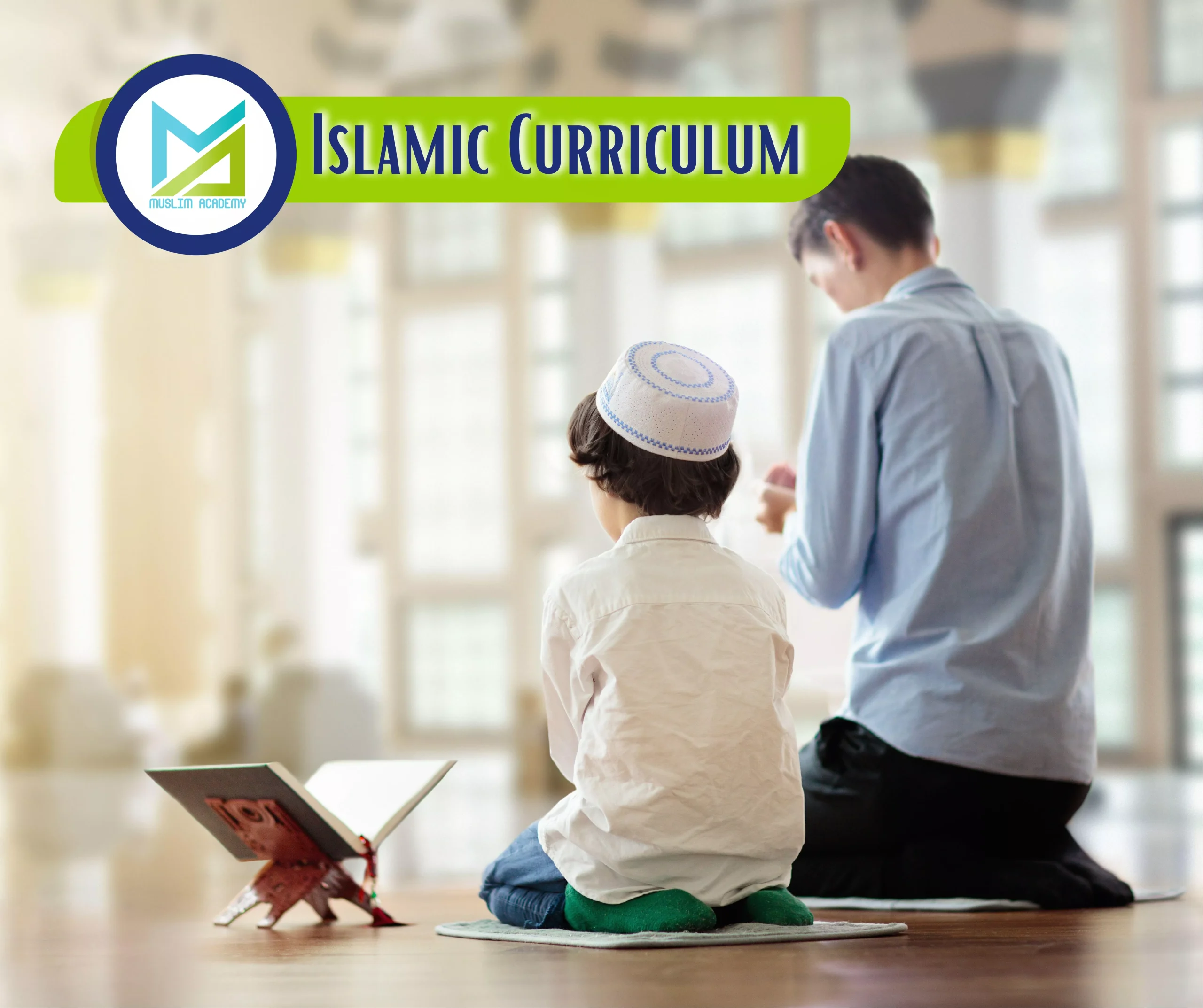
Start Online Quran Classes with Muslim Academy
https://muslimacademy.net/index.php/free-trial/
Knowledge without structure is like bricks without mortar. Each piece may be genuine and valuable on its own. Yet without a plan that places each brick in the right position, in the right order, and with the right connections to everything around it, no lasting structure emerges. The same principle applies to religious education. A Muslim who learns random Islamic facts, attends occasional lectures, and reads disconnected articles builds a fragile and incomplete understanding of their faith. What transforms scattered religious exposure into genuine Islamic knowledge is a well-designed Islamic Curriculum with Muslim Academy — a structured, progressive, and comprehensive sequence of learning that builds each level of knowledge on a solid foundation and carries the student steadily forward toward real depth and competence.
Understanding what a genuine Islamic Curriculum with Muslim Academy contains, how it is structured, and why its design matters so profoundly gives every parent, teacher, and learner the tools to make better decisions about one of the most important investments a Muslim community can make.
What a Genuine Islamic Curriculum with Muslim Academy Covers
A serious Islamic Curriculum with Muslim Academy does not cherry-pick popular topics or focus exclusively on what is easiest to teach. It covers the full range of subjects that constitute authentic Islamic knowledge — organized in a sequence that reflects genuine pedagogical wisdom about how human beings learn and how knowledge builds upon itself.
Quranic Education
Every serious Islamic Curriculum with Muslim Academy begins with the Quran. Students learn to recognize the Arabic alphabet, read Quranic text accurately, and apply the rules of tajweed — the precise science of correct recitation. From there, the curriculum introduces Quranic memorization at a pace appropriate to the student’s age and capacity. Furthermore, it develops engagement with the Quran’s meaning — beginning with accessible translations and progressing toward guided study of classical tafsir (Quranic interpretation) for more advanced students.
Quranic education is not a single course to be completed and set aside. It runs as a continuous thread throughout the entire curriculum — deepening at every level as the student’s linguistic, theological, and spiritual development makes greater engagement possible.
Arabic Language
The Quran was revealed in Arabic. The hadith of the Prophet were spoken in Arabic. The entire body of classical Islamic scholarship — jurisprudence, theology, Quranic commentary, and prophetic biography — was written in Arabic. Consequently, a genuine Islamic Curriculum with Muslim Academy treats Arabic not as an optional enrichment but as a core competency without which genuine engagement with the Islamic tradition is impossible.
A well-designed Arabic component begins with alphabet recognition and basic reading skills, progresses through foundational grammar and morphology, and eventually equips advanced students to read classical texts in their original language. This progression requires patience and consistent effort. However, the payoff — direct access to the primary sources of Islam without dependence on translation — makes every year of Arabic study enormously worthwhile.
Islamic Belief (Aqidah)
Understanding what Islam actually teaches about Allah, about prophethood, about angels, about divine books, about the Day of Judgment, and about divine decree is the theological foundation upon which every other dimension of Islamic practice rests. A serious curriculum teaches aqidah systematically — not as a list of doctrines to memorize, but as a structured understanding of Islamic theology that students can explain, defend, and apply in their own intellectual and spiritual lives.
Moreover, aqidah study equips students to engage thoughtfully with philosophical challenges, contemporary skepticism, and the distorted theological claims that circulate widely in the modern information environment. A Muslim who understands their theology deeply is far less vulnerable to confusion and far more capable of representing their faith accurately to others.
Islamic Jurisprudence (Fiqh)
Islam addresses every dimension of human life — worship, family relations, business dealings, social responsibilities, and personal ethics. The discipline of fiqh — Islamic law — derives practical rulings from the Quran and the prophetic tradition through a rigorous methodology that classical scholars developed over centuries. A good curriculum introduces fiqh systematically, starting with the rulings of personal worship — prayer, fasting, charity, and pilgrimage — and progressing to family law, commercial ethics, and broader social responsibilities.
Additionally, a mature Islamic Curriculum with Muslim Academy teaches the principles of usul al-fiqh — the methodology of legal reasoning — so that students understand not just what the rulings are but how qualified scholars derive them. This understanding prevents the dangerous simplism that treats a single verse or hadith as a complete legal ruling without engaging with the scholarly tradition of interpretation that surrounds it.
Hadith and Prophetic Biography
The Prophet Muhammad is the living model of Quranic values — the human being through whom the Quran’s principles became visible in practical daily life. A serious curriculum devotes significant attention to prophetic biography (seerah), helping students understand the context in which Islam developed, the character of the man who conveyed it, and the lessons his life carries for every generation of Muslims.
Alongside seerah, a complete curriculum introduces hadith studies — the science of prophetic traditions. Students learn the major hadith collections, the principles by which scholars authenticate hadiths, and the methodology for applying prophetic guidance to contemporary situations. This discipline requires both memorization and analytical rigour, and produces students who can engage with hadith literature with the sophistication that this complex science demands.
Islamic History and Civilization
Understanding Islam means understanding the history of the people who lived it, built it, and transmitted it across generations. A good Islamic Curriculum with Muslim Academy covers the early Islamic community in Mecca and Medina, the era of the companions and their successors, the development of the major Islamic empires, and the intellectual golden age in which Muslim scholars made foundational contributions to mathematics, medicine, astronomy, philosophy, and architecture.
This historical dimension gives students a sense of belonging to a living tradition — one that has produced remarkable human achievement and continues to shape the lives of over a billion people today. Furthermore, it provides essential context for understanding how Islamic law, theology, and scholarship developed the specific forms they carry today.
Islamic Ethics and Spiritual Development
Knowledge without character produces nothing of lasting value. The greatest scholars of Islamic history consistently taught that the purpose of Islamic learning is not simply to fill the mind with information but to transform the character of the person who learns. A serious Islamic Curriculum with Muslim Academy, therefore, includes explicit attention to akhlaq — Islamic ethics and moral character — and to the inner dimensions of faith that classical scholars grouped under the broad heading of spiritual purification.
Students who engage with this dimension of the curriculum develop not just knowledge of what Islam teaches but the habits of heart that translate that knowledge into genuine virtue — honesty, humility, generosity, patience, and sincere devotion to Allah in every dimension of daily life.
How a Good Islamic Curriculum with Muslim Academy Is Structured
The design of an Islamic Curriculum with Muslim Academy matters as much as its content. Even excellent subject matter, taught in the wrong sequence or without adequate attention to how knowledge builds on itself, produces confusion rather than clarity.
A well-designed curriculum follows three broad principles of organization.
Progression From Foundation to Depth
Every subject begins at the foundational level and builds progressively toward greater complexity and nuance. A student learns to read Arabic before studying Arabic grammar. They understand the basic obligations of prayer before exploring the jurisprudential debates surrounding its detailed rulings. They encounter the broad narrative of prophetic biography before studying the technical science of hadith authentication.
This progressive structure ensures that each new level of learning rests on a solid foundation. Students never encounter ideas that require prior knowledge they have not yet developed. Consequently, understanding deepens naturally rather than being forced artificially.
Integration Across Subjects
The subjects of an Islamic Curriculum with Muslim Academy are not isolated
silos. Quranic study connects to the Arabic language, which connects to tafsir,
which connects to aqidah, which connects to fiqh. A well-designed curriculum
makes these connections explicit — helping students see how each subject
illuminates and reinforces the others. This integration produces a holistic
understanding of Islam as a unified tradition rather than a collection of disconnected disciplines.
Age and Stage Appropriateness
A curriculum designed for seven-year-olds looks very different from one
designed for university students. Effective Islamic educational design matches
the complexity of content, the sophistication of language, and the depth of
analysis to the developmental stage of the students it serves. Young children
need concrete examples, engaging narratives, and patient repetition.
Adolescents benefit from opportunities to ask challenging questions and
explore nuanced answers. Adults bring life experience that enriches their
engagement with every subject and deserves a curriculum that respects that experience.
Conclusion
A well-designed Islamic Curriculum with Muslim Academy is one of the most
important gifts a Muslim community can offer its members — young and old,
beginner and advanced, formally educated and informally formed. It
transforms scattered religious exposure into genuine knowledge, fragile
familiarity with robust faith, and good intentions, into the competence needed
to live, serve, and lead with authentic Islamic depth.
Every parent who chooses a structured program for their child, every teacher
who designs a progressive course for their students, and every institution that
invests in building a coherent Islamic Curriculum with Muslim Academy
contributes to the continuity of a tradition of learning that has sustained
Muslim communities for over fourteen centuries. That tradition deserves
nothing less than the best educational thinking, the most qualified teachers,
and the most sincere commitment that every generation of Muslims can bring to it.