Start Online Quran Classes with Muslim Academy
https://muslimacademy.net/index.php/free-trial/
Knowledge requires institutions. Without them, learning stays informal and fragile. It passes between individuals but never builds lasting foundations. Islamic civilization understood this truth early. Muslim scholars established centers of organized learning centuries before Europe built its first universities. These institutions gathered scholars, trained students, and produced knowledge that shaped the entire world.
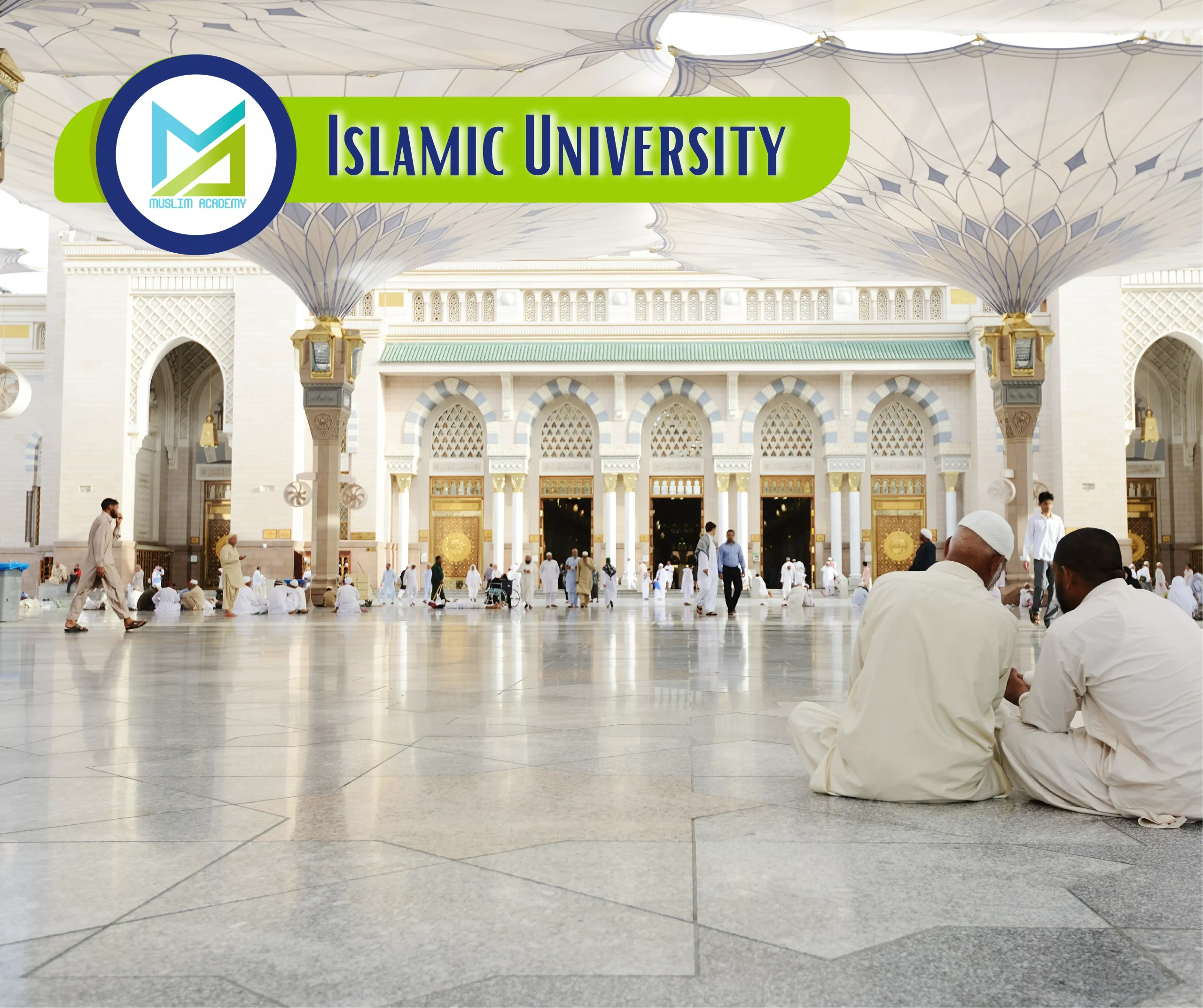
Today, the Islamic University with Muslim Academy remains one of the most significant institutions in Muslim life. It trains scholars, produces religious leaders, and preserves the intellectual tradition of Islam. Furthermore, it serves communities that depend on qualified, deeply trained Muslims to guide them with genuine knowledge and authentic scholarship.
Understanding what an Islamic University with Muslim Academy is, what it offers, and why it matters gives every Muslim a clearer picture of where serious Islamic learning comes from.
The Historical Roots of Islamic Higher Learning
Islamic higher education has a long and remarkable history. The earliest centers of organized Islamic learning emerged within decades of the Prophet Muhammad’s death. Scholars gathered in mosques. Students traveled from distant lands. Knowledge passed through structured circles of learning called halaqas.
Al-Azhar in Cairo stands as the oldest continuously operating university in the world. It opened in 970 CE. For over a thousand years, it has trained scholars in Quranic sciences, jurisprudence, theology, and Arabic language. Graduates carry their knowledge to Muslim communities across the globe. Moreover, its influence on Islamic scholarship cannot be overstated.
Other great centers followed. The Islamic University with Muslim Academy of Madinah opened in 1961. It draws students from over 160 countries. Dar Al-Uloom Deoband in India has trained generations of South Asian scholars since 1867. Each institution carries a distinct scholarly tradition. Together, they form a global network of Islamic learning that links every generation to those before it.
What an Islamic University with Muslim Academy Teaches
A serious Islamic University with Muslim Academy offers a comprehensive curriculum. It does not pick popular topics and ignore difficult ones. Instead, it covers the full range of subjects that Islamic scholarship has developed across fourteen centuries.
Quranic Sciences
Every Islamic University with Muslim Academy places the Quran at the center of its curriculum. Students study correct recitation with tajweed. They learn the science of tafsir — Quranic interpretation. They study the history of the Quran’s revelation and compilation. Many students pursue full memorization. Furthermore, they learn the multiple modes of Quranic recitation known as qira’at. Each subject deepens the student’s relationship with the sacred text.
Arabic Language
Classical Arabic is the language of the Quran and all major Islamic texts. Every serious Islamic University with Muslim Academy teaches it rigorously. Students learn grammar, morphology, and rhetoric. They develop the ability to read classical texts directly. Without strong Arabic, a student cannot engage with primary Islamic sources. Consequently, Arabic study forms a core pillar of every serious Islamic University with Muslim Academy program.
Hadith Studies
The traditions of the Prophet Muhammad form the second foundation of Islamic knowledge. Universities teach the major hadith collections. They cover the science of narrator criticism. Students learn to authenticate hadiths and apply them correctly. This discipline demands both memorization and analytical thinking. Moreover, it requires years of sustained, structured study.
Islamic Jurisprudence
Fiqh — Islamic law — addresses every dimension of Muslim life. Islamic universities teach both the rulings themselves and the methodology for deriving them. Students study the four major schools of jurisprudence. They teach usul al-fiqh — the principles of legal reasoning. As a result, graduates can address new questions with real scholarly competence rather than personal opinion.
Islamic Theology
Aqidah covers the foundational beliefs of Islam. Students study the nature and attributes of Allah. They examine prophethood, angels, divine books, and the afterlife. Additionally, they engage with classical theological debates and contemporary challenges to Islamic belief. This subject equips graduates to represent their faith accurately and defend it thoughtfully.
Islamic History and Civilization
Understanding Islam requires understanding its history. Students study the life of the Prophet, the early Muslim community, and the development of Islamic civilization. They explore the intellectual golden age of Islamic scholarship. Furthermore, they learn how Islamic institutions, laws, and sciences developed over time. This historical foundation gives depth to every other subject in the curriculum.
The Role of an Islamic University with Muslim Academy in Muslim Communities
An Islamic University with Muslim Academy does not exist for its students alone. Its real purpose is the communities that those students will eventually serve.
Every mosque needs a qualified imam. Every Muslim school needs trained teachers. Muslim community needs scholars who can answer questions, resolve disputes, and provide spiritual leadership. These individuals do not emerge from casual self-study or occasional mosque lectures. They come from institutions that trained them rigorously over the years.
Furthermore, Islamic universities produce scholars who preserve the tradition of religious knowledge. They write books. teach the next generation of scholars. They maintain the chain of transmission that connects living Muslims to the Prophet Muhammad through an unbroken line of qualified teachers and certified students.
Without this institutional foundation, religious knowledge becomes distorted. It fragments into personal opinions and cultural habits. It loses the precision and the depth that genuine scholarship demands. Consequently, the Islamic University with Muslim Academy is not a luxury for Muslim communities — it is a necessity.
Islamic Universities in the Modern World
The landscape of Islamic higher education has expanded significantly in recent decades. Traditional brick-and-mortar institutions continue to serve their communities. Additionally, online Islamic universities now extend serious scholarly education to students who cannot relocate to study physically.
Students in Western countries, Muslim alternatives in non-Muslim nations, and working adults with family responsibilities can now access structured, certified Islamic education through digital platforms. They attend live lectures. Submit assignments. receive ijazas — formal certificates of authorisation — from qualified scholars. Moreover, they do all of this without leaving their home countries.
This expansion has brought both opportunities and responsibilities. More access to Islamic higher education is genuinely good. However, quality varies widely across institutions. Not every institution that uses the name delivers the scholarly standard the name implies. Students must therefore evaluate credentials carefully before committing to any program.
Choosing the Right Islamic University with Muslim Academy
Selecting an Islamic University with Muslim Academy requires careful research. Several criteria consistently distinguish genuine institutions from inadequate ones.
Check faculty qualifications first. Every serious institution employs scholars who hold verified credentials from recognized centers of Islamic learning. These scholars carry ijazas that document their place in the chain of Islamic scholarship. Genuine institutions publish this information openly.
Assess the curriculum structure honestly. A quality Islamic University with Muslim Academy program follows a clear, progressive sequence. Each subject builds on the previous one. Students move from foundational knowledge toward genuine scholarly depth. Vague curricula without clear progression indicate weak educational design.
Look for institutional accountability. Serious Islamic universities maintain connections to recognized scholarly bodies. They seek endorsement from established centers of learning. They hold themselves to standards that go beyond self-certification.
Finally, consider the spiritual environment. The greatest Islamic scholars always taught that knowledge and character must develop together. An institution that produces technically knowledgeable but ethically weak graduates has missed the deepest purpose of Islamic education entirely.
Conclusion
The Islamic University with Muslim Academy has always stood at the center of Muslim intellectual and spiritual life. It produces the scholars, teachers, and leaders that communities depend on. preserves the living tradition of Islamic knowledge. connects each generation to those before through a chain of qualified transmission that has continued without break for over fourteen centuries.
Every Muslim who has ever benefited from a knowledgeable imam, a skilled Quran teacher, or a thoughtful Islamic scholar has experienced the downstream gift of a serious Islamic University with Muslim Academy education. That gift deserves the best possible investment — from scholars who teach with genuine depth, from students who study with genuine commitment, and from communities that understand how much depends on keeping this essential institution strong.