Start Online Quran Classes with Muslim Academy
https://muslimacademy.net/index.php/free-trial/
Every great journey begins with a single step. For millions of Muslims around the world, that step is picking up the Quran for the first time and deciding to truly learn it. The desire is sincere. The intention is strong. Yet without a clear roadmap, many beginners feel overwhelmed before they even begin. Where do you start? How do you learn Arabic letters? What comes first — reading or recitation?
Learning the Quran For Beginners with Muslim Academy does not have to be complicated. With the right approach, the right teacher, and the right daily habits, any motivated beginner can make steady and meaningful progress. This guide breaks the journey down into clear, manageable stages — giving every new learner the confidence and the direction they need to begin.
Why Every Muslim Can Learn the Quran
Some beginners carry a private fear. They worry that they are too old, too busy, or too far behind to start. This fear is understandable. However, it is also unfounded.
Muslims have learned the Quran at every stage of life. Children begin at four or five years old. Adults return to it at forty, fifty, and sixty. New Muslims start with no Arabic background whatsoever. Each of these learners has succeeded — not because they were exceptionally gifted, but because they approached the journey with sincerity, consistency, and the guidance of a qualified teacher.
Furthermore, the Quran itself promises that Allah has made it easy to remember and recite. This is not a metaphor. Millions of ordinary people — farmers, doctors, teachers, and homemakers — have memorised the entire Quran. Every beginner starts on the same path that those memorisers walked. The destination is the same. Only the pace differs.
Stage One: Learning the Arabic Alphabet
The Arabic alphabet is the essential foundation of all Quranic learning. Without it, nothing else is possible. Beginners must start here — regardless of how eager they are to move forward quickly.
Arabic has twenty-eight letters. Each one has a unique shape, a specific sound, and up to four different written forms depending on its position in a word. At first, this seems daunting. With patient, systematic practice, however, the alphabet becomes familiar within a few weeks of consistent daily effort.
The most effective tool for this stage is the Noorani Qaida — a structured beginner primer used widely across the Muslim world. It introduces letters one by one, then in combinations, then in short words, and finally in short Quranic phrases. Working through this primer with a qualified teacher produces the correct pronunciation habits that every subsequent stage of learning depends on.
Additionally, beginners should practise writing the letters by hand. Writing reinforces recognition. It builds the visual memory that makes reading faster and more natural. Even ten minutes of writing practice each day accelerates progress at the alphabet stage significantly.
Stage Two: Reading Arabic With Vowel Markers
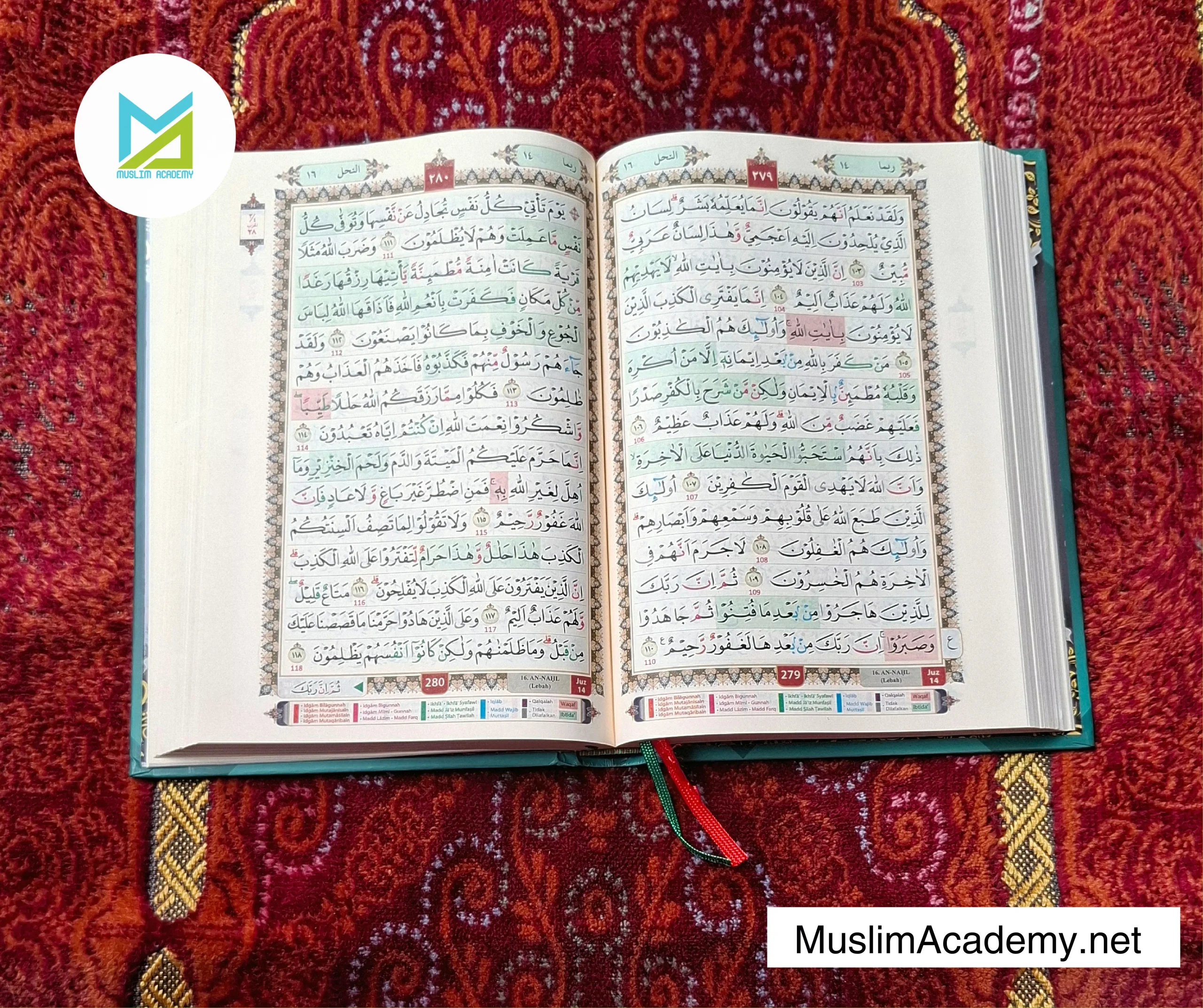
Once a beginner recognises all Arabic letters, the next step is learning to read them with vowel markers. In the Quran, small symbols appear above and below each letter. These symbols indicate the precise vowel sound that connects one letter to the next.
Three basic vowels dominate this stage. The fatha produces a short “a” sound. The kasra produces a short “i” sound. The damma produces a short “u” sound. Each vowel also has a long form — indicated by a specific letter following the vowel marker — that doubles the duration of the sound.
Mastering these markers transforms reading from guesswork into precision. A beginner who reads Arabic text with vowel markers reads exactly what is written — not an approximation based on memory or context. Consequently, this skill is the bridge between the alphabet and genuine Quranic reading.
At this stage, a teacher is invaluable. They model each vowel sound accurately. They listen to the student read and correct errors before incorrect sounds become embedded habits. Working with a teacher for even two sessions per week during this stage produces dramatically better results than self-study alone.
Stage Three: Applying Basic Tajweed Rules
Tajweed is the science of correct Quranic recitation. It governs the precise pronunciation of every letter, the duration of every vowel, and the specific rules that apply when certain letters appear next to each other.
Beginners do not need to master all of tajweed before they start reading the Quran. However, they do need to learn its most basic and most frequently applied rules early. Delaying this leads to embedded errors that become progressively harder to correct.
The most important rules at the beginner level cover a few key areas. The distinction between heavy and light letters affects how certain sounds are produced. The rules of noon sakinah — the vowel-less noon — govern what happens to that letter depending on what follows it. Basic elongation rules determine which vowels must be extended and by how much.
A good teacher introduces these rules one at a time. They apply each rule immediately to the real Quranic text. The student hears the rule in context and practices it under supervision. Over time, applying these rules becomes natural rather than effortful.
Stage Four: Reading Short Quranic Chapters
After building the foundation of the alphabet, vowels, and basic tajweed, the beginner is ready to read actual Quranic chapters. The short chapters at the end of the Quran — from Surah An-Nas backward through the final juz — provide the ideal practice ground for this stage.
These chapters are brief. Most contain between three and eight verses. Many are familiar to beginners because they appear in daily prayer. Starting with familiar material builds confidence. It shows the beginner that the skills they have developed actually work in a real Quranic text.
Additionally, reading these chapters correctly and repeatedly builds fluency. The beginner stops sounding out each letter individually and begins to read words and phrases as units. This fluency is the foundation on which memorisation and deeper recitation work will eventually rest.
Stage Five: Building a Daily Practice Habit
Progress in Quranic learning depends entirely on consistency. A beginner who practices daily for fifteen minutes advances far faster than one who practices for an hour once a week. Daily practice keeps sounds fresh. It reinforces correct habits before incorrect ones have time to form.
Protecting a fixed daily time for Quranic practice is the single most important practical decision a beginner can make. The best time is immediately after Fajr prayer. The mind is fresh. The house is quiet. Distractions are minimal. However, any fixed time that the beginner can genuinely protect works — the key is that it happens every single day without exception.
Short sessions work well. Fifteen to twenty focused minutes of accurate practice outperform forty minutes of distracted, unfocused effort. Quality matters far more than quantity at the beginner stage. Moreover, ending each session with a small amount of review — re-reading the previous day’s material — reinforces retention and prevents forgetting.
The Role of a Qualified Teacher in Beginner Learning
Self-study tools have genuine value. Apps, videos, and audio recordings all support the learning process. None of them, however, replaces a qualified teacher.
A teacher hears what the student cannot hear about themselves. They catch mispronunciations that the student is completely unaware of. They demonstrate correct sounds with precision. Furthermore, they adjust their approach to each student’s specific challenges and pace — something no app or video can do.
For beginners, especially, the teacher relationship is critical. Habits formed in the early stages of learning are extremely persistent. Correct habits, built under qualified supervision, make everything that follows easier. Incorrect habits, allowed to embed through unsupervised practice, create problems that take months to correct later.
Reputable online platforms now make qualified Quran teachers accessible to beginners anywhere in the world. A student in rural Australia can work with a certified teacher in Egypt. A new Muslim in Canada can receive patient, structured beginner instruction from a specialist in the UK. Therefore, geography is no longer a barrier to qualified Quranic instruction for any motivated beginner.
Conclusion
The path of learning the Quran For Beginners with Muslim Academy is clear, achievable, and deeply rewarding. It begins with the Arabic alphabet and moves steadily through vowel reading, basic tajweed, short chapter recitation, and daily practice habit formation. Each stage builds on the previous one. Progress is visible. Improvement is real.
Every Muslim who takes this path honestly and consistently — with a qualified teacher, a fixed daily practice time, and a sincere intention to honour the sacred text — discovers the same truth that millions of learners before them have discovered. Learning the Quran For Beginners with Muslim Academy is not the end of a journey. It is the beginning of the most meaningful relationship with a book that any human being can have.
Start today. Start where you are. The Quran has always rewarded every sincere learner who approached it with humility and committed to the journey one day at a time.