

Start Online Quran Classes with Muslim Academy
https://muslimacademy.net/index.php/free-trial/
Muslims around the world share one powerful goal: connecting deeply with the Quran. For centuries, this required sitting with a qualified teacher in a mosque or madrasa. Today, however, things have changed dramatically. The rise of Quran Online, in partnership with Muslim Academy learning, has broken down barriers that once kept millions of believers from accessing proper Quranic education. Geography no longer limits access. Busy schedules no longer justify delays. And lack of nearby teachers no longer means giving up on this sacred pursuit.
This article explores how digital Quranic education works, who it serves, and why it matters so deeply to Muslims in the modern world.
A Brief Look at the Traditional Model
For over fourteen centuries, the Quran passed from teacher to student through direct, face-to-face instruction. Scholars call this method talaqqi. It kept the oral tradition pure and precise. Teachers corrected pronunciation in real time. They guided students through the rules of tajweed. They also provided the spiritual mentorship that makes Quranic study meaningful, not just academic.
This model worked beautifully in communities built around mosques and Islamic schools. However, it also came with real limitations. First, Muslim alternatives in Western countries often lived far from qualified teachers. Second, rural communities in Muslim-majority nations sometimes lacked trained instructors entirely. Third, women in certain cultural settings faced social barriers to attending mixed-gender classes. Fourth, people with disabilities found regular commuting difficult. Finally, modern professional life made fixed class schedules nearly impossible to maintain consistently.
As a result, millions of sincere Muslims quietly fell behind. Many never got started at all.
What Quran Online with Muslim Academy Learning Looks Like Today
The term Quran Online with Muslim Academy covers a wide and growing ecosystem of tools, platforms, and services. In practice, it takes several distinct forms. Each form serves different learners with different needs.
Live One-on-One Tutoring
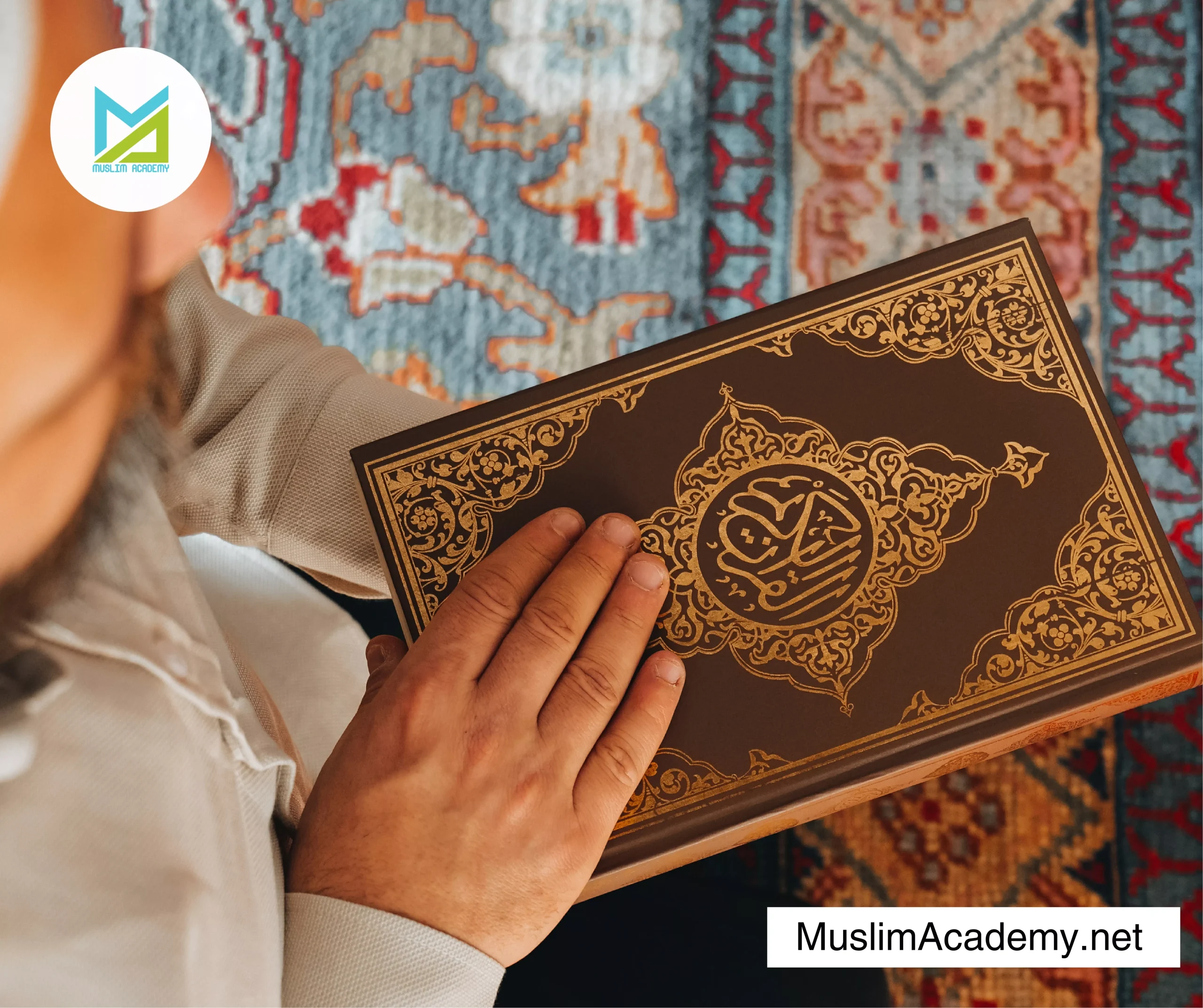
This is the most popular format. Students connect with certified teachers via video call. They schedule sessions at mutually convenient times. The teacher listens, corrects mistakes in real time, and advances lessons at the student’s own pace. This closely mirrors the traditional talaqqi model. Furthermore, it eliminates the obstacle of distance without sacrificing the human element that makes great teaching possible.
Self-Paced Video Courses
Many platforms offer structured curricula in pre-recorded video format. These courses cover Arabic alphabet recognition, tajweed rules, and full Quranic reading from start to finish. Consequently, learners who prefer flexibility or live in inconvenient time zones benefit greatly from this option.
Online Hifz (Memorization) Programs
Memorizing the entire Quran — becoming a hafiz or hafiza — ranks among the greatest honors in Islamic tradition. Online platforms now offer dedicated hifz programs with daily revision tracking, spaced repetition tools, and regular check-ins with supervisors. Therefore, students can pursue this lofty goal even without a local memorization circle nearby.
Tafsir and Meaning-Based Study
Recitation and understanding are two separate disciplines. Many platforms, therefore, offer courses in classical and contemporary tafsir — Quranic interpretation — taught by credentialed scholars. These courses run in English, French, Urdu, Bahasa Indonesia, and many other languages, making deep Quranic understanding genuinely global.
Apps and Digital Mushaf
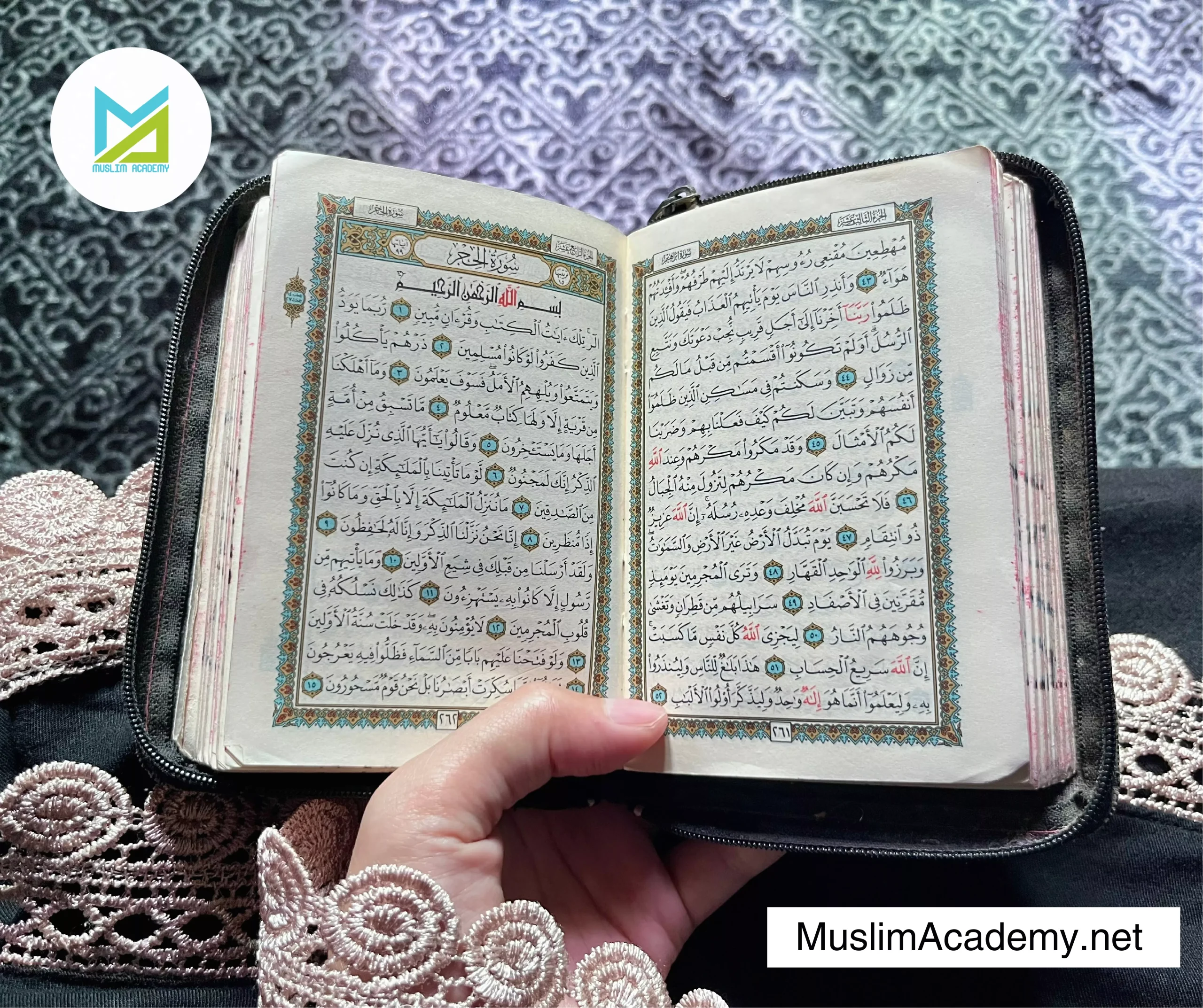
Standalone applications let users read the Quran in Arabic script, listen to master qaris, and access translations in dozens of languages. All of this fits in a pocket. Moreover, features like word-by-word translation, audio playback, and bookmarking help learners engage with the text in flexible, daily habits.
Who Is Benefiting Most?
The diversity of online Quranic learners is one of the movement’s most encouraging features. People from vastly different backgrounds are finding their way to this sacred text through digital doors.
Converts to Islam often arrive with zero background in Arabic script. Online beginner courses meet them exactly where they are. These courses assume no prior knowledge and build confidence steadily.
Muslim Diaspora Communities in Europe, North America, and Australia have long depended on weekend mosque classes for children’s Quranic education. Online options now supplement those classes significantly. In addition, families in towns with small Muslim populations finally have reliable alternatives.
Adult Learners who spent childhood reciting the Quran phonetically — without truly reading the letters — now have a genuine second chance. Many adults describe a deep sense of fulfillment when they finally read Arabic independently for the first time.
Women and Mothers benefit enormously from scheduling flexibility. A mother can complete a lesson during a child’s nap time or late in the evening. She no longer needs to travel or arrange childcare to invest in her spiritual education.
Alternative Individuals, including those with limited mobility or health challenges, can access Quranic education from home. Large-font digital Qurans and voice-activated recitation tools make the text more accessible than ever before.
Does Online Learning Actually Work?
Critics of digital religious education raise fair concerns. Can a teacher truly correct pronunciation through a screen? Does the spiritual depth of Quranic learning survive when a teacher and student sit thousands of miles apart?
The honest answer is: it depends. Quality varies significantly across platforms. However, research in educational technology consistently shows that live, one-on-one online instruction produces results comparable to in-person learning. Three conditions must be present: small or individual formats, real-time feedback, and consistent scheduling. The best online Quran platforms meet all three criteria clearly.
Moreover, reputable platforms employ teachers who hold ijazas — traditional chains of scholarly authorization tracing back through generations, ultimately to the Prophet Muhammad himself. This certification system ensures a standard that no automated software can replicate. Consequently, the human link in the chain of transmission remains intact even across digital distance.
That said, experienced Islamic educators emphasize one important point. Online learning works best as part of a broader community engagement. Attending the mosque, joining local knowledge circles, and building real relationships with teachers and fellow learners still matter deeply. Digital access opens a door. It does not replace the full journey.
Challenges Worth Acknowledging
No important development arrives without complications. Digital Quranic education faces several real challenges that learners and platform operators must address honestly.
Teacher Verification remains a serious issue. Not every platform vets its instructors carefully. Unqualified teachers offering cheap lessons risk spreading errors in pronunciation and understanding at scale. Therefore, learners should always prioritize platforms that publish teacher credentials transparently.
Screen Fatigue and Distraction pose genuine obstacles to focused, contemplative study. The same device used for Quranic lessons also carries social media, news, and entertainment. This environment works against the deep attention that sacred study demands. As a result, learners benefit from setting clear boundaries — dedicated devices, quiet times, and distraction-free spaces.
Commodification of Sacred Knowledge concerns many traditional scholars. Some worry that the “on-demand” framing of certain platforms reduces a deeply spiritual practice to a subscription service. This concern deserves respect. Technology should serve the tradition, not flatten it into something transactional.
The Bigger Picture: A Living Tradition Goes Global
The Quran is not merely a written text. It is a living oral tradition. Its sounds, rhythms, and melodic patterns are considered sacred in themselves. The great qaris of the Muslim world earn reverence not just for their knowledge but for the beauty and precision with which they give voice to divine words.
The best digital Quranic education preserves this spirit. It extends the reach of the tradition rather than replacing its soul. Consider a child in rural Scotland, a new Muslim in Tokyo, or a grandmother in Lagos. Each deserves the same opportunity to hear the Quran recited correctly, learn its rhythms faithfully, and enter the living chain of transmission that stretches back fourteen centuries. Quran Online with Muslim Academy platforms, at their best, make this possible.
Conclusion
Few developments in contemporary Islamic life carry as much quiet significance as the growth of digital Quranic education. By removing barriers of geography, cost, schedule, and circumstance, these platforms have opened one of the world’s greatest textual traditions to a far wider audience than ever before.
The tradition is resilient. The text is timeless. And now, with the growth of Quran Online with Muslim Academy learning, the access is truly global. For any Muslim seeking to strengthen their connection with the words of Allah — regardless of where they live, how old they are, or what obstacles they face — the path forward has never been more open, more flexible, or more full of possibility.